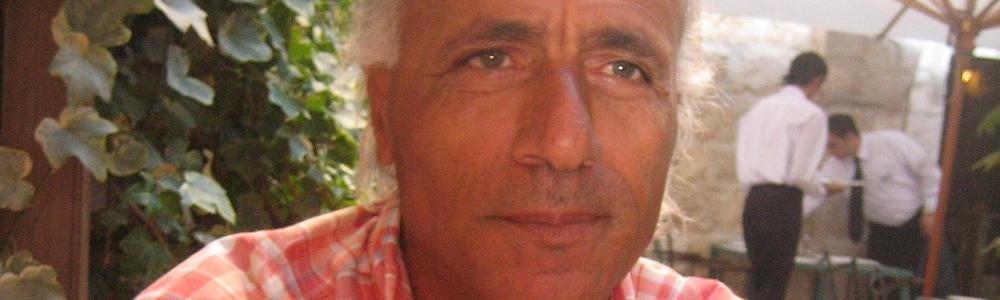
Mordechai Vanunu spent 18 years in prison for exposing Israel's bomb
Mordechai Vanunu worked as a technician inside Israel's secret nuclear plant at Dimona. In 1986 he handed his photographs to a British newspaper and showed the world a bomb Israel never admitted to. Mossad lured him to Rome, drugged him, and shipped him home. He served 18 years, most of it alone in a cell.
Key Takeaways
- Vanunu exposed Israel's hidden nuclear weapons program at the Dimona reactor.
- His 57 photographs let experts estimate Israel held 100 to 200 warheads.
- Mossad agents abducted him in Rome and brought him back for a secret trial.
- He spent 18 years in prison, more than 11 of them in solitary confinement.
- His downfall was simple. He had no way to speak out without exposing himself.
Who is Mordechai Vanunu?
Mordechai Vanunu is an Israeli former nuclear technician who told the world about Israel's atomic bomb. He was born in Marrakesh, Morocco, on 14 October 1952. His family moved to Israel in 1963. He grew up poor, studied for a while, then took a job that would change his life.
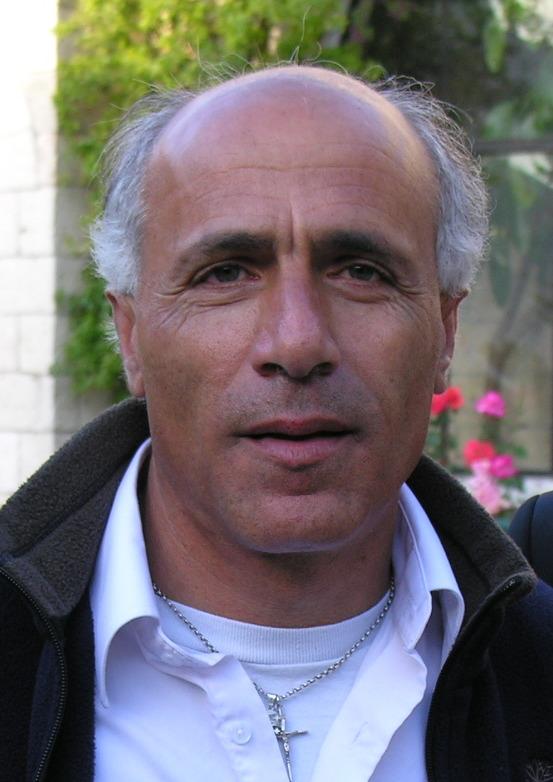
Mordechai Vanunu in 2005, a year after his release.
Ali kazak 9 (CC BY-SA 3.0)
In 1977 he started work at the Negev Nuclear Research Center, the plant near the desert town of Dimona. His title was modest. He was a shift technician, one of hundreds. But his job gave him access to the heart of the site, and he kept his eyes open for nine years.
 WeMoral - whistleblowing software
An anonymous, encrypted whistleblower reporting channel for your employees, suppliers and customers, with case management, the 7-day and 3-month deadlines, and audit logs. Be compliant with the whistleblowing laws that apply to you, in minutes.
Over time his politics shifted. He grew close to left-wing student groups and turned against Israel's treatment of Palestinians. He began to think the bomb he helped tend was a danger the public had a right to know about. In October 1985 the plant cut staff, and Vanunu lost his job.
What did Vanunu reveal about Dimona?
Vanunu revealed that Israel had built a large, secret stockpile of nuclear weapons. He gave The Sunday Times 57 photographs taken inside Dimona. From them, experts judged that Israel held between 100 and 200 warheads. That made it the world's sixth nuclear power, far ahead of any guess at the time.
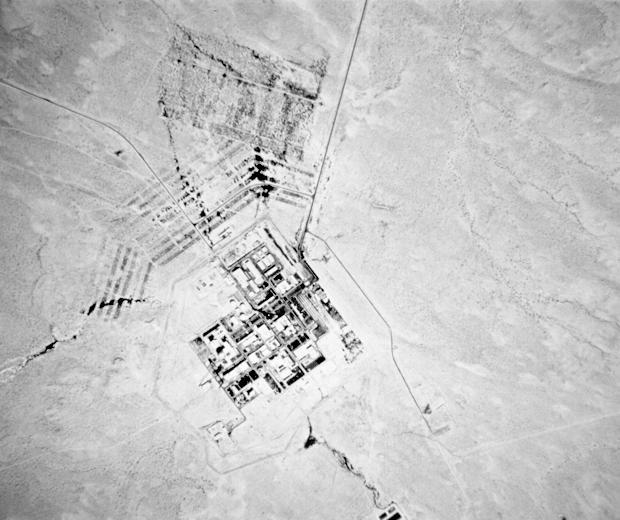
A declassified US spy-satellite image of the Dimona site, 1971.
US government CORONA programme (public domain)
The photos were not snapshots of buildings. They showed the inside of Machon 2, a hidden plant built below ground. That was where Israel separated plutonium, the core stuff of a bomb. Vanunu had photographed glove boxes, control panels, and models of warhead parts. It was a tour no outsider had ever seen.
Israel had always used the same careful line. It would not confirm or deny that it had the bomb. This pose is called nuclear ambiguity, and it let Israel hold the weapon without ever owning up to it. Vanunu's photos blew a hole in that pose, yet Israel held the line anyway, and still does today.
How he smuggled the evidence out
Vanunu got his evidence the simplest way. He brought a camera to work and used it where no one was looking. In his last months at the plant, he shot two rolls of film inside areas that were strictly off limits. Then he carried the rolls out and told no one.
After he lost his job, he left Israel and drifted across Asia. He reached Australia in 1986 and settled in Sydney for a time. He washed dishes and drove a taxi. He also went through a personal change and joined the Anglican Church in July that year, leaving behind the faith he was raised in.
In Sydney he met Peter Hounam, a reporter for the British paper The Sunday Times. Vanunu showed him the photos. The paper flew him to London and spent weeks checking his story. They handed the images to Frank Barnaby, a nuclear physicist, who questioned Vanunu for days and judged him real.
The honey trap that caught him
While the paper checked his account, Vanunu grew restless in London. A friendly American woman who called herself Cindy struck up a romance with him. She was in fact a Mossad agent named Cheryl Hanin-Bentov. She talked him into a short trip to Rome, where her sister supposedly had a flat.
The trip was a trap. On 30 September 1986, agents jumped him inside the Rome apartment. They drugged him, bound him, and drove him to the coast. From there a boat took him to a ship, and the ship took him to Israel. He arrived in secret on 7 October 1986, two days after the paper ran his story.
The Sunday Times had published anyway. On 5 October 1986 its front page read "Revealed: the secrets of Israel's nuclear arsenal." By then the source of that scoop was already in a cell, and the public did not yet know where he had gone.
A secret trial and 18 years
Israel tried Vanunu behind closed doors. He was charged with treason and aggravated espionage. The court barred the press and the public from the room. In March 1988 the judges convicted him and gave him 18 years, counted from the day he was seized in Rome.
He served much of it in brutal conditions. He spent more than 11 years in solitary confinement, alone in a small cell with the light kept on. Israel said it feared he would leak more secrets. He said the goal was to break his mind.
He still found a way to speak. As a police van drove him to a hearing, he pressed his hand to the window. On his palm he had written where and when Mossad took him:
"Vanunu M was hijacked in Rome ITL 30.9.86 2100. Came to Rome by BA Fly 504."
The message Vanunu wrote on his hand, December 1986
Photographers caught the message, and it ran around the world. It was the first hard proof of how Israel had grabbed him on foreign soil. Here is how the whole case unfolded:
- October 1985 - Vanunu is laid off from the Dimona plant.
- 5 October 1986 - The Sunday Times publishes his nuclear revelations.
- 30 September 1986 - Mossad agents seize him in a Rome apartment.
- 7 October 1986 - He arrives in Israel by ship, in secret.
- August 1987 - His trial opens behind closed doors.
- March 1988 - He is convicted of treason and espionage.
- 21 April 2004 - He walks free after 18 years.
The one thing Vanunu never had
Most retellings of this story sell it as a spy thriller or argue over whether he was a hero or a traitor. The plainer truth sits underneath both. Vanunu's real problem was that he had no safe way to raise the alarm. To tell what he knew, he had to expose himself, and that is what sank him.
There was no anonymous channel for a worker like him. So he had to become the channel. He carried the film out by hand, flew to London under his own name, and sat for days of questions in person. A honey trap only works on a target you can find and name. Anonymity would have left Mossad with nothing to grab. Vanunu was a plant technician, and technicians in ordinary industry still hit the same wall. Whistleblowing software for manufacturing and construction takes a report with no account, no email address and no name on it.
He also had no legal shield. A treason court does not care why you spoke. It asks only what you disclosed, so "I did it to warn the world" counts for nothing. And there was no neutral body that could take a secret of this weight and act on it. A foreign paper was his only door.
Even his cry for help proved the point. The note on his palm named his flight, BA 504, and the hour he was taken. His own movements were the evidence. He could not vanish, because every step he took left a trail. Compare his bare-handed route with two other famous cases:
| Whistleblower | What they exposed | How they had to disclose | Outcome |
|---|---|---|---|
| Mordechai Vanunu | Israel's nuclear arsenal | Carried photos abroad in person | Abducted, 18 years in prison |
| Daniel Ellsberg | Pentagon Papers | Handed copies to newspapers | Charges dismissed for misconduct |
| Karen Silkwood | Nuclear plant safety | Gathered documents to give the press | Died in a disputed car crash |
The safeguards Vanunu lacked are now the basics of any serious reporting system. An anonymous intake, a protected route, and an independent recipient are the standard parts of modern whistleblowing software. His case is the starkest lesson in what their absence can cost a single person.
Life under restriction after 2004
Vanunu walked out of Shikma Prison on 21 April 2004, but he was not really free. The state placed a long list of bans on him. He could not leave Israel. He could not go near an airport, a port, or an embassy. He could not talk to foreigners without permission.
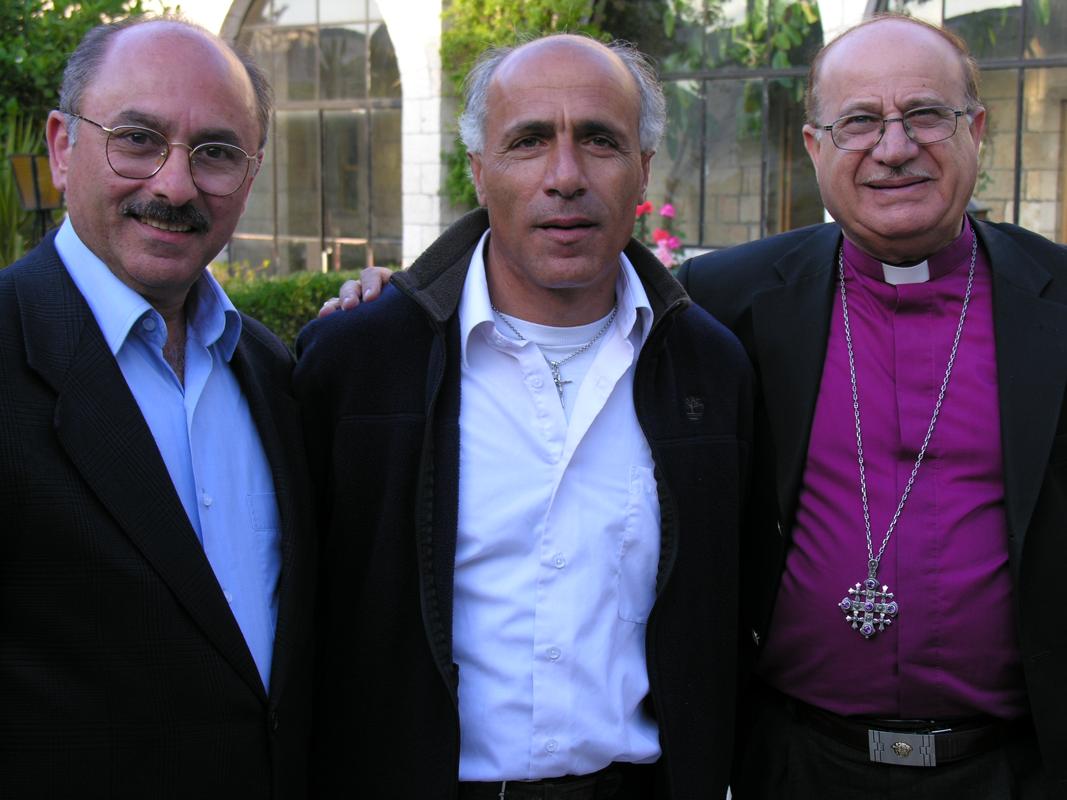
Vanunu (centre) with Bishop Riah Abu El-Assal in Jerusalem, 2005, free but still under tight restrictions.
Ali kazak 9 (CC BY-SA 3.0)
He broke those rules often, on purpose. He gave interviews and met foreign friends, and the state arrested him again and again. He drew short jail terms in 2007 and 2010 for talking to people he was banned from seeing. He has never been allowed to settle abroad.
The wider world saw him very differently. Amnesty International named him a prisoner of conscience. He won the Right Livelihood Award in 1987, while he sat in prison, and he was nominated for the Nobel Peace Prize many times. To many he is a symbol of one man against the bomb.
Mordechai Vanunu frequently asked questions
What did Mordechai Vanunu do?
He exposed Israel's secret nuclear weapons program. He worked at the Dimona reactor for nine years and took 57 photographs inside it. In 1986 he gave them to The Sunday Times, which used them to show that Israel had built a stockpile of warheads.
Why did Israel imprison him?
Israel charged him with treason and espionage for leaking state nuclear secrets. A secret court convicted him in 1988 and sentenced him to 18 years. He served more than 11 of them in solitary confinement.
How was Vanunu captured?
A Mossad agent posing as a tourist, "Cindy," lured him from London to Rome with the promise of a romance. Agents seized him there on 30 September 1986, drugged him, and took him to Israel by ship.
Is Mordechai Vanunu still alive?
Yes. He was released in 2004 and still lives in Israel under heavy restrictions. He cannot leave the country, and he has been arrested several times for meeting foreigners against the rules.
Did Vanunu prove Israel has nuclear weapons?
His photos gave the first inside view of the Dimona plant and led experts to estimate 100 to 200 warheads. Even so, Israel has never confirmed or denied that it has the bomb. That official silence still stands.
Conclusion
Vanunu paid more for a leak than almost any whistleblower alive. He gave up his freedom to show the public a weapon their leaders would not name. The state took his liberty for 18 years and then kept a leash on him for years more.
Yet the strangest part is what did not change. The world now treats Israel's arsenal as a plain fact, in large part because of him. Israel has still never said the word. The secret he broke open is the one secret the state refuses to admit, long after the man who exposed it stopped being a threat.
Researcher and data analyst in whistleblowing. Tells the stories of famous whistleblowers and the history behind their fight for accountability.