Karen Silkwood died on the way to expose a plutonium plant
Karen Silkwood checked her own body for radiation, and the meter screamed. She was carrying almost 400 times the legal limit of plutonium. Nine days later, on 13 November 1974, she died in a car crash while driving to give a New York Times reporter a folder of evidence against her employer. The folder was never found.
Key Takeaways
- Karen Silkwood worked at a plant that turned plutonium into nuclear fuel.
- She told her union and the government that the plant was cutting safety corners.
- A routine self-check found 400 times the legal limit of plutonium in her body.
- She died in a 1974 crash on her way to meet a reporter, and her evidence vanished.
- Her family's lawsuit reached the Supreme Court and changed the rules for nuclear firms.
Who was Karen Silkwood?
Karen Silkwood was an American lab worker and union activist. She was born in 1946 in Texas and grew up in Oklahoma. She made plutonium fuel pellets at a Kerr-McGee plant. As a union safety rep, she gathered proof that the plant cut corners. She died at 28, before she could hand it over.
 WeMoral - whistleblowing software
An anonymous, encrypted whistleblower reporting channel for your employees, suppliers and customers, with case management, the 7-day and 3-month deadlines, and audit logs. Be compliant with the whistleblowing laws that apply to you, in minutes.
Her job was small but dangerous. She worked at the Kerr-McGee Cimarron site near Crescent, Oklahoma. The plant packed plutonium into pellets for nuclear fuel rods. Plutonium is one of the most toxic materials on Earth. A speck breathed into the lungs can cause cancer years later.
Silkwood joined the Oil, Chemical and Atomic Workers union and won a seat on its bargaining team. She was the first woman to hold that role at the plant. The job pulled her into safety work. She started writing down what she saw, and what she saw worried her.
What did she find at the Kerr-McGee plant?
Silkwood found a plant that put speed ahead of safety. She logged spills, faulty welds on fuel rods, missing respirators, and records that had been changed. She also flagged plutonium that could not be accounted for. In 1974 she took her list to the Atomic Energy Commission in Washington. Washington was the nearest thing to a reporting channel she had. Whistleblowing software for manufacturing and construction gives a list like hers an address inside the company first, and a record if nothing happens.
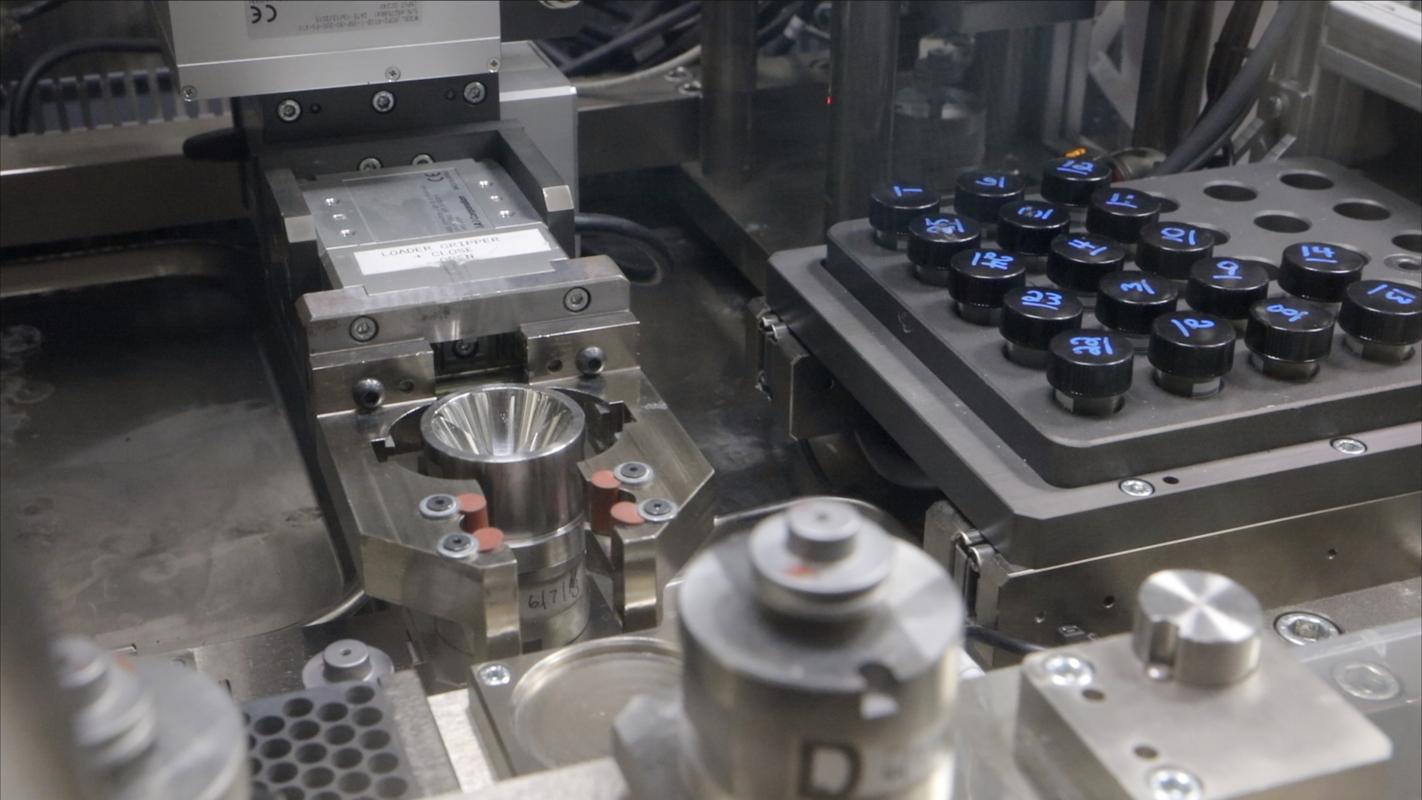
Plutonium is handled inside a sealed glovebox to keep it off the skin and out of the lungs.
© Oak Ridge National Laboratory (CC BY 2.0)
The numbers were alarming. Over five years, about 40 pounds of weapons-grade plutonium went unaccounted for at the plant. When the site was later torn apart, only 20.2 pounds turned up in its pipes. The rest was never explained. Records also showed that dozens of workers had been contaminated.
One charge stood out. Silkwood said that workers had touched up X-ray photos of the welds on fuel rods. Bad welds were ground down, and the images were altered so the rods would pass inspection. A weak rod inside a reactor could crack or leak. She spent weeks quietly building a file of notes, dates, and sample photos to prove it.
A radiation expert who studied the plant did not hold back. Karl Z. Morgan, a founder of the field of health physics, testified about what he saw at Cimarron.
I have never known an operation in this industry that was so poorly operated from the standpoint of radiation protection as the Cimarron facility.
Karl Z. Morgan, trial testimony
The wider record backed him up. Reports counted at least 76 workers contaminated between 1971 and 1975. Roughly a third needed emergency treatment to flush metal from their bodies. You can read more on the plant in this Bulletin of the Atomic Scientists account.
How was she contaminated with plutonium?
On 5 November 1974, a routine self-check at work lit up. Silkwood was carrying close to 400 times the legal limit of plutonium. Over the next two days the readings climbed. Then testers found the source was not the plant floor but her own apartment, in places she ate and washed.
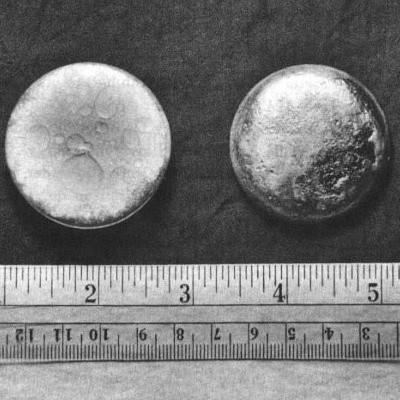
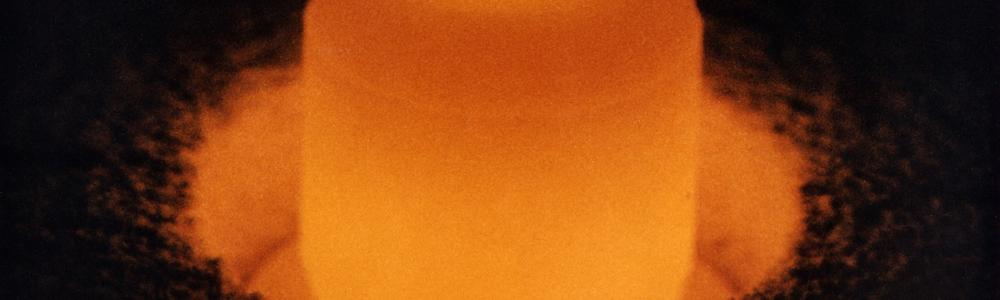
Refined plutonium, the material at the heart of the Cimarron plant.
© U.S. Department of Energy (public domain)
The pattern made no sense for an accident. The worst readings were on a pack of lunch meat in her fridge and on the toilet seat. The plutonium came from a batch at the plant that Silkwood had no way to reach. So how did it end up in her food and her bathroom?
The timeline was grim. On the first day, a swab inside her nose came back hot, a sign she had breathed the metal in. She was scrubbed down and sent home. The next morning she still set off the alarms. On the third day a health team swept her apartment and found plutonium through it. They tore out carpet, packed her things into drums, and hauled them away.
She was flown to Los Alamos for tests. Doctors found plutonium in her lungs. Silkwood believed someone had spiked her apartment to scare her or to discredit her safety claims. Kerr-McGee suggested she might have contaminated herself. Neither side could prove its case, and the question still hangs over the story.
The crash on the way to the New York Times
On 13 November 1974, Silkwood went to a union meeting in Crescent. Afterward she set off alone for Oklahoma City. She planned to meet David Burnham, a reporter from The New York Times, and a national union official. With her was a folder she said proved the plant had falsified safety checks.
She never arrived. Her car left the road and hit a concrete culvert. She died at the scene. When help came, the folder of documents was gone, and it has never turned up since. Burnham, who had earlier broken the Frank Serpico police-corruption story, waited for a source who did not come.
The official ruling was a single-car accident. A trooper said she had fallen asleep, and sedatives were found in her blood. Her union hired its own crash expert, who reported a fresh dent in the rear of her car. He argued she had been struck from behind and pushed off the road. No one was ever charged, and the truth stays buried with her.
What the lost folder held is still argued over. Colleagues said it carried the weld photos and the contamination logs. Federal investigators later confirmed real safety violations at the plant, even if they could not prove plutonium had been smuggled out. Without her files, the strongest version of her case died with her on that road.
What did Silkwood v. Kerr-McGee decide?
Silkwood's father sued Kerr-McGee over the plutonium that poisoned her home. The case became a landmark. A jury sided with the family. Kerr-McGee fought back through the courts, and the fight ran all the way to the Supreme Court, where it reshaped the rules for the whole nuclear industry.
In 1979 a federal jury awarded the estate $505,000 for the contamination and $10 million in punitive damages. An appeals court cut the award down to just $5,000 for lost property. The family kept fighting. The core question was simple: could a state punish a nuclear firm, or did federal law block that?
In 1984 the Supreme Court answered. By a vote of 5 to 4, it ruled that federal control of nuclear safety did not shield a company from state punitive damages. The decision, Silkwood v. Kerr-McGee, opened the door for ordinary people to sue nuclear firms under state law. You can read the full opinion online.
| Stage | Year | Outcome |
|---|---|---|
| Federal jury verdict | 1979 | $505,000 actual plus $10 million punitive |
| Appeals court | 1981 | Cut to $5,000 for property damage |
| Supreme Court | 1984 | State punitive damages allowed, 5 to 4 |
| Final settlement | 1986 | Kerr-McGee pays the estate $1.38 million |

The Supreme Court ruled in 1984 that state law could still reach a nuclear firm.
© Joe Ravi (CC BY-SA 3.0)
Rather than face a new trial, Kerr-McGee settled in 1986. It paid the estate $1.38 million and admitted no fault. The plant itself had already closed in 1975, soon after Silkwood died. Her name, though, was now stamped on a rule that other workers could use.
The ruling outlasted the money. Before Silkwood, nuclear firms argued that only the federal government could police them. After it, a worker or a neighbor harmed by a leak could take a company to a state court and ask a jury for damages. That risk of a local lawsuit gave plants a hard reason to run clean.
Silkwood on screen
Silkwood's story reached far beyond Oklahoma. In 1983, director Mike Nichols made the film Silkwood, with Meryl Streep in the lead and Cher and Kurt Russell beside her. It earned five Academy Award nominations and put her case in front of millions.
The film made her a household name and fixed one image in the public mind: a young worker, scrubbed raw in a decontamination shower, fighting a company far larger than herself. It also kept the open questions alive. Decades on, people still argue about who contaminated her apartment and what happened on that dark road.
The crash report still reads single-car accident. The plutonium that fouled her kitchen was never traced to a hand. The one answer her family did win came years later at the Supreme Court, and it outlived her: a company that lets radiation loose can be made to pay for it. Karen Silkwood never delivered her folder.

Researcher and data analyst in whistleblowing. Tells the stories of famous whistleblowers and the history behind their fight for accountability.