
Erin Brockovich made PG&E pay $333 million for poisoning Hinkley
Erin Brockovich was not a lawyer. She was a file clerk with no legal training when she found a stack of medical records that did not belong in a property file. That hunch grew into a $333 million case against Pacific Gas & Electric and one of the most famous toxic-water fights in American history.
Key Takeaways
- Erin Brockovich was a legal clerk, not a lawyer, when she built the Hinkley case.
- She tied a cancer cluster to chromium-6 that PG&E let seep into the town's water.
- The 1996 settlement of $333 million was the largest of its kind in the country at the time.
- Hinkley still emptied out, because the cleanup never caught the spreading poison.
- Brockovich now fights PFAS "forever chemicals" in towns across the country.
Who is Erin Brockovich?
Erin Brockovich is an American legal clerk and consumer advocate. She was born in 1960 in Lawrence, Kansas. She had no law degree and no science training. In 1991 she took a filing job at a small California law firm, Masry & Vititoe. Two years later, a routine case put her in front of records that changed her life.
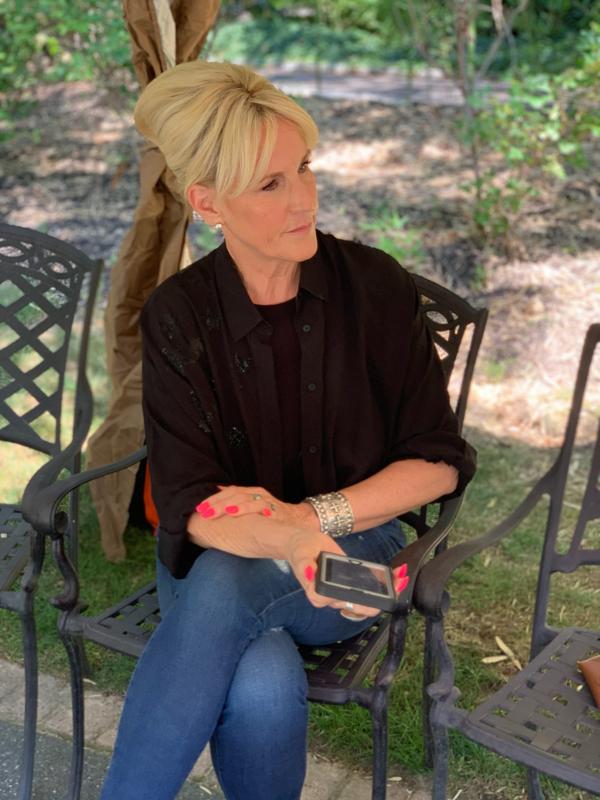
Erin Brockovich / Sroeck (CC BY-SA 4.0)
At the time she was a broke single mother of three. She had just lost a car-crash lawsuit and needed work, so she talked the firm's owner, attorney Ed Masry, into hiring her. The job was dull. She sorted files and chased paperwork.
 WeMoral - whistleblowing software
An anonymous, encrypted whistleblower reporting channel for your employees, suppliers and customers, with case management, the 7-day and 3-month deadlines, and audit logs. Be compliant with the whistleblowing laws that apply to you, in minutes.
One file did not add up. It was a real-estate matter about land that Pacific Gas & Electric wanted to buy in a desert town called Hinkley. Tucked inside were doctors' notes and blood-test results. Brockovich asked a simple question: why are medical records sitting in a property deal? She started digging, and she did not stop.
What happened in Hinkley, California?
Hinkley is a small town in California's Mojave Desert. From 1952 to 1966, PG&E ran a natural-gas compressor station there. It used hexavalent chromium, also called chromium-6, to stop rust in its cooling towers. The plant dumped the leftover water into unlined ponds, and the poison soaked into the groundwater the town drank. Someone on that site knew where the ponds drained long before a file clerk did. Whistleblowing software for manufacturing and construction is built to reach those people. Most of a plant crew has no work email, so the report has to start at the gate.
For years the people of Hinkley drank that water, cooked with it, and bathed in it. They did not know. Then the illnesses came. Families saw tumors, cancers, miscarriages, and nosebleeds that would not stop. Chromium-6 is a known cancer-causing agent when people swallow it over time.
Chromium-6 is not rare. It is used in metal plating, dyes, and rust control. In the wrong place it does real harm. Swallowed over years, it is linked to stomach cancer and other tumors. The people of Hinkley got no warning label and no choice. The water was simply what came out of the tap.
Worse, the company had told residents the chromium in their water was harmless. Some were even told it was good for them. Brockovich drove out to Hinkley again and again. She knocked on doors, sat at kitchen tables, and earned the trust of people who had no reason to trust anyone in a suit. One by one, the stories lined up into a pattern.
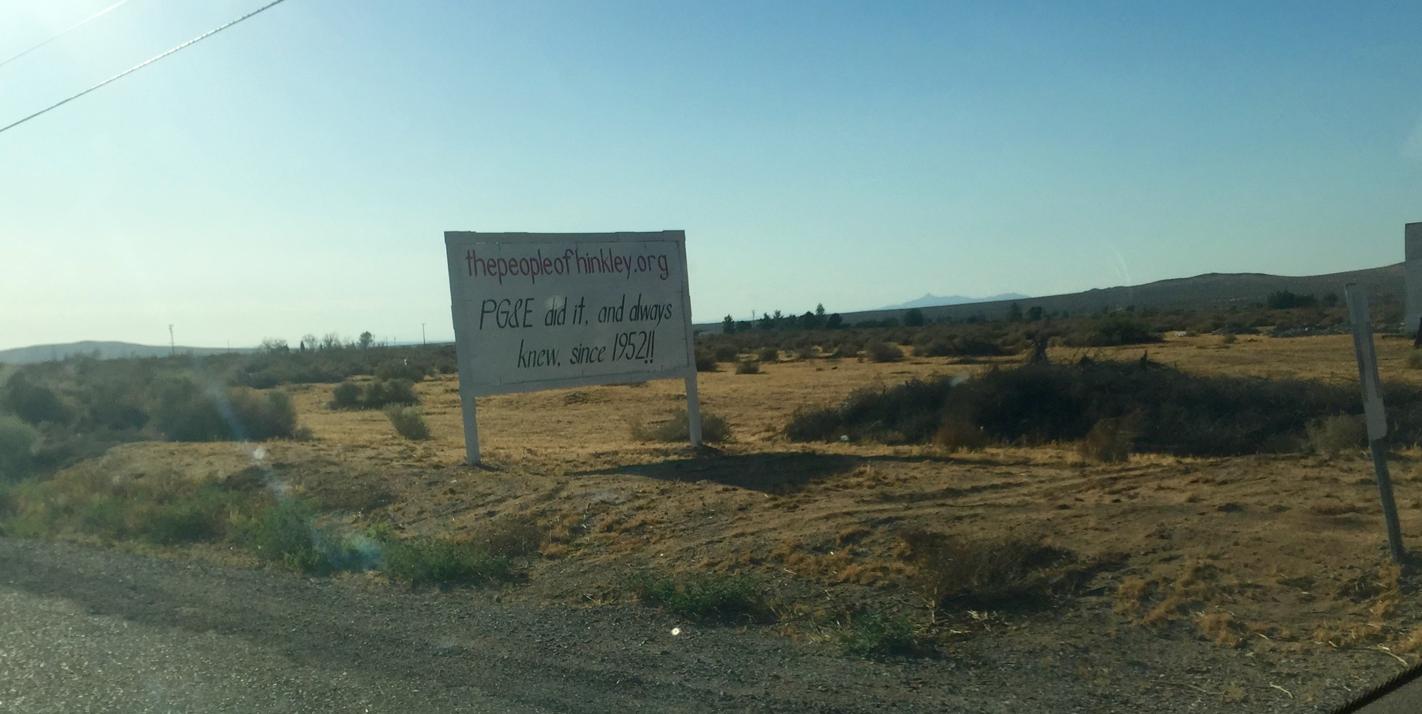
A billboard outside Hinkley, California / Alison Cassidy (CC BY-SA 4.0)
How did the PG&E case reach $333 million?
The case was called Anderson v. Pacific Gas & Electric. It went to private arbitration instead of a jury trial. Arbitrators first ruled on a test group of about 40 residents and awarded them roughly $120 million. That number showed PG&E what the full class might cost. In 1996 the company settled the entire case for $333 million.
More than 600 people shared in the deal. It was the largest direct-action settlement in United States history at the time. The lawyers took about 40 percent in fees. Brockovich herself received a bonus of $2.5 million from her firm, a reward for the legwork that made the case. Ed Masry later said that without her door-to-door field work, the firm would never have known enough to file.
The fight turned on a number: how much chromium-6 in water is too much? That question is still messy. The limits set by science and by law are far apart, as the table below shows.
| Standard | Chromium-6 limit | Status |
|---|---|---|
| California public health goal | 0.02 ppb | Health target, not a law |
| California legal limit (2024) | 10 ppb | First enforceable US limit |
| Old California total-chromium limit | 50 ppb | Replaced |
| US federal total chromium | 100 ppb | No chromium-6 limit of its own |
| Hinkley plume near the station | 1,000+ ppb | About 100x the new limit |
Was Erin Brockovich really a whistleblower?
Not in the strict sense. A whistleblower usually reports wrongdoing from inside their own workplace. Brockovich worked for the residents' law firm, not for PG&E. She was an outside investigator. Still, most people, and most lists of famous whistleblowers, place her among them. The reason matters.
She did what a whistleblower does in spirit. She pulled a hidden harm into the open and gave ordinary people a voice against a giant. The 2000 film about her case, with Julia Roberts in the lead, sealed that image in the public mind. You can read more about it in our roundup of the best whistleblower movies.
Most exposures need both kinds of people. They need an insider who knows where the bodies are buried, someone like Jeffrey Wigand at Brown & Williamson, Erika Cheung at Theranos, or John Barnett at Boeing. They also need an outsider who refuses to let it drop. That is why a safe reporting channel, like a modern whistleblowing platform, matters so much. It lets the insider speak up before an outsider has to spend years knocking on doors.
What happened to Hinkley after the settlement?
The money did not save the town. The chromium plume kept moving underground. Around 2010, a second plume turned up miles from the first. PG&E started buying homes and tearing them down. Today the company owns about two-thirds of Hinkley, the school has closed, and most people are gone.
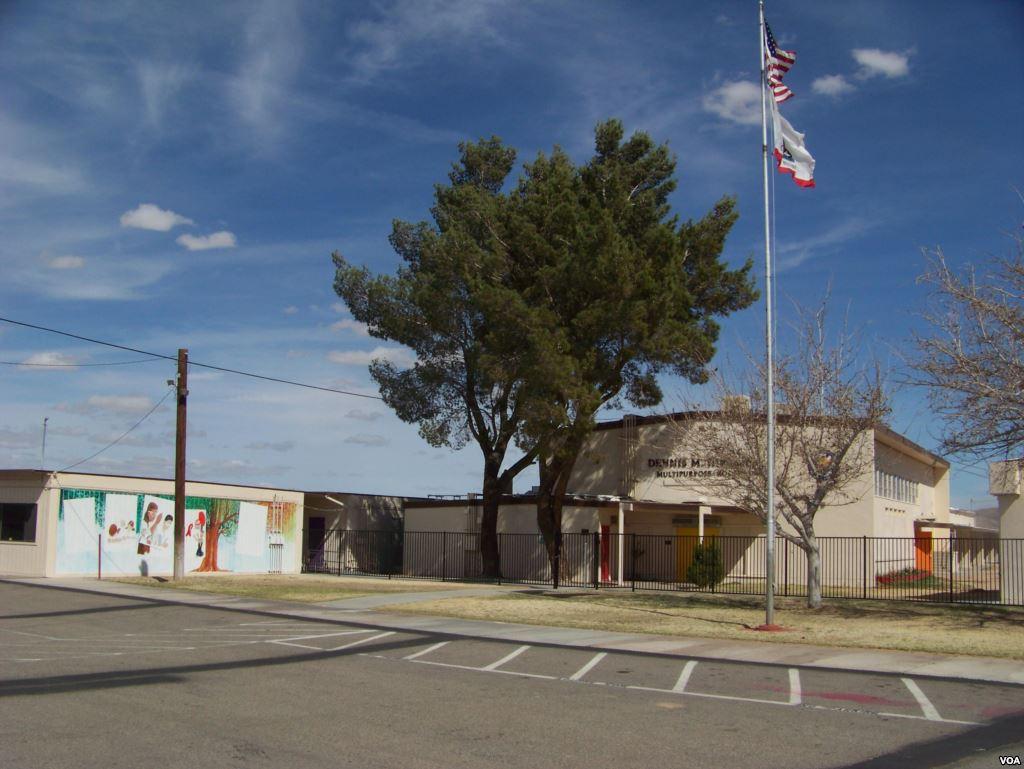
Hinkley Elementary School / VOA/C. Richard (public domain)
Near the old compressor station, chromium-6 levels still top 1,000 parts per billion. Home values collapsed. One family watched a property worth several hundred thousand dollars fall to almost nothing. The payouts went to people, not to repair the town, and you cannot rebuild a community with a check.
The cleanup grinds on. Pulling chromium out of a desert aquifer is slow, and the plume may take generations to contain. The win was real, but it could not undo what sixty years of dumping had already done.
The numbers tell the rest. The town's population has fallen sharply since the case, and the old school sits empty. PG&E has spent years and large sums on cleanup wells and monitoring. The plume, though, does not read press releases. It keeps drifting through the rock beneath the desert.
California's first chromium-6 limit
Hinkley helped push California to act. In 2024 the state adopted the first enforceable drinking-water limit for chromium-6 in the United States: 10 parts per billion. It took effect on 1 October 2024. Water systems have two to four years to meet it, depending on how many homes they serve.
Before this, there was no federal rule aimed at chromium-6 on its own. There was only a limit on total chromium, set at 100 ppb nationally and 50 ppb in California. State scientists had set a health goal of just 0.02 ppb, but a goal is a target, not a law you can enforce. Utilities had no legal duty to test for chromium-6 on its own.
The new limit was not an easy win. Industry groups fought it, arguing the cost would fall on small water systems and their customers. The state pressed ahead anyway. You can read the regulator's own announcement from the California State Water Resources Control Board.
Where is Erin Brockovich now?
Brockovich never left the work. She runs a consulting practice, has written two books, and has hosted TV shows about everyday people fighting back. Her newest fight is PFAS, the "forever chemicals" turning up in water across the country. She holds town halls, backs lawsuits, and pushes regulators to do their jobs.
Her books are Take It from Me from 2001 and Superman's Not Coming from 2020. The second title sums up her message: no hero is flying in to fix your water, so you have to fight for it yourself. She has carried that message to towns like Dalton, Georgia, where residents are fighting PFAS in their supply.
Her name now travels with the cause. She spoke out after the 2015 Porter Ranch gas leak near Los Angeles. She turned up after the 2023 train derailment in East Palestine, Ohio, where families feared for their air and water. In case after case she tells people the same thing: write everything down, organize, and do not wait to be rescued. The environmental groups that take up fights like hers need the same honesty inside their own walls. Whistleblowing software for charities and NGOs gives their staff and volunteers a safe way to raise a concern.
She has also taken the fight to print. In a New York Times opinion piece, Brockovich warned that weakening the power of regulators makes it harder to protect the public from pollutants like PFAS.
Without those basic guardrails in place, large companies get to do whatever they want, and hard-working Americans get sick.
Erin Brockovich, New York Times, 2024
The names change, but the pattern she first saw in Hinkley keeps repeating, from PFAS-tainted water to the KTM emissions scandal.
Erin Brockovich's story proves that one stubborn person without a title can force a giant to pay. It is also a warning. A record settlement and an Oscar-winning film did not give Hinkley its water back. Winning in court is not the same as making a town whole, which is why the goal should always be to stop the harm before it starts.

Researcher and data analyst in whistleblowing. Tells the stories of famous whistleblowers and the history behind their fight for accountability.