KTM's enduro emissions scandal and the insiders who exposed it
The KTM emissions scandal broke in May 2026. A whistleblower-backed report accused the Austrian bike maker of a Dieselgate-style trick. Its off-road bikes ship road-legal and held back, the reporters said. Then dealers unlock them to run far dirtier and louder than the law allows. A lab test put one unlocked bike at roughly ten times the pollution limit. KTM firmly denies it.
Key Takeaways
- A media consortium says KTM lets dealers de-restrict its enduro bikes after they pass road tests.
- A lab test found an unlocked bike ran about 10 times over the EU pollution limit and twice as loud.
- The story came from insiders and a group called Climate Whistleblowers, not from any KTM channel.
- Germany's vehicle regulator, the KBA, opened a probe the day the story broke.
- KTM calls the reports a "fundamental misunderstanding" and says every bike leaves the factory road-legal.
What KTM's dealers are accused of doing
The claim is simple. KTM allegedly sells its enduro bikes in a tame, road-legal state. Then it lets dealers strip the limits off once the paperwork is done. A held-back bike makes about 15 hp (11 kW). Unlocked, the same machine jumps to roughly 50 hp (37 kW). Its exhaust and noise then shoot past what the law permits. The bike that passed the test is not the bike that ends up on the trail.
 WeMoral - whistleblowing software
An anonymous, encrypted whistleblower reporting channel for your employees, suppliers and customers, with case management, the 7-day and 3-month deadlines, and audit logs. Be compliant with the whistleblowing laws that apply to you, in minutes.
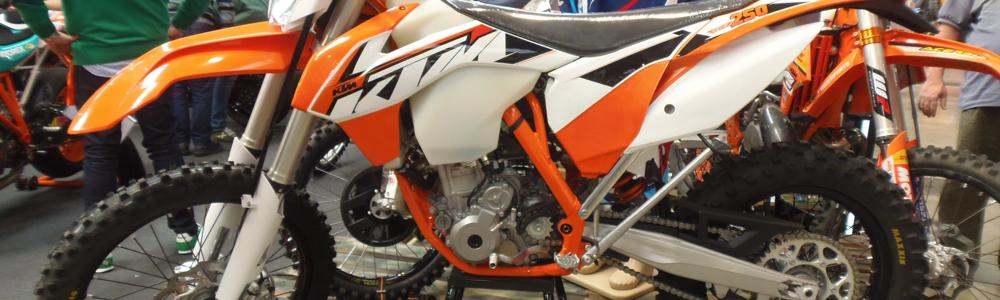
The reported method is hands-on. To free the engine, a dealer pulls out the lambda sensor, the air restrictor, the catalytic converter, and an exhaust tube. Each of those parts is there to keep the bike clean and quiet. Then the engine computer is reflashed with software owned by KTM itself. Staff said they got yearly KTM training on how to do it. This was not a back-room job by one rogue shop, the report says. It was a routine the brand knew about and taught.
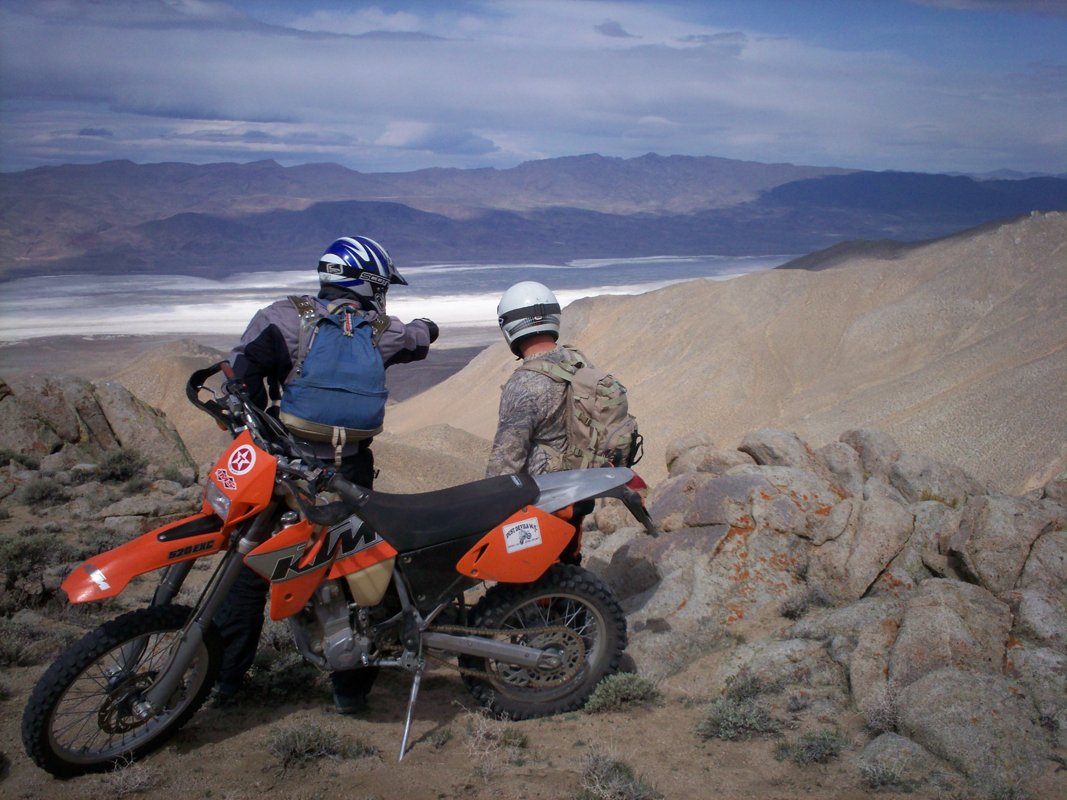
A KTM EXC enduro, the model family at the heart of the case. © Cadams7649 (CC BY-SA 3.0)
The timing makes it sharper. KTM was already in deep trouble before any of this surfaced. Its parent, Pierer Mobility, went into self-administration in 2024. That is a form of court-run rescue. The firm had piled up debt and built more bikes than it could sell. India's Bajaj then stepped in and took majority control. So the emissions claims hit a company that was already fighting to survive.
How whistleblowers and a journalist consortium exposed it
The story did not come from a regulator or an audit. It came from inside the trade and from a nonprofit built to protect green whistleblowers. Climate Whistleblowers, a Paris group founded in 2023, ran a year-long probe with about ten European news outlets. Le Monde and Der Spiegel were among them. They called the project "Unrestricted." The group exists to back people who expose harm to the climate. It offers them legal, financial, and media support so they do not stand alone. A mechanic should not need a Paris nonprofit to be heard. Whistleblowing software for manufacturing and construction puts a QR code on the workshop door, and the report it opens goes somewhere the dealership cannot reach.
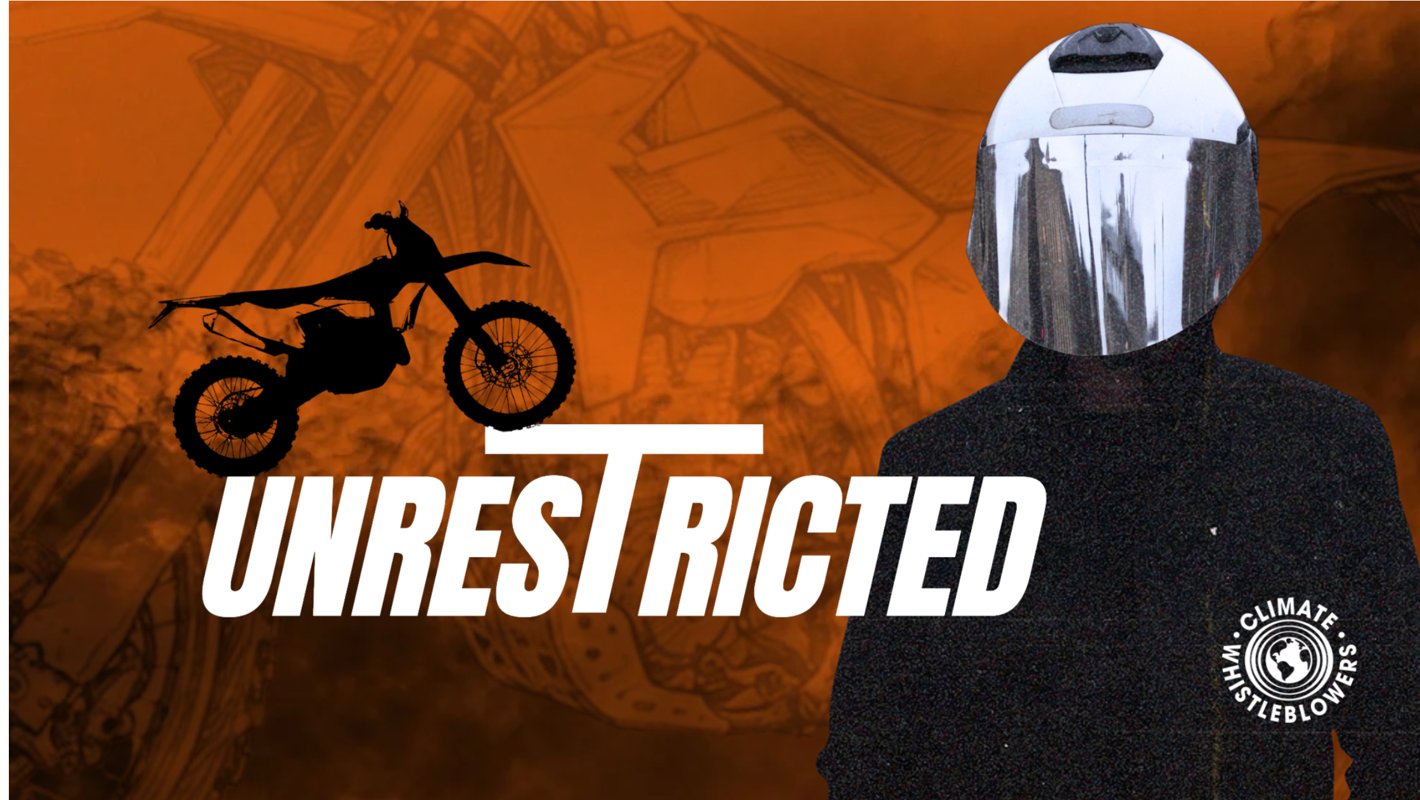
Cover of the "Unrestricted" investigation report by Climate Whistleblowers, published 26 May 2026.
The reporting was done undercover. Journalists posed as buyers. They visited 15 trade shows and dealerships across seven European countries, from the United Kingdom to Austria to Spain. They did not have to dig. Without being asked, dealers explained how the bike could be unlocked after sale. Le Monde published the findings on 27 May 2026 under the headline "KTM's secretly derestricted and highly polluting motorcycles".
Insiders backed it up. One whistleblower with two decades in the industry studied dealer listings. He found that 95% of used KTM enduros for sale in Austria were visibly de-restricted. A KTM employee, quoted by the reporters, called the setup "a bit of a scam." The bikes were built restricted "just to meet the standards," the worker said. An environmental lawyer, Remo Klinger, was blunter still. He called the practice "so grossly unlawful and illegal that you rarely come across anything like it."
"Unrestricted shows the scheme is an open secret in the industry, but is still left unchecked by the authorities. If a leader in the industry like KTM dares to do that, especially after Dieselgate, there is a real risk that non-compliance is far more widespread."
Laura Paquemar, programme manager at Climate Whistleblowers, May 2026
What the emissions tests actually found
The numbers are the heart of the case. Independent testing ordered by the International Council on Clean Transportation (ICCT), a clean-transport research group, put a de-restricted KTM EXC 300 far outside the rules. It ran about ten times over the EU pollution limit. It was also roughly twice as loud as the law allows. Its carbon monoxide output, the reporters wrote, was closer to an old diesel train than a road bike. Carbon monoxide is a poison gas. The point of the parts a dealer removes is to cut it, so pulling them out is not a small tweak.
Laid side by side, the two states of the same bike barely look like one product. The factory version is a mild machine that clears every road rule. The dealer version is a different animal.
| Restricted (factory) | De-restricted (dealer) | |
|---|---|---|
| Power | About 15 hp (11 kW) | About 50 hp (37 kW) |
| Pollution vs EU limit | Within the limit | About 10 times over |
| Noise vs legal level | Within the limit | About twice as loud |
| Road-legal | Yes | No |
That gap is the whole point. Homologation is the official sign-off that a vehicle meets road rules. A bike that passes it is turned into one that never could. The paperwork still says clean. The machine on the road is anything but.
How "alibi registration" keeps the papers clean
The trick that ties it together is what the reporters called "alibi registration." A dealer hands the buyer documents for the tame, restricted bike. Then it sells the unlocked one. On paper the machine is road-legal. In the real world it is not. The document is an alibi for a bike that no longer matches it.
That leaves the rider exposed too. A bike that fails to match its own papers is not street-legal. Its insurance can be void. Its rider can be fined. The buyer takes on that risk, often without grasping it, while the maker keeps a clean record on file.
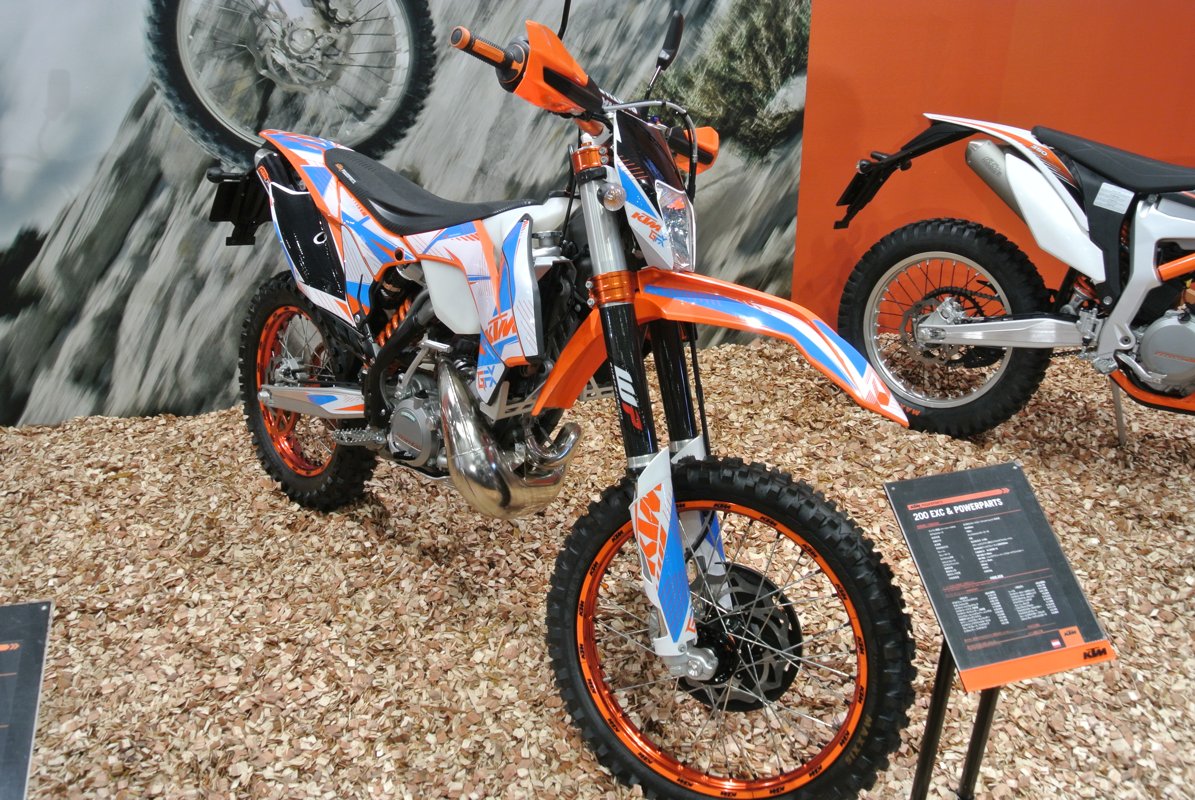
A KTM EXC enduro shown with aftermarket "PowerParts" at a motorcycle show. © Rainmaker47 (CC BY-SA 3.0)
The scale is not tiny. Germany registered about 4,261 new sport enduros across KTM and its sister brands Husqvarna and GasGas in 2024. That figure dropped to 464 in 2025 as a stricter emissions standard came in. Across Europe, the report put the number of these bikes on the road at between 12,000 and 16,000. How many have been unlocked is unknown. That gap is part of the problem.
What KTM says in its defence
KTM rejects the accusations outright. In a public statement, the company said it "firmly rejects the allegations" that it puts illegal motorcycles on the market. Every bike leaves the factory "homologated and road-approved," it said. It sells them only in that state. Any change for competition, it argues, happens after the sale. And it only happens when the customer asks.
The company frames the whole story as a mix-up. It called the report a "fundamental misunderstanding" of how enduro bikes are sold and used. Buyers are told, it says, that road approval ends the moment a bike is converted for the track. KTM also played down the scale of the harm. Motorcycles make up around 0.3% of Germany's carbon output, it noted, with race-ready enduros a sliver of that. The allegations are not proven. No regulator has yet ruled against the company.
How regulators are responding
The authorities moved fast. On the day the story broke, Germany's Federal Motor Transport Authority, the KBA, opened an investigation. It said it would act against the businesses involved if it found the bikes broke the rules. Transport authorities in France and Germany both said they were looking into the claims. The case also lands as the EU tightens its rules. A stricter emissions standard for bikes is phasing in, which makes any dodge around road tests a sharper concern.
What happens next is open. A regulator could clear KTM. It could fault the dealers. Or it could find that the maker steered the practice from the top. "Customers did this on their own" is one story. "The brand trained its network to do it" is a very different one. That is the question the insiders raised, and it is why their evidence counts.
Why a safe reporting channel would have changed the story
People inside the trade knew for years. The employee who called it "a bit of a scam" knew. The veteran who counted the de-restricted listings knew. Rival firms wondered aloud how KTM kept getting away with it. Yet the knowledge only became action when it left the industry. It had to run through a nonprofit and a room full of reporters, because there was no safe way to raise it closer to home.
That is the gap a proper internal channel is built to close. Good whistleblowing software gives a worker a way to flag a concern without putting their name and their job on the line. A dealer mechanic uneasy about what he was trained to do could have filed it early and in confidence. So could an engineer who saw the test bike differ from the sale bike. Both would have reached someone able to act, long before a regulator knocked.
KTM built its name on machines that go where nothing else will. The irony of this case is hard to miss. The same brand allegedly sold bikes tuned to look tame on the one document that counts, then trusted its dealers to undo the disguise in the car park. Whether that survives contact with the KBA is now out of KTM's hands. What is clear is that the people best placed to stop it saw it first, and had nowhere inside to turn.

Researcher and data analyst in whistleblowing. Tells the stories of famous whistleblowers and the history behind their fight for accountability.