
Whistleblower Edward Snowden uncovers NSA secrets
In American pop culture, well-known whistleblowers read almost like myths. They play the brave figure who stands up to the System. Most risk their lives and their savings for the common good. Most are later remembered kindly. A few split opinion. The clearest case is Edward Snowden. In June 2013 the former intelligence contractor gave journalists the largest cache of secret files in US history. The leak forced a worldwide debate about how far a government may spy on its own people.
Key Takeaways
- Edward Snowden is the former US intelligence contractor who leaked the largest cache of secret NSA files in US history in June 2013.
- His leak exposed mass-surveillance programmes such as PRISM and XKeyscore and the bulk collection of Americans' phone records.
- He is widely called a whistleblower, though critics dispute the label because he leaked to journalists rather than to official watchdogs.
- Snowden was charged under the Espionage Act of 1917 but never stood trial.
- He has lived in Russia since 2013 and became a Russian citizen in 2022.
What Snowden actually leaked
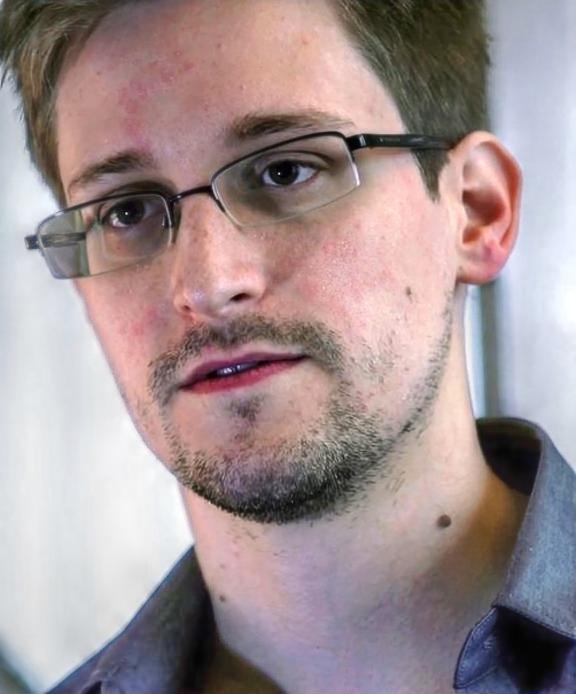
Edward Snowden, Hong Kong, June 2013
©Laura Poitras / Praxis Films (CC BY
3.0)
Snowden was not a senior officer. He was not a policy insider. He was a computer scientist. He had drifted through US intelligence as a sysadmin. First he was a CIA tech employee, posted to Geneva. Then he worked as a contractor for Dell. Finally he joined Booz Allen Hamilton, and the job sent him to the National Security Agency in Hawaii. As a systems administrator he held broad access. He could see what most analysts could not. He could see the machinery of mass spying itself. In May 2013 he flew to Hong Kong with a hard drive of files. He waited in a hotel room for the reporters he had talked to for months.
Those files named names. The most famous programme was PRISM. It ran under Section 702 of the Foreign Intelligence Surveillance Act. PRISM made Microsoft, Yahoo, Google, Facebook, YouTube, Skype and Apple hand over user content. That meant emails, chats, photos, video calls and stored files. The agency just had to ask. No court order was needed for each target. XKeyscore was often called "the NSA's Google." It let analysts search a huge index of internet traffic with no prior sign-off. The British GCHQ ran Tempora. It tapped the transatlantic cables. It stored content for three days and metadata for thirty. Bullrun was the code-breaking arm. It worked, often in secret, to weaken everyday encryption, so the agencies could read what was meant to be private. A leaked court order to Verizon was just as stark. It showed the NSA collected the call records of millions of Americans every day. Behind all of it sat the Five Eyes alliance. Its members are the US, UK, Canada, Australia and New Zealand. They shared access on a scale no parliament had ever debated.
Hong Kong and the charges
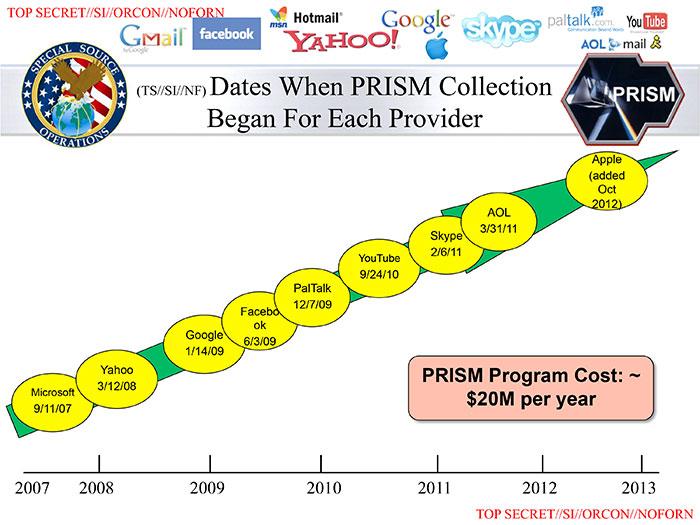
Slide from the leaked PRISM briefing, listing the dates each provider began participating
©National Security Agency (Public Domain)
The first stories ran in The Guardian on 5 June 2013. The Washington Post followed the next day. Glenn Greenwald, Laura Poitras and the Guardian's Ewen MacAskill had spent the previous week with Snowden. They met him in the Mira Hotel in Hong Kong. They recorded the interviews that became Poitras's film "Citizenfour." On 9 June the agency was closing in. Snowden appeared on camera and asked to be named as the source. He wanted no part of being a faceless leaker. The public had a right to know who made the claim, he argued, and to weigh his motives.
The legal response was swift. It has often been misreported since. On 21 June 2013 the US Department of Justice charged Snowden. The counts were two breaches of the Espionage Act of 1917 and one count of theft of government property. Together those charges carry up to about thirty years in prison. That figure is sometimes written up as a sentence. But no trial ever took place. Snowden was charged, not convicted. The US revoked his passport while he was mid-flight. He was stranded in the transit zone of Moscow's Sheremetyevo airport for thirty-nine days. On 1 August 2013 Russia granted him temporary asylum.
 WeMoral - whistleblowing software
An anonymous, encrypted whistleblower reporting channel for your employees, suppliers and customers, with case management, the 7-day and 3-month deadlines, and audit logs. Be compliant with the whistleblowing laws that apply to you, in minutes.
Legal aftermath, and the 2026 fight
The legal afterlife of the leaks is the better measure of what they did. In the US, the USA Freedom Act of June 2015 ended one big programme. It stopped the bulk collection of home phone metadata under Section 215 of the Patriot Act. That was the very programme the Verizon order had exposed. The power then lapsed for good on 15 March 2020. Europe saw bigger change. The Austrian lawyer Max Schrems used the Snowden material to build two landmark cases. He brought them at the Court of Justice of the European Union. Schrems I (2015) struck down the Safe Harbor data deal. Schrems II (2020) struck down its successor, Privacy Shield. In May 2023 the Irish data protection regulator fined Meta a record €1.2 billion. The fine punished transfers of European user data to the US, where the spying Snowden had described could reach it. The ruling cited his leaks directly.
The fight Snowden actually started is the one over Section 702. It is not over. On 20 April 2024 Congress passed the Reforming Intelligence and Securing America Act (RISAA). The law renewed the section for two more years. It also widened the legal meaning of an "electronic communication service provider." Now a wider range of US businesses can be forced to help the NSA. Senator Ron Wyden was blunt. He called it "one of the most dramatic and terrifying expansions of government surveillance authority in history." Snowden pushed the warning on X and asked President Biden to veto the bill. The veto did not come. RISAA carries a sunset of 20 April 2026. That put the next renewal fight back in front of Congress. This time the Trump administration holds the pen, not the Biden one. Lawmakers have so far ducked a clean decision. In April 2026 they cleared only a short stopgap. It kept Section 702 running into the spring, and the long-term argument is still open.
Life in Russia and the pardon question
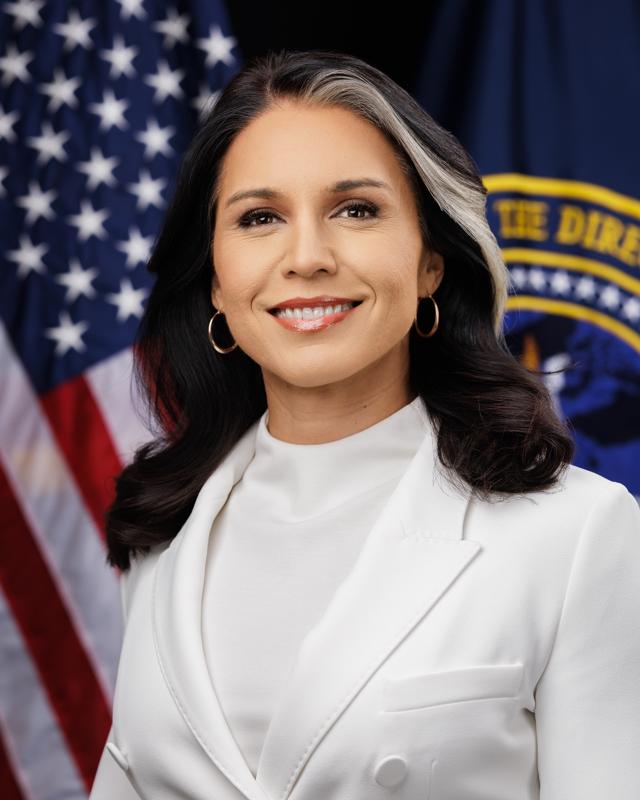
Tulsi Gabbard, US Director of National Intelligence and longtime advocate for a Snowden
pardon
©Office of the Director of National Intelligence (Public Domain)
His private life in Russia is calmer than the politics around him. In 2017 he married his long-time partner Lindsay Mills, an American photographer who joined him in Moscow. The marriage became public in 2019. Their first son was born in December 2020. A second arrived before September 2022. On 26 September 2022 Vladimir Putin granted Snowden Russian citizenship by decree. On 1 December 2022 he took the oath and got a Russian passport. He has been guarded about the Ukraine war. Just before the February 2022 invasion he tweeted that an attack on Kyiv was hard to imagine. He later admitted he had "called it wrong." He has mostly stayed out of the public debate on Russia since.
That backdrop has revived an old question: a presidential pardon. Several figures in Donald Trump's second-term circle have backed clemency for Snowden. The most prominent is Tulsi Gabbard, the new director of national intelligence. Gabbard co-sponsored a 2020 House resolution to drop the charges. At her January 2025 confirmation hearing, Republican senators pressed her hard on that view. She edged toward a softer line on Section 702. But she did not disown her earlier stance. Trump himself has not committed to anything in public. In 2013 he said Snowden "should be executed." In 2020 he said he would "look at it." Snowden has said for years that he would come home tomorrow for a fair trial. The Espionage Act stands in the way. It bars defendants from arguing that a leak served the public interest. The same bar had already sent CIA officer John Kiriakou to prison months before Snowden fled.
Films and a memoir
Two films later fixed the public image. Poitras's Citizenfour was shot mostly inside that Hong Kong hotel room. It won the Academy Award for Best Documentary Feature in 2015. It is still the rawest record of the leaks, because the camera was running while they happened. Oliver Stone's 2016 drama Snowden cast Joseph Gordon-Levitt in the title role. It was looser with the facts. It cared more about psychology than evidence. But it carried the story to a much larger audience. Together the two films shaped the image of a man most people had never seen speak. Both sit near the top of any list of films about whistleblowers.
In September 2019 Snowden published his memoir Permanent Record with Macmillan. On the day it came out, the Department of Justice filed a civil suit. Snowden was meant to clear the book with the CIA and NSA first. He had not. A federal court in Virginia agreed with the government. In September 2020 it ordered Snowden to hand over the proceeds. The forfeiture came to roughly $5.2 million. It covered both book royalties and the speaking fees he had earned from 2014 on. The money went into a trust for the United States. The book still stayed on bestseller lists. The lawsuit, Snowden joked, had done more for sales than any tour could.
A second career as a privacy commentator
He also has a second career as a privacy commentator. In July 2024 he gave the keynote at the Bitcoin 2024 conference in Nashville. He warned the crowd that most on-chain Bitcoin payments can in fact be traced. Exchanges also hand transaction histories to regulators on demand. He used the talk to confirm an open secret from a 2022 Fortune piece. He was one of six people in the original Zcash trusted-setup ceremony. He held a piece of the master key that was later destroyed. A few weeks earlier the Wasabi Wallet team had shut down its CoinJoin coordinator under US legal pressure. After that, Snowden posted what he called a "final warning" to Bitcoin developers: privacy has to be built into the protocol, he wrote, or it will be regulated out of the ecosystem.
I've been warning Bitcoin developers for ten years that privacy needs to be provided for at the protocol level. This is the final warning. The clock is ticking.
- Edward Snowden (@Snowden) May 4, 2024
In 2025 he stayed visible without leaving Russia. He gave a long interview to the journalist John Stossel in March. In June he gave a keynote at SuperAI Singapore. Its title was "Freedom in the Age of Intelligent Machines." On his X account he kept up steady commentary about large-language-model providers and corporate "compliance" tools. They are rebuilding the surveillance system he had documented in 2013, he argues. This time it sits inside the products themselves, not behind a court order.
Edward Snowden: frequently asked questions
Was Edward Snowden a whistleblower?
Yes. He is widely seen as one, and that is how he describes himself. He exposed government wrongdoing. He believed the public had a right to know about it. Critics reject the label. They point out that he leaked to journalists and fled abroad instead of using official channels. Supporters answer that those channels had failed earlier NSA staff, and gave intelligence contractors no protection at all.
What did Edward Snowden leak?
He gave reporters proof of mass surveillance. The files named PRISM, which pulled user data from Google, Apple, Microsoft and others. They named XKeyscore, a search tool for internet traffic. They named the British Tempora cable taps. They also included a court order. It showed the NSA collected the phone records of millions of Americans every day.
Who did Edward Snowden work for?
He was a CIA tech employee. Then he was a contractor for Dell. Finally he was a contractor for Booz Allen Hamilton. Booz Allen posted him to an NSA centre in Hawaii. His job as a systems administrator let him see the surveillance machinery itself.
Where is Edward Snowden now?
He lives in Russia. The US revoked his passport in 2013 and left him stranded in Moscow. Russia granted him asylum, then permanent residency. Vladimir Putin granted him Russian citizenship by decree in September 2022.
Has Edward Snowden been pardoned?
No. The Espionage Act charges still stand. Some figures in the second Trump administration have backed clemency. They include the intelligence director Tulsi Gabbard. No pardon has been granted, and the president has not committed to one.
Did Edward Snowden go to prison?
No. He was charged in 2013 but never arrested or tried. He left the US before the charges were filed. He has stayed abroad since, so he has served no prison time.
The verdict on Snowden has not settled. It probably never will while he is alive. To his defenders he is a hero. He almost single-handedly dragged the surveillance state into daylight and made the public look at it. To his detractors he is a contractor who took an oath and broke it. He fled to a hostile foreign power. He took that power's protection and refused to come home and stand trial. Both pictures are partly true. One thing is no longer arguable. The files he carried out of Hawaii in May 2013 changed the law in three places. They billed Meta a billion euros. They kept the most contested piece of US surveillance power on a short leash. And they made privacy something ordinary people now expect to argue about in public.

Researcher and data analyst in whistleblowing. Tells the stories of famous whistleblowers and the history behind their fight for accountability.