
Suchir Balaji and the cost of being an OpenAI whistleblower
Suchir Balaji's name is now tied to the fight over how AI firms are held to account. In October 2024 he told The New York Times a hard thing. He said OpenAI had trained its models on copyrighted work without permission. Five weeks later, on 26 November, police found him dead in his San Francisco apartment.
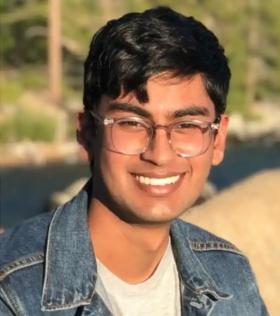
Suchir Balaji, the OpenAI researcher whose death in November 2024 sparked an ongoing dispute over AI accountability. Photo: Wikipedia (fair use, originally Times of India).
The 16 months since have not brought clean answers. They have brought lawsuits and a second autopsy. They have brought a Senate bill and a foundation in his name. They have also brought a public fight. San Francisco's medical examiner closed the case. Suchir's family will not accept that. This post looks at where the case stands now. It also looks at what it changed for whistleblowing in AI.
Key Takeaways
- Suchir Balaji was an OpenAI researcher who helped train GPT-4. He then left the company and went public.
- He told The New York Times that OpenAI had used copyrighted work to train its models. He argued the practice broke the fair use test.
- He was found dead in November 2024. The medical examiner ruled it a suicide. His family rejects that ruling and is suing his landlord.
- His case helped drive a Senate bill, the AI Whistleblower Protection Act. It would shield AI staff who report safety or legal concerns.
Suchir Balaji: A Courageous Voice in the AI Industry
Balaji was born in Florida in November 1998 and raised in Cupertino, California. He was a gifted coder long before OpenAI. He reached the finals of a 2017 Kaggle contest with a $100,000 prize. He finished a UC Berkeley computer science degree at 22. He then joined OpenAI early. He worked on the team that scraped the web to train GPT-4. He spent nearly four years there before he resigned in August 2024. By then he had a firm view. The company's data practices could not pass the fair use test.
 WeMoral - whistleblowing software
An anonymous, encrypted whistleblower reporting channel for your employees, suppliers and customers, with case management, the 7-day and 3-month deadlines, and audit logs. Be compliant with the whistleblowing laws that apply to you, in minutes.
On 23 October 2024 The New York Times published a long interview with him. He also put an essay on his own site, suchir.net. It was titled "When does generative AI qualify for fair use?" His point was simple. ChatGPT competes for money with the writers and publishers whose work it learned from. That, he said, breaks the third and fourth fair use factors. "If you believe what I believe, you have to just leave the company," he told the Times. Less than a month later, on 18 November, Times lawyers named him a likely witness in their copyright suit against OpenAI.
Eight days after that filing, he was dead.
The Contested Investigation
San Francisco's medical examiner released its report on 14 February 2025. It ruled the death a self-inflicted gunshot wound. The 13-page report listed several findings. It found gunshot residue on both of Balaji's hands. It noted a registered Glock he had bought that January. The apartment was dead-bolted from the inside. His recent browser history focused on brain anatomy. Toxicology showed alcohol at more than twice the legal driving limit. It also showed amphetamine and GHB. SFPD put out its own four-page summary the same day. Police Chief Bill Scott and medical examiner director David Serrano Sewell wrote about the family. They hoped the documents "may help bring some amount of closure".
The family rejected the findings. Suchir's mother, Poornima Ramarao, hired pathologist Joseph Cohen for a second autopsy. Cohen reported that the bullet ran downward and slightly to the right. That path, he said, was odd for a self-inflicted shot. He also found a bruise on the back of Suchir's head. It fit a blow struck before the wound, he argued. The family's lawyer said the second autopsy raised questions. He did not call it proof of murder.
The case became a public conspiracy story almost at once. Elon Musk tweeted in January 2025 that the death "doesn't seem like a suicide". Tucker Carlson ran a long interview with Ramarao. Congressman Ro Khanna asked for a "full and transparent investigation". On 22 September 2025, Suchir's parents sued the apartment landlord, Alta Laguna LLC and Holland Partner Group. They say the property manager first showed them garage CCTV. Then he said the cameras were not working. Then he was fired. They also say the company handed over only two days of footage. They had asked for seven. The nine-count claim seeks at least $1 million in damages.
The case is still alive. In April 2026, a San Francisco judge, Christine Van Aken, backed a demurrer from the apartment owner. She found flaws in six of the claim's counts. But she gave the parents leave to amend. The suit was not thrown out. Ramarao and Balaji can fix the claim and refile it.
In January 2026, the San Francisco Standard published an investigation. It checked the body-camera footage, the building's key-fob logs, and the security video. It tested all of it against the family's claims. The blood stayed in the bathroom. It had not spread through the apartment. The camera showed no sign of a struggle. No record placed any other person in Balaji's unit at the time. The piece also added a fact the family had not shared. Suchir had a known history of depression. He was taking antidepressants when he died. None of that proves the family's grief wrong. But the physical record fits the medical examiner's ruling. It fits that better than the murder story spread online.
What Suchir's Allegations Meant for OpenAI
Suchir's death has not slowed the lawsuit he was set to testify in. On 26 March 2025, Judge Sidney Stein rejected OpenAI's bid to dismiss the New York Times's copyright claims. He let the main case go ahead. On 5 January 2026, the same judge upheld a discovery order. It forces OpenAI to hand over 20 million ChatGPT chat logs to the publishers. The logs are stripped of names. The company had first agreed to that number. Then it tried to swap in a search-keyword sample. Stein ruled that users had "voluntarily submitted their communications". He found that OpenAI's privacy case was too weak to block the order.
That fight is the public face of a longer pattern. In May 2024, Vox reported a problem at OpenAI. The company was pushing departing staff to sign gag clauses. The clauses were so broad that even naming the deal broke it. Staff who refused risked losing all their stock. The company walked the clauses back after former staff spoke out, among them Daniel Kokotajlo and William Saunders. The law covers people who have already left, the same as current staff. Whistleblower software for technology companies should stay open to them after the laptop goes back. In June 2024, thirteen OpenAI and DeepMind staff, current and former, signed an open letter. It was titled A Right to Warn about Advanced Artificial Intelligence. It asked AI labs to stop using NDAs as a gag. It asked them to build real channels for safety concerns. Suchir's case landed five months later, in the middle of that argument.
Frances Haugen and Facebook's Ethical Challenges
Frances Haugen was a product manager at Facebook. She became a household name in 2021. That year she leaked thousands of internal files. She also testified before Congress. She told lawmakers that Facebook had put growth ahead of user safety. Her files forced a public debate. People asked how the feed boosts content, hurts teen mental health, and spreads false political claims. She faced a heavy backlash. But she kept pushing for reform.
Tyler Shultz and the Theranos Scandal
Tyler Shultz helped expose the fraud at Theranos. The company was once worth billions for blood-testing tech that did not work. Shultz was a young employee. He was also the grandson of board member George Shultz. He risked his career and his family ties to bring the truth out. His testimony helped bring the company down. It also helped convict CEO Elizabeth Holmes.
What the Balaji Case Actually Changed
Suchir's claims and the fight over his death have already moved policy. On 15 May 2025, Senate Judiciary Chair Charles Grassley introduced a new bill. It is the bipartisan AI Whistleblower Protection Act (S.1792). The bill defines AI systems broadly. It bars employers from punishing staff who report safety flaws or law-breaking. It makes the NDA-and-stock-clawback trap OpenAI used void in law. It also gives whistleblowers two routes to fight back. They can seek help from the Department of Labor. They can also sue to get their job back, with back pay and damages. Grassley's office cited the OpenAI departures and the Right-to-Warn letter as the spur.
One researcher's death did not produce that bill on its own. Three problems were already on the table. The AI industry leaned hard on NDAs. It had few safe ways to raise a safety concern. And federal law barely protected AI whistleblowers. Suchir's case made all three impossible to ignore.
Building a Safer Environment for Whistleblowers
Whatever happens with S.1792 in Congress, employers need not wait for a law. Three things consistently help:
- Anonymous, secure reporting channels. Internal disclosure routes that genuinely protect identity remove the need to choose between speaking up and keeping a job. A modern whistleblowing platform handles this at the technical layer.
- External advocacy and legal support. Groups like the National Whistleblower Center and the Government Accountability Project step in where employers will not. Suchir Balaji never reached them.
- A culture that does not treat dissent as disloyalty. The hardest of the three. It cannot be installed; it has to be modeled by leadership and demonstrated when an actual disclosure arrives.
Suchir's Legacy
Suchir's parents have turned their grief into the Suchir Balaji Foundation. It runs a research project on AI fair use. It also runs a whistleblower defense fund. On 30 July 2025, National Whistleblower Day, the foundation held its first Truth in AI summit in San Francisco. It brought together activists, policy staff, and engineers. We may never get the final word on how he died. But his copyright argument will be fought through the New York Times case for years. The public record of OpenAI's conduct now stands: the NDAs, the Right-to-Warn letter, the discovery fight. The next wave of AI workers will weigh all of it. They will weigh it when they decide whether to speak up.
Suchir Balaji: frequently asked questions
What did Suchir Balaji expose at OpenAI?
He said OpenAI had trained GPT-4 on copyrighted books, articles, and other work. The company had no permission and paid nothing. He argued this was not fair use. ChatGPT, he said, competes for money with the writers and publishers whose work it learned from.
How did Suchir Balaji die?
San Francisco's medical examiner ruled his death a self-inflicted gunshot wound. The report came out on 14 February 2025. His family rejects that ruling. They paid for a second autopsy of their own.
Did Suchir Balaji's family sue anyone?
Yes. In September 2025 his parents filed a wrongful-death suit. They sued the apartment owner, Alta Laguna LLC, and the property manager, Holland Partner Group. In April 2026 a judge backed a demurrer but let them amend the claim. So the parents can refile, and the case goes on.
What was Suchir Balaji's salary at OpenAI?
News reports put his pay at about $350,000 a year. He worked there for nearly four years. OpenAI has not confirmed a figure in public.
When was Suchir Balaji born?
He was born on 21 November 1998 in Florida. He grew up in Cupertino, California, where both of his parents worked in technology.
Was Suchir Balaji a whistleblower?
He raised his concerns through the press and an essay on his own site. He did not use a formal protected channel. That gap is part of why his case fueled the push for federal AI whistleblower protection.
Conclusion
The hardest part of Suchir Balaji's story is simple. Nobody comes out of it satisfied. The medical examiner closed the case. His family will not. The Times case moves forward. But nobody who could speak to OpenAI's training data from the inside is alive to do it. The Senate has a bill. It does not have a vote.
Our job is to make whistleblowing possible without the isolation Suchir faced. That means building the dull but vital basics. People need private channels, clear ways to escalate, and real legal cover. The next person who sees something inside an AI lab should not have to choose. The choice should not be their conscience or everything else they have built.
Researcher and data analyst in whistleblowing. Tells the stories of famous whistleblowers and the history behind their fight for accountability.