
Daniel Ellsberg leaked 7,000 pages of the Pentagon Papers
Daniel Ellsberg was a military analyst with top secret clearance. In 1971 he leaked a 7,000 page secret study of the Vietnam War to the press. The government charged him under the Espionage Act, and he faced up to 115 years in prison. Then the case fell apart, and his leak reshaped American press freedom.
Key Takeaways
- Daniel Ellsberg leaked the Pentagon Papers, a secret history of the Vietnam War.
- The papers showed that four presidents had misled the public about the war.
- He faced 115 years in prison under the Espionage Act.
- A judge threw out the case after the government broke the law to spy on him.
- His leak led to a landmark Supreme Court win for a free press.
Who was Daniel Ellsberg?
Daniel Ellsberg was an American military analyst and economist. He was born in 1931 and died in 2023. He helped plan the Vietnam War from the inside, then turned against it. His leak of the Pentagon Papers made him one of the most famous whistleblowers in history.
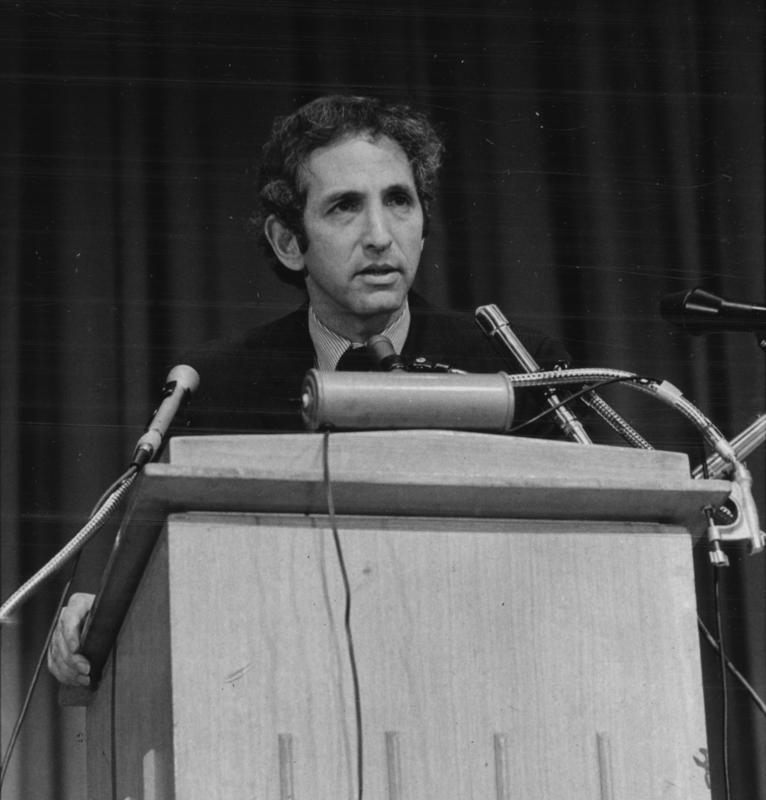
Daniel Ellsberg at a 1972 press conference in New York City.
Bernard Gotfryd, Library of Congress (public domain)
Ellsberg was no outsider. He earned a degree from Harvard and served as a US Marine officer. In 1959 he joined the RAND Corporation, a think tank that advised the military. He worked on nuclear war plans and studied how leaders make choices under risk. Few people knew the secret machinery of American power better than he did.
 WeMoral - whistleblowing software
An anonymous, encrypted whistleblower reporting channel for your employees, suppliers and customers, with case management, the 7-day and 3-month deadlines, and audit logs. Be compliant with the whistleblowing laws that apply to you, in minutes.
In 1965 he went to Vietnam to see the war up close. He spent two years there with the State Department. What he saw on the ground did not match the hopeful story the government told at home. He came back doubting the war he had helped to run.
What were the Pentagon Papers?
The Pentagon Papers were a secret government study of the Vietnam War. They ran to about 7,000 pages across 47 volumes. Defense Secretary Robert McNamara ordered the report in 1967. It traced US choices in Vietnam from 1945 to 1968, and it was never meant for the public.
The study told a damning story. It showed that four presidents, from Truman to Johnson, had misled the public about the war. Leaders knew the odds of winning were low. They widened the war anyway, and they hid the true scale of it from voters and Congress. You can read the declassified study at the US National Archives.
Ellsberg helped work on the study at RAND, so he had access to a copy. He read the whole thing. The gap between the secret record and the public story shook him. He decided the American people had a right to see what he had seen.
Why did Ellsberg leak them?
Ellsberg leaked the papers because he believed the war was built on lies. He thought the public and Congress needed the truth to stop it. He also drew courage from young men who went to prison rather than fight in a war they saw as wrong.
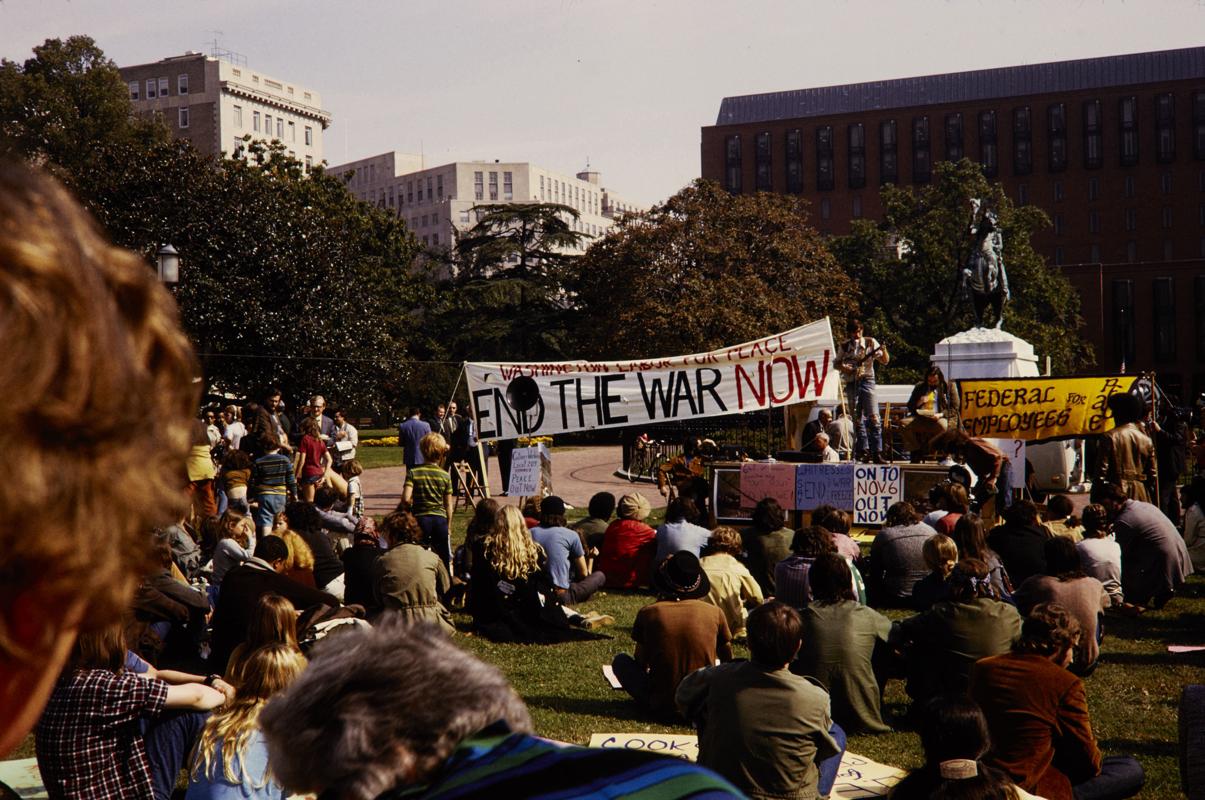
An anti-war rally in Washington DC, October 1971, demanding an end to the Vietnam War.
Cecil W. Stoughton (public domain)
Late in 1969 he began to act. With his former RAND colleague Anthony Russo, he secretly photocopied the entire study, page by page, night after night. His own children helped at times. It was slow, risky work that could have sent him to prison on its own.
He first tried the official route. He offered the papers to members of Congress, hoping a senator would read them into the record. None would touch them. So he turned to the press, and handed the study to a reporter at The New York Times.
How the press won the right to publish
The New York Times began printing the Pentagon Papers on 13 June 1971. The Nixon administration went to court and won an order to stop the series after three days. It was the first time in US history that a federal court blocked a newspaper from publishing in this way.
Ellsberg had planned for that. He passed copies to The Washington Post and then to more than a dozen other papers. As fast as the government silenced one, another picked up the story. The leak had outgrown any single injunction.
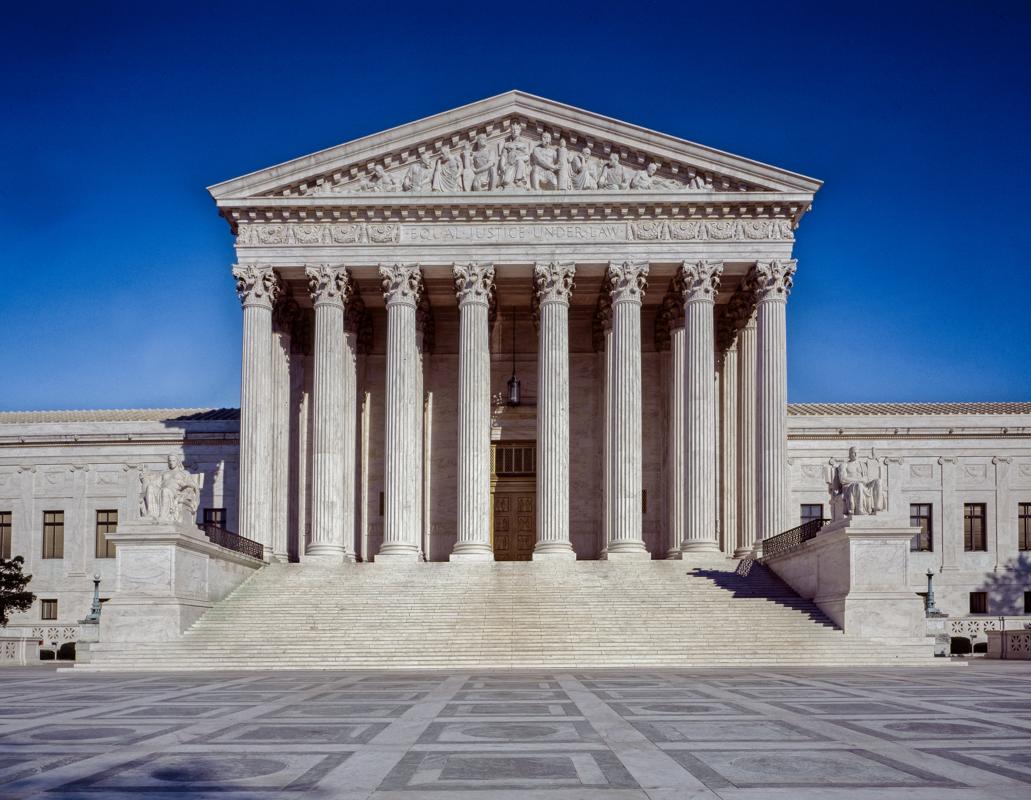
The US Supreme Court in Washington DC, where the press won the right to publish the Pentagon Papers.
Carol M. Highsmith, Library of Congress (public domain)
The fight reached the Supreme Court in days. On 30 June 1971, the justices ruled 6 to 3 for the newspapers in New York Times Co. v. United States. The court held that the government had not met the heavy burden needed to censor the press in advance. The papers were free to publish, and they did.
Why was he charged under the Espionage Act?
The government charged Ellsberg under the Espionage Act of 1917, a law written to catch spies who help foreign enemies. A grand jury indicted him on 12 felony counts, including theft and conspiracy. Together they carried a maximum of 115 years in prison.
The charge raised a hard problem that still shadows whistleblowers. The Espionage Act has no public interest defense. A person tried under it cannot tell the jury why they spoke out. The motive does not matter in court, so a leak that exposes wrongdoing is treated like a leak that helps an enemy. Here is how the case unfolded:
- October 1969 - Ellsberg and Anthony Russo start secretly copying the 7,000 page study.
- 13 June 1971 - The New York Times publishes the first Pentagon Papers story.
- Late June 1971 - Ellsberg is charged, and other papers keep publishing.
- 30 June 1971 - The Supreme Court rules 6 to 3 for the press.
- December 1971 - A grand jury indicts him on 12 felony counts.
- January 1973 - His trial begins in Los Angeles.
- 11 May 1973 - The judge dismisses every charge.
Why were all the charges dismissed?
The case was thrown out because the government broke the law to attack Ellsberg. A judge ruled that the misconduct was so serious it poisoned the whole trial. On 11 May 1973, Judge William Byrne dismissed every charge against Ellsberg and Russo.
The misconduct was stunning. A secret White House unit known as the plumbers had broken into the office of Ellsberg's psychiatrist, Lewis Fielding. They were hunting for files to smear him. The FBI had also wiretapped his calls without a warrant and then lost or hid the records. None of this had been shared with the defense.
It got worse for the government. While the trial was running, the White House secretly offered Judge Byrne the job of FBI director. The dangle of a top post to the judge hearing the case was its own scandal. The same plumbers who burgled Fielding's office soon carried out the Watergate break-in that would end Nixon's presidency.
What Ellsberg did after the trial
Ellsberg walked free, and he never went quiet. He spent the next 50 years as an antiwar and antinuclear activist. He was arrested dozens of times at protests. He drew on his old RAND work to warn the world about the danger of nuclear weapons.
He kept writing too. In 2017 he published The Doomsday Machine, a memoir about his years as a nuclear war planner. In 2012 he helped found the Freedom of the Press Foundation, a group that defends journalists and leakers. He became an elder statesman for a new generation of whistleblowers.
He backed the leakers who followed him and saw them as his heirs. He defended Chelsea Manning, Edward Snowden, and Julian Assange, and warned that the Espionage Act was being turned against the very people it should protect. He died of cancer on 16 June 2023, at the age of 92.
His leak is the subject of the 2009 documentary The Most Dangerous Man in America, which follows how he copied and released the Pentagon Papers.
| Whistleblower | What they exposed | Year | Outcome |
|---|---|---|---|
| Daniel Ellsberg | Pentagon Papers on the Vietnam War | 1971 | Charges dismissed for misconduct |
| Chelsea Manning | Military and diplomatic files | 2010 | 35 years, later commuted |
| Edward Snowden | Mass surveillance programs | 2013 | Charged, living in exile |
| Julian Assange | Published leaked US files | 2010 | Years in legal limbo, plea deal |
The defense Ellsberg never got
Ellsberg's leak handed the press a permanent win, yet it changed little for the person who does the leaking. The Espionage Act still offers no public interest defense, so the question his trial raised was never settled. He walked free on the government's own crimes, not on any rule that protects a source who acts in good faith.
He spent the rest of his life trying to close that gap. He argued the law was built for spies who help an enemy, not for people who tell the public the truth. "Courage is contagious," he liked to say. One person who speaks out makes it easier for the next, which is why he stood beside the leakers who came after him.
Daniel Ellsberg: frequently asked questions
What did Daniel Ellsberg leak?
He leaked the Pentagon Papers, a 7,000 page secret study of US decisions in the Vietnam War. The study showed that several presidents had misled the public about the war. He gave it to The New York Times and other papers in 1971.
Did Daniel Ellsberg go to prison?
No. He was charged with 12 felony counts that carried up to 115 years. A judge dismissed every charge in 1973 after it came out that the government had burgled his psychiatrist's office and wiretapped him without a warrant.
Was Daniel Ellsberg a whistleblower?
Yes. He exposed government wrongdoing in the public interest, which is the heart of whistleblowing. The government charged him as a leaker under the Espionage Act, a law that does not let a defendant argue public interest.
How are the Pentagon Papers linked to Watergate?
The same White House unit, the plumbers, that broke into Ellsberg's psychiatrist's office later broke into the Democratic headquarters at Watergate. The Watergate scandal exposed the misconduct that got Ellsberg's case thrown out.
What did Daniel Ellsberg do later in life?
He became a leading antiwar and antinuclear activist. He wrote The Doomsday Machine in 2017, co-founded the Freedom of the Press Foundation in 2012, and defended later whistleblowers. He died in 2023 at the age of 92.
Conclusion
Daniel Ellsberg proved that one insider with a conscience can change history. He gave up a safe career to tell the public a truth their leaders had hidden. The government tried to bury him, and instead it buried its own case.
He spent fifty more years pressing a question his own trial never answered. Can a democracy punish the person who hands it the truth? The Pentagon Papers settled what a newspaper is free to print. They never settled what happens to the source who takes the risk.

Researcher and data analyst in whistleblowing. Tells the stories of famous whistleblowers and the history behind their fight for accountability.