
Mark Felt the Watergate whistleblower known as Deep Throat
Watergate is a single word for the moment American politics broke in public. Between 1972 and 1974, three things pushed the country into crisis. There was a White House break-in. There was a cover-up. And there was a secret FBI source. It ended with Richard Nixon. He is still the only US president to ever quit the office. The man feeding the reporters was Mark Felt, the number two at the FBI. His name stayed hidden for more than thirty years.
Key Takeaways
- Deep Throat, the Watergate whistleblower, was W. Mark Felt, the FBI's second-in-command during the scandal.
- Felt secretly fed leads to Washington Post reporter Bob Woodward, helping expose the cover-up that forced Richard Nixon to resign in August 1974.
- The "Deep Throat" codename came from the Post newsroom, not from Felt himself.
- Felt kept the secret for 33 years and revealed himself in Vanity Fair in 2005, aged 91.
- His record is mixed. He was later convicted of authorising illegal FBI break-ins, then pardoned.
The Plumbers and the burglary that started it
People often call the five Watergate burglars "the Plumbers". They were a different group. The real Plumbers were an earlier secret White House unit. It was set up in 1971 to stop leaks. The leak that stung most was the Pentagon Papers. Nixon's circle wanted payback against the man who leaked them, military analyst Daniel Ellsberg. Two Plumbers broke into the office of his psychiatrist in Beverly Hills in September 1971. They were former CIA officer E. Howard Hunt and former FBI agent G. Gordon Liddy. They hoped to find dirt that would discredit Ellsberg. They came back with nothing.
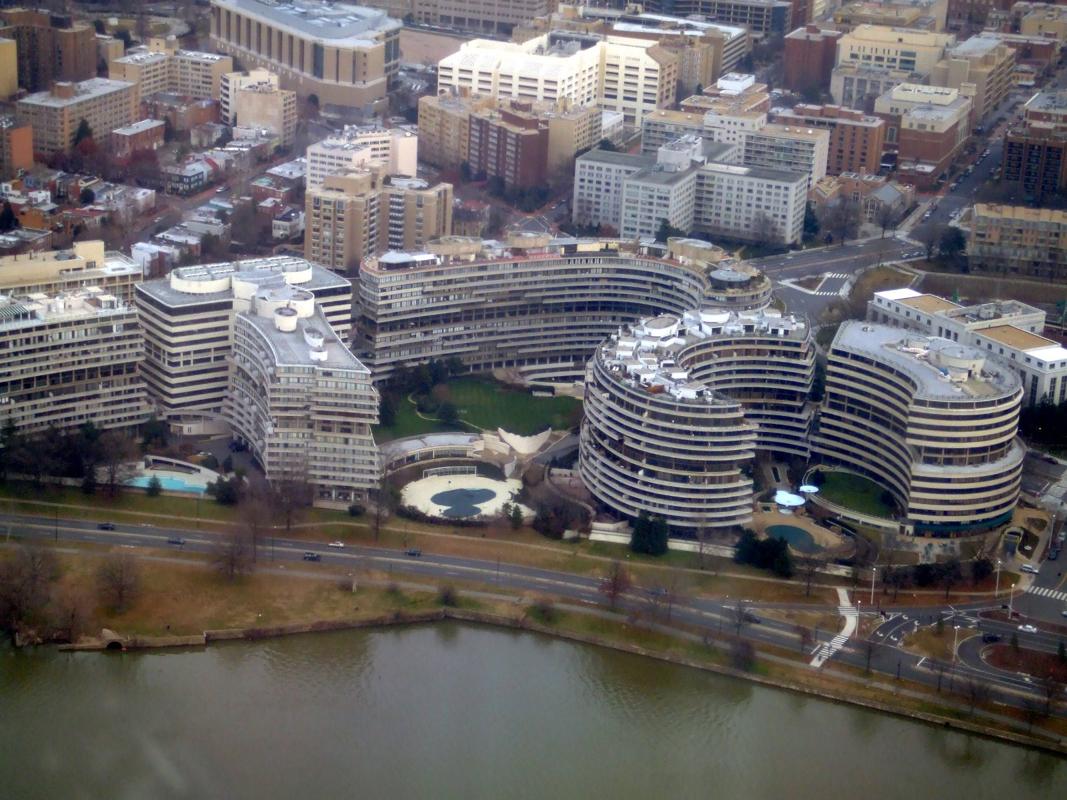
The Watergate complex on the Potomac, where the June 1972 burglary took place / Indutiomarus / Wikimedia Commons (Public Domain)
Hunt and Liddy then joined the campaign as planners for the Committee to Re-Elect the President. People mocked it as CREEP. The two men used the same playbook again. On 17 June 1972, five men were arrested at the Watergate complex on the Potomac. They had broken into Democratic National Committee headquarters. One was James McCord, the committee's own security chief. They were there to fix a broken wiretap they had planted weeks earlier and to photograph papers. Bugs, radios, and crisp hundred-dollar bills lay around the scene. The bills traced back to the Nixon campaign. The arrests changed little at first. Nixon won re-election four months later in a 49-state landslide.
 WeMoral - whistleblowing software
An anonymous, encrypted whistleblower reporting channel for your employees, suppliers and customers, with case management, the 7-day and 3-month deadlines, and audit logs. Be compliant with the whistleblowing laws that apply to you, in minutes.
A leaker at the top of the FBI
The Watergate burglary was, on paper, an FBI case. The bureau's Deputy Associate Director was William Mark Felt Sr., a thirty-year veteran. He had expected to take over the FBI when J. Edgar Hoover died in May 1972. Nixon passed him over. He gave the job to his own loyalist, L. Patrick Gray. Felt watched from the inside as Gray passed FBI evidence straight to the White House. He also watched Nixon's aides steer, slow, and second-guess the bureau's own work.
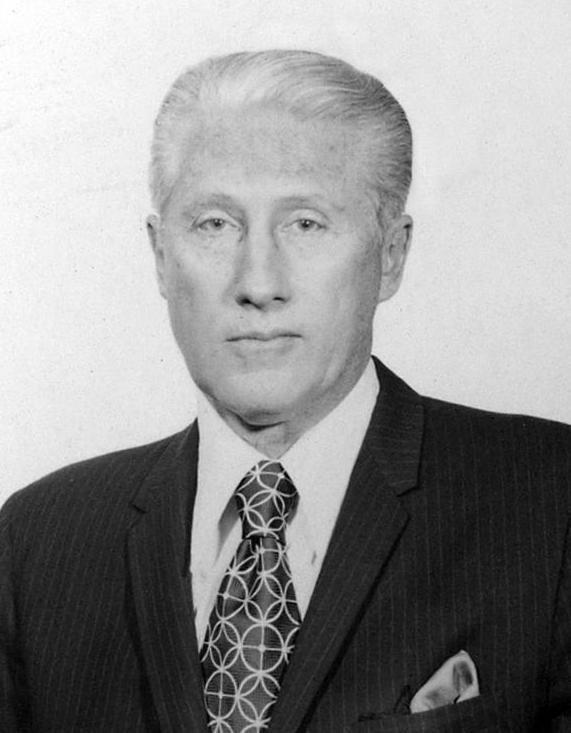
Mark Felt as FBI Deputy Associate Director, around 1972 / FBI / Wikimedia Commons (Public Domain)
Felt began meeting Bob Woodward, a young Washington Post reporter. They met in an underground parking garage in Rosslyn, Virginia. The two used a simple signal system. Woodward moved a flowerpot on his balcony to ask for a meeting. Felt drew a clock face in Woodward's copy of the New York Times to set the time. Woodward and his colleague Carl Bernstein never named their source in print. The Post's editors called him "Deep Throat". The name was a play on a pornographic film of the day. It also marked the fact that he spoke only on deep background. He confirmed leads, killed wrong ones, and pointed the reporters toward the money. That money trail linked the burglars to Nixon's campaign funds.
The cover-up unravels on tape
In February 1973, the Senate set up a select committee to look into the campaign. North Carolina Democrat Sam Ervin chaired it. Hearings opened in May. They ran for months on live television. The key witness was former White House counsel John Dean. In June 1973, he spent a week describing a cover-up that ran across the whole presidency. Then Nixon aide Alexander Butterfield dropped a side note under questioning. The president had taped every talk in the Oval Office since 1971.
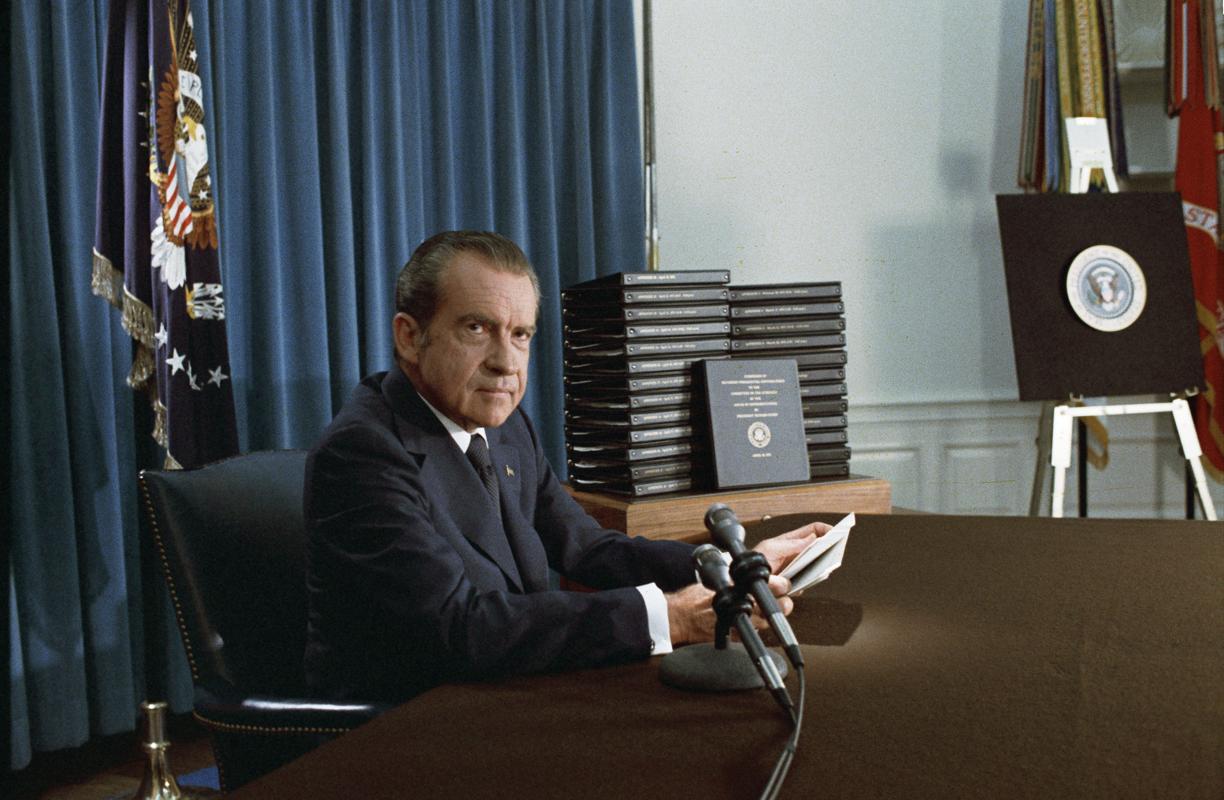
Nixon at his desk recording his televised address to the nation on Watergate, 22 April 1974, with stacks of tape transcripts at his side / Jack Kightlinger / Nixon Presidential Materials, NARA / Wikimedia Commons (Public Domain)
The tapes turned a he-said-he-said scandal into a recorded one. The fight over the tapes ran for more than a year. Then the Supreme Court ruled, on 24 July 1974, that Nixon had to hand them over. The vote was unanimous. On 5 August the White House released one recording. It was made on 23 June 1972, six days after the burglary. On it, Nixon told his chief of staff to have the CIA shut down the FBI's investigation. The press called it the "smoking gun". Ten Republicans on the House Judiciary Committee had voted against impeachment in committee. Now they said they would vote for it on the floor. Nixon's support collapsed within two days.
Resignation and pardon
On the evening of 8 August 1974, Nixon told the country he would resign at noon the next day. The next morning he gave a long, rambling farewell to White House staff in the East Room. Then he walked out to the South Lawn with his successor, Gerald Ford. He boarded the presidential helicopter. He flashed a two-fingered V-sign from the steps. It became one of the most photographed gestures of the century.
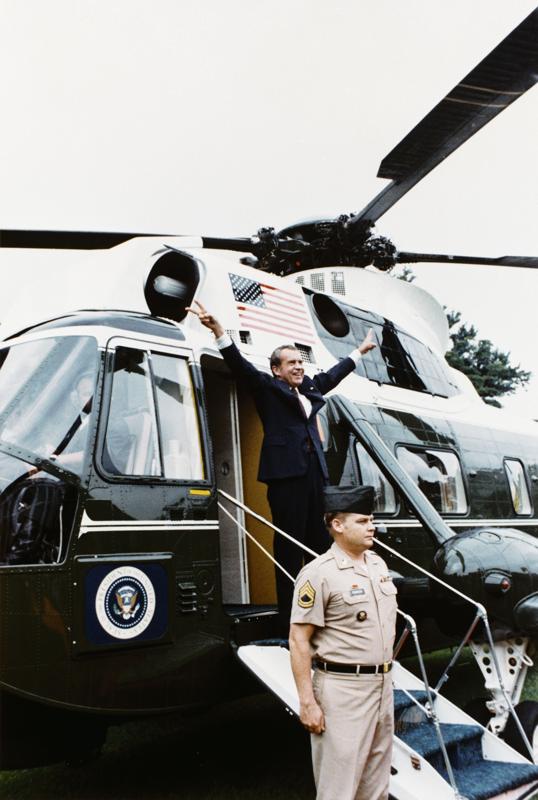
Nixon's V-sign as he boards Marine One on the South Lawn, 9 August 1974 / Robert L. Knudsen / White House Photo Office, NARA / Wikimedia Commons (Public Domain)
A month later, on 8 September 1974, Ford gave Nixon a "full, free, and absolute" pardon. It covered any federal crime from his presidency. The pardon spared Nixon a trial. It also cost Ford the 1976 election. Forty of Nixon's aides were not so lucky. Cabinet officers, campaign staff, lawyers, and the burglars all served real time. Attorney General John Mitchell, chief of staff H.R. Haldeman, domestic policy chief John Ehrlichman, and White House counsel Charles Colson all went to prison. Mitchell's own wife, Martha Mitchell, had tried to warn reporters about the cover-up that summer. Nixon's men held her in a hotel and drugged her to keep her quiet.
Why Felt stayed silent for 33 years
Through all of it, Felt said nothing in public. Books and articles named him as a suspected source for decades. He denied it under oath every time. Woodward and Bernstein had promised to protect their source until his death. They kept that promise. They held to it even after Felt began to show signs of dementia in his late eighties.
The reveal came from the source's own family, not from Woodward. On 31 May 2005, Vanity Fair published a piece by attorney John D. O'Connor. In it, Felt named himself in plain words. He was 91 and living in Santa Rosa, California.
"I'm the Guy They Called Deep Throat."
Mark Felt to John D. O'Connor, Vanity Fair, July 2005
The Washington Post and Bob Woodward confirmed the story within hours. Felt's daughter Joan said the family had pushed him to come forward. They wanted to set the record straight. They also wanted to land book and film deals while he was still alive to enjoy them.
Felt's complicated legacy
The hero story is uneasy in places. While Felt was passing tips to Woodward, he was also signing off on illegal break-ins. The targets were the homes of relatives and friends of Weather Underground fugitives. They were "black-bag jobs". They were the exact kind Felt had spent thirty years denying the bureau ever did. A federal grand jury charged him on 10 April 1978. He and another senior FBI official, Edward S. Miller, were convicted on 6 November 1980. The charge was conspiring to violate citizens' rights. The judge fined Felt $5,000 and gave him no jail time.
Less than four months later, on 26 March 1981, President Ronald Reagan pardoned both men. He wrote that they had acted "in good faith". So the man who took down a president for illegal spying was himself convicted of illegal spying. Then he was pardoned for it. He was a criminal under federal law for less than a year and a half. Felt died at home in Santa Rosa on 18 December 2008, aged 95.
Watergate's afterlife in books, screen, and law
Watergate has had a long life in culture. Woodward and Bernstein's All the President's Men (1974) became the textbook for a generation of reporters. It sits on any list of essential whistleblower books. The Alan Pakula film followed in 1976. It remains a staple of whistleblower cinema. Bernstein went back to that period in his 2022 memoir Chasing History. Garrett Graff's Watergate: A New History came out the same year. It was the first full one-volume account written with Felt's name already known, and a finalist for the Pulitzer Prize in History. Peter Landesman's 2017 film Mark Felt: The Man Who Brought Down the White House, with Liam Neeson, gave the leaker his first screen biography. HBO's 2023 series White House Plumbers, with Woody Harrelson and Justin Theroux as Hunt and Liddy, played the burglary as the dark farce it was.
The archives keep moving too. On 31 October 2018, after a lawsuit, the National Archives unsealed the Watergate "Road Map". It was a grand jury's 53-point report. The report had laid out the evidence against Nixon for the House Judiciary Committee in 1974. It had stayed under seal for forty-four years. The 50th anniversary of the resignation in 2024 brought another wave of files and documentaries. It also brought fresh arguments over what the case should mean for executive power.
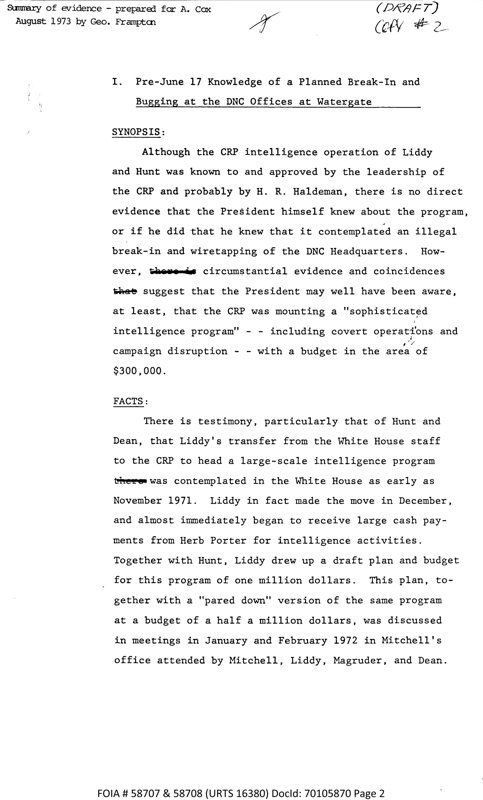
Page 2 of the Watergate "Road Map" summary of evidence prepared for special prosecutor Archibald Cox in August 1973, declassified by the National Archives in 2018 / National Archives (Public Domain)
Watergate also reshaped how Western democracies think about whistleblowers. The reporting Felt enabled showed something stark. A secret source can be the only check on a captured executive branch. Every later source took that lesson on board. Edward Snowden leaked NSA programmes. Frances Haugen handed internal Facebook papers to a Senate subcommittee. The rules that grew up to protect such sources owe a debt to "Deep Throat". Those rules include source-protection privilege, formal whistleblower laws, and secure intake channels. The US Whistleblower Protection Act (1989), the SEC bounty programme created by Dodd-Frank (2010), and the EU Whistleblower Directive (2019) are the quieter heirs of a man meeting a reporter in a parking garage.
Mark Felt and Deep Throat: frequently asked questions
Who was Deep Throat in the Watergate scandal?
Deep Throat was W. Mark Felt, the FBI's Deputy Associate Director. He was the bureau's number-two official during Watergate. He fed checked leads to Washington Post reporter Bob Woodward while staying anonymous. His identity stayed secret for 33 years.
Why was the Watergate whistleblower called Deep Throat?
Washington Post editors gave the source the codename. It was a play on the title of a 1972 pornographic film. It also marked the fact that Felt spoke only on "deep background", never for direct quotation.
Was Deep Throat a whistleblower?
Yes. Felt leaked from inside an FBI that the White House had captured. He exposed a cover-up he could not stop through official channels. That is the textbook definition of a whistleblower.
When was Deep Throat's identity revealed?
On 31 May 2005, Vanity Fair published a piece in which Felt, then 91, named himself in plain words. The Washington Post confirmed it within hours. Felt died in 2008, aged 95.
Did Mark Felt go to prison?
No. He was convicted in 1980 of authorising illegal break-ins at the homes of Weather Underground fugitives' relatives. That case was unrelated to Watergate. He received a $5,000 fine and no jail time. President Reagan pardoned him in 1981.
Mark Felt was a flawed, conflicted, partly self-serving civil servant. He still handed a free press the facts it needed to break a presidency. The Watergate story lasts for a reason. It reminds us that checks on power fail more often than they hold. When they do, the line between cover-up and accountability can come down to one person. It comes down to someone inside the building who decides to talk.
Researcher and data analyst in whistleblowing. Tells the stories of famous whistleblowers and the history behind their fight for accountability.