
Lue Elizondo went from AATIP chief to UAP whistleblower
Luis "Lue" Elizondo ran the Pentagon's program on UAP. He quit it in October 2017. Seven years later, on 13 November 2024, he testified at the second UAP hearing held by the US House Oversight Subcommittee on National Security. David Grusch had been a witness at the first one, sixteen months earlier. Under oath, Elizondo told lawmakers that "UAP are real" and that secret federal programs were running with no oversight from Congress.
His path is odd for a spy who goes public. He did not flee. He was not charged. He wrote a book that hit number one on the New York Times list. He named names from inside a hearing room. And he still splits the room. Fans call him the top UAP witness in years. Critics call him a salesman. He once showed a photo of a light bulb and called it a craft.
Key Takeaways
- Lue Elizondo is a former Pentagon intel officer. He ran the Advanced Aerospace Threat Identification Program (AATIP).
- He quit in October 2017 over what he called too much secrecy. He then gave three Navy UAP videos to the New York Times.
- His book Imminent hit number one on the New York Times list in August 2024.
- In November 2024 he told a House hearing the US runs a UAP reverse-engineering program with no oversight from Congress.
- His case helped drive a new UAP Whistleblower Protection Act, first filed by Rep. Tim Burchett in November 2024.
From the Bay of Pigs to the Pentagon
Elizondo's story starts with his family. His father, Luis Elizondo III, was a Cuban exile. He joined Brigade 2506, the CIA-backed unit that landed at the Bay of Pigs in 1961. Lue grew up with that story at the dinner table. He was born in Texas. He studied microbio at the University of Miami. He joined the US Army in 1995. The Army sent him to South Korea and Kuwait. He moved to private-side intel work when his service ended.
 WeMoral - whistleblowing software
An anonymous, encrypted whistleblower reporting channel for your employees, suppliers and customers, with case management, the 7-day and 3-month deadlines, and audit logs. Be compliant with the whistleblowing laws that apply to you, in minutes.
He kept moving as a civilian. He ran counterterror and counter-spy work in Afghanistan, Latin America, the Caribbean, and the Middle East. He spent time at Guantanamo Bay. In 2008 he joined the Pentagon. His new post was at the Office of the Under Secretary of Defense for Intelligence. That post gave him the access that would later shape his public life. He worked next to US Navy and CIA staff. He saw raw intel on threats that did not fit any normal box. He says he was pulled into a new program in 2009. That program was AATIP.
AATIP, the Tic Tac, and a quiet resignation
AATIP was a small Pentagon unit. Senate Majority Leader Harry Reid pushed it into being in 2007. The Defense Intelligence Agency ran it on about $22 million through 2012. Its job was to study odd sightings filed by US military pilots. Elizondo took over the UAP side of the work. Reid wrote in 2021 that "Lue Elizondo's involvement and leadership role in this program" was a matter of record.
The most famous case sat at the heart of the program. In November 2004, F/A-18 pilots from the USS Nimitz off the coast of California had a daylight run-in with a white, smooth, pill-shaped object. Commander David Fravor later called it a "Tic Tac". It had no wings, no exhaust, no visible flight surfaces. It moved in ways that broke every known flight rule. Sensors on the carrier group tracked it. A forward-looking infrared camera caught the clip later known as FLIR1. Two more clips, Gimbal and Go Fast, came from F/A-18s flying off the USS Theodore Roosevelt in 2015.
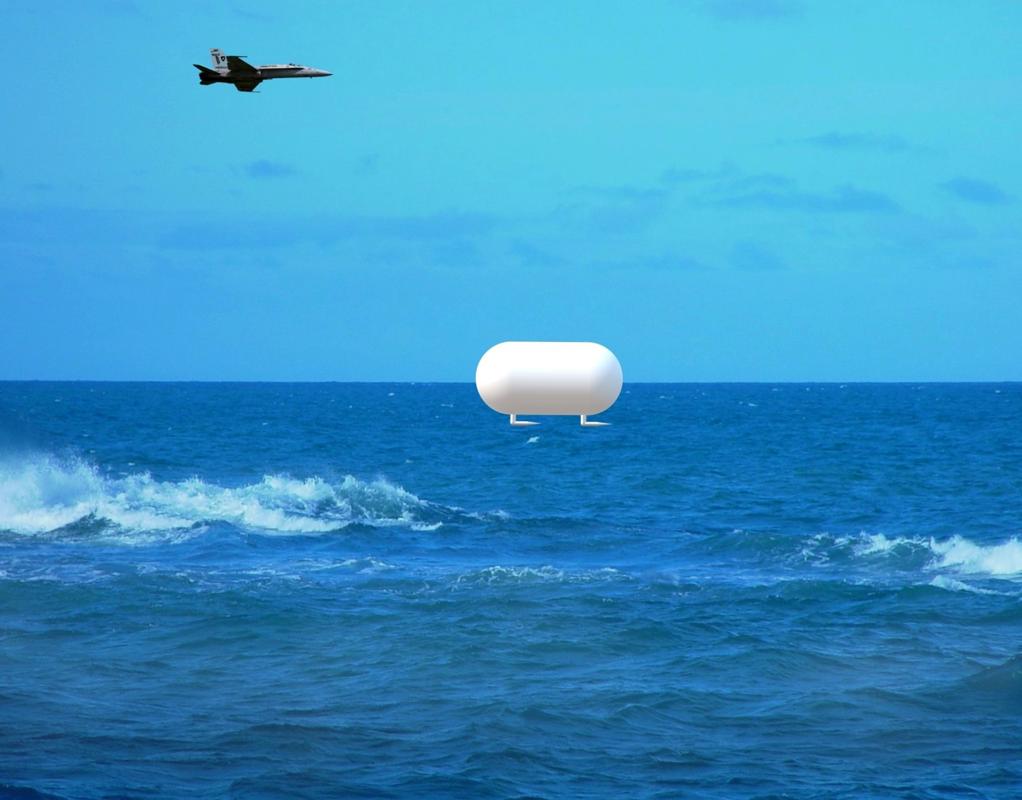
Illustration of the 2004 USS Nimitz "Tic Tac" case described by Commander David Fravor. Illustration by JMK ©JMK (CC BY-SA 4.0)
Elizondo handed in his quit letter in October 2017. The letter went to Defense Secretary James Mattis. It blamed "bureaucratic challenges and inflexible mindsets" inside the Department. He left with three Navy videos he said the Pentagon had cleared. He gave them to a small group of reporters. On 16 December 2017 the New York Times ran a long piece by Helene Cooper, Ralph Blumenthal, and Leslie Kean. It revealed AATIP and showed the FLIR1 and Gimbal clips. The Pentagon later said the videos had never been cleared. A later review found they were not classified.
After the Times story Elizondo joined To The Stars Academy of Arts and Science. Tom DeLonge, the former Blink-182 singer, led the new outfit. Elizondo became its Director of Global Security and Special Programs. He stayed for nearly three years. He left in late 2020 with former Deputy Assistant Secretary of Defense for Intelligence Christopher Mellon. The two said they wanted to lobby Congress directly. They did not want to spend their time on a private firm's stock price.
Imminent and the orb story at home
Elizondo's first book, Imminent: Inside the Pentagon's Hunt for UFOs, came out on 20 August 2024. William Morrow, a HarperCollins imprint, put it out. The Department of Defense read the draft and signed off on the cuts before the book was released. The book went straight to number one on the New York Times list. It also hit number one on the Sunday Times list in the UK. It is now a triple-crown bestseller.
The book makes big claims. Elizondo says the United States holds physical material from UAP crashes. He says four non-human bodies were pulled from Roswell in 1947. He paints a long arms race inside the security state. He says the work has been paid for through black programs with no proper oversight. The Pentagon's public stance is the opposite. It says there is no proof of alien activity. It says no reverse-engineering program exists.
The wildest part of the book is not about the Pentagon. It is about his own house. For seven years, Elizondo writes, his D.C.-area home was visited by green, glowing, basketball-sized orbs. They passed through walls. His wife Jennifer, his two daughters, and the neighbours all said they had seen them. The family called them "our friends from out of town." Jennifer told reporters she would watch a small green sphere drift down the hallway. It would pass straight through the plaster. Elizondo says he asked the FBI to check the house. He says the orbs followed his work, not him in person. None of this can be checked from outside. It is the oddest passage in any whistleblower memoir of the last ten years.
A second book is set for 27 August 2026. It is called Reckoning: The Unspoken Truth about UFOs and the Urgency of Now. Elizondo has lined up a long speaking tour, called Persona Non Grata, ahead of the launch.
What Elizondo told Congress in November 2024
The hearing was held on 13 November 2024. A second panel on tech and government joined in. The chairs were Rep. Nancy Mace (R-SC) and Rep. Glenn Grothman (R-WI). The title was direct. It was called "Unidentified Anomalous Phenomena: Exposing the Truth". Four witnesses gave evidence. They were Elizondo, retired Navy Rear Admiral Tim Gallaudet, former NASA boss Michael Gold, and reporter Michael Shellenberger.
Elizondo's opening was short and blunt. "UAP are real," he told the panel. "Advanced technologies not made by our government, or any other government, are monitoring sensitive military installations around the globe." He went further than he had on TV. He said the United States holds UAP tech. He said rival states hold the stuff as well. Chair Mace asked him if a federal reverse-engineering program existed. He said yes. He said it was running outside the formal oversight system in Congress.
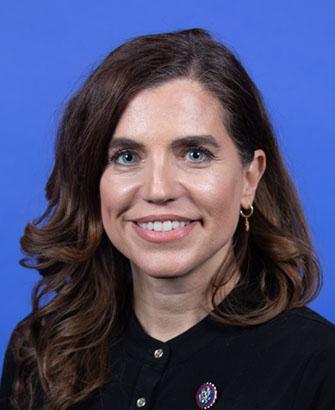
Rep. Nancy Mace, who chaired the 13 November 2024 House Oversight UAP hearing. Photo: US House of Representatives (Public Domain).
Payback was the second theme of his testimony. Elizondo told the room that he and former co-workers had given secret evidence to Pentagon and intel-world watchdogs. Many of them, he said, had then been hit by "a small cadre" inside the federal bureaucracy. He named "unwarranted criminal investigations, harassment and efforts to destroy one's credibility". He said his own career and his co-workers' security clearances had come under threat.
Mace pressed the obvious point. "If it's really no big deal and there's nothing there, why hide it from the American people?" Rep. Eric Burlison floated a process fix. He said lawmakers should lock UAP witnesses and AARO staff in the same secure room until the stories matched. Rep. Tim Burchett took the bill route. The day before the hearing, on 12 November 2024, he had filed the UAP Whistleblower Protection Act (H.R. 10111). It died in committee when the 118th Congress ended. Burchett and Rep. Anna Paulina Luna later refiled it as H.R. 5060 in the 119th Congress.
Grusch and Elizondo describe different programs. In July 2023, former Air Force and National Geospatial Intelligence Agency officer David Grusch told the same subcommittee that he had been briefed on a long-running UAP retrieval and reverse-engineering effort. He said he had spoken to forty witnesses. He had not seen the material himself. Elizondo's claims are more narrow and rest on his own AATIP work. Leslie Kean broke both stories. She has said the programs Grusch describes are "completely separate" from what Elizondo worked on. The two cases now travel together in the press anyway.
The skeptics: AARO, debunked photos, and the Intercept
Elizondo's name has been pushed back from three sides. The first is the Pentagon's own line. In June 2019, spokesperson Christopher Sherwood told The Intercept that Elizondo "had no responsibilities with regard to the AATIP program while he worked in OUSDI, up until the time he resigned". That line cut right across Elizondo's public bio. Harry Reid sided with Elizondo in 2021. He said the Pentagon was wrong. The Department has never pulled Sherwood's words back. So on the public record, what Elizondo did inside the Pentagon is still in dispute.
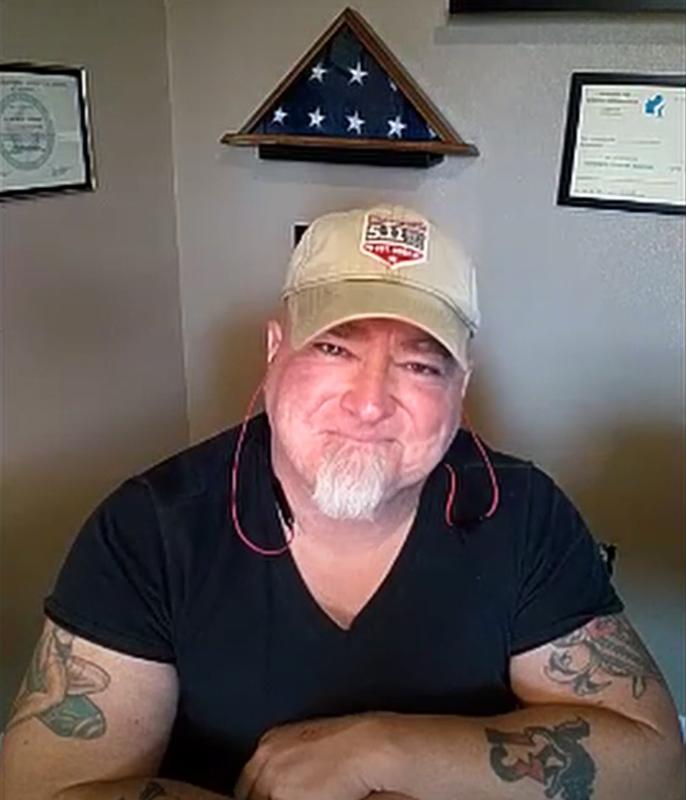
Luis "Lue" Elizondo during an on-camera interview. Photo by Max Moszkowicz ©Max Moszkowicz (CC BY 3.0)
The second front is image checks. Elizondo has shown photos in public talks that did not hold up on review. One image he linked to a Romanian embassy turned out to be a light fixture in someone's office. It had first been posted on Facebook in 2023. He showed a second image he said was a 600-foot disc. Analysts tagged it as a center-pivot irrigation rig on a US farm. The photos do not disprove his other claims. They do show that the bar for what he shows in public is lower than the bar his audience wants.
The third front is AARO, the Pentagon's All-domain Anomaly Resolution Office. AARO was set up in 2022. It is the US government's official desk for these reports. In its March 2024 historical record report, AARO said no probe, academic study, or government review had ever found proof of alien tech. The office said many famous sightings could be traced to secret human aerospace work. The most famous of those older claims is Bob Lazar's 1989 Area 51 story, which no probe has ever backed up. Sean Kirkpatrick, the first AARO director, has been openly hostile to the disclosure scene. Elizondo has been openly hostile back. The two stories cannot both be right at once.
Between 2022 and 2023, AARO looked into a tip from Elizondo himself. He had said files with alien evidence were left in a former Pentagon office. FBI agents searched and sealed the room. They found nothing of note. Elizondo says the files had been moved before the search.
What the case changed for UAP whistleblowing
Whatever the final verdict on Elizondo, his case has moved the legal frame around UAP disclosure. Two pieces of that shift stand out.
The first is the UAP Disclosure Act of 2023. Senate Majority Leader Chuck Schumer and Senator Mike Rounds drafted it. It was filed as an amendment to the 2024 National Defense Authorization Act. The text was based on the JFK Assassination Records Collection Act of 1992. The first version did three things at once. It set up a UAP records review board picked by the president. It set a 25-year clock for letting UAP records out. And it gave the federal government an eminent-domain power. The power would apply to any recovered non-human tech held by private firms. The version that became law dropped the eminent-domain clause. It also weakened the review board. The skeleton stays. The fight over what stays in is now annual.
The second piece is legal cover for whistleblowers. The UAP Whistleblower Protection Act would cover military staff, intel officers, and Pentagon contractors. It would also cover federal civilian contractors. The cover would apply to people who report UAP-linked programs or funding. Current federal whistleblower law does not. So the people most likely to know about a black UAP program have no shield. Air Force veteran Dylan Borland told a 2025 hearing he was blacklisted from intelligence work for over a decade after reporting a UAP, exactly the kind of payback the bill aims to stop. Elizondo himself had no such cover when he left in 2017. Neither did Edward Snowden in 2013. The pattern is the same across the intel world. Without a legal channel, people leak to the press or stay silent.
Lue Elizondo: frequently asked questions
Is Lue Elizondo a whistleblower?
He calls himself one. He has described acts of payback he has faced. He did not use a formal protected channel. He left government, gave Pentagon footage to the New York Times, and later testified to Congress under oath. Critics say a whistleblower must work inside the system first. Backers say there was no system that would have heard him.
What did Lue Elizondo do at the Pentagon?
He ran the UAP side of AATIP. He also worked in the Office of the Under Secretary of Defense for Intelligence. Senator Harry Reid backed up his role in 2021. The Pentagon's own 2019 statement says he had no formal AATIP job. The fight has never been settled on the public record.
What is in Lue Elizondo's book Imminent?
The book traces his career at the Pentagon and the work of AATIP. It says the United States holds recovered UAP material. It says secret reverse-engineering programs exist. It also tells a seven-year run of green-orb sightings at his own family home. Imminent hit number one on the New York Times list in August 2024.
What did Elizondo tell Congress on 13 November 2024?
He told the House Oversight Subcommittee that UAP are real. He said the United States holds non-human tech. He said rivals do as well. He said federal programs are running with no oversight from Congress. He also said a small group of officials had targeted UAP witnesses with criminal probes and threats.
How does Lue Elizondo differ from David Grusch?
Both told Congress that the United States holds recovered UAP material. Elizondo ran the public side of AATIP and showed the Navy videos. Grusch testified in 2023 as a newer insider in the intel world. Reporter Leslie Kean has said the programs they each describe are not the same.
Where does Lue Elizondo live?
He lives in the United States. He has not fled abroad. He has not been charged with any crime. Public reporting and his book place his family home in the Washington D.C. area.
The honest read on Elizondo is that his case sits on a knife edge. He is either the most important Pentagon insider to go public on UAP. Or he is a charming mid-level officer who has talked up what he saw. The public record does not yet settle the question. It does settle the knock-on effect. A number-one bestseller, on-the-record testimony, and a cross-party push for whistleblower cover have moved UAP out of the tabloid corner. The topic now sits on the standing agenda of Congress. The next people who walk into a hearing room will do so with legal cover Elizondo never had.
Researcher and data analyst in whistleblowing. Tells the stories of famous whistleblowers and the history behind their fight for accountability.