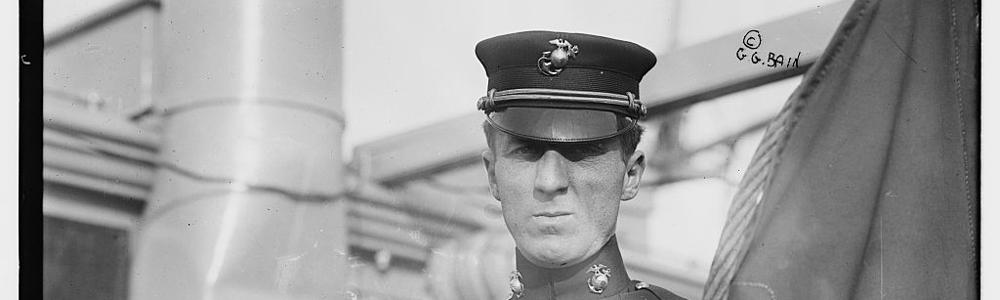
Smedley Butler exposed a Wall Street plot to overthrow FDR
Smedley Butler was the most decorated US Marine of his day, with two Medals of Honor. In 1934 he told Congress that a group of rich financiers had asked him to lead a private army against President Roosevelt. The press laughed it off as a hoax. Then a House committee checked his story and found the core of it was true.
Key Takeaways
- Smedley Butler was a two-time Medal of Honor Marine who turned against the wars he had fought.
- He testified that financiers wanted him to lead a coup against President Roosevelt.
- The scheme is known as the Business Plot of 1933.
- Newspapers mocked him, but a congressional committee backed up his account.
- No one was ever charged, and the story shows how easily a true warning gets ignored.
Who was Smedley Butler?
Smedley Butler was a US Marine Corps general and, at his death, the most decorated Marine in the country's history. He was born in 1881 into a Quaker family in Pennsylvania. He joined the Marines at 16 and served for more than 33 years. Few soldiers ever saw more combat or won more medals.
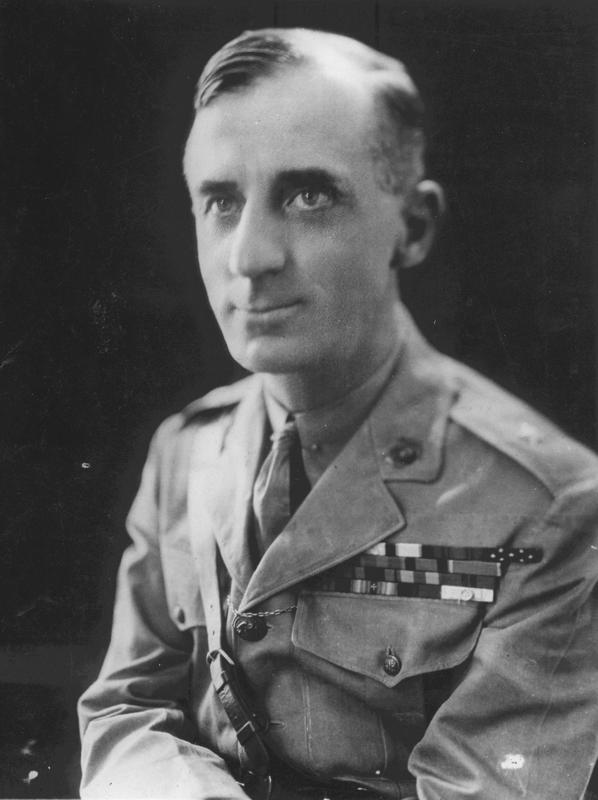
Smedley Butler in 1927, his medal ribbons on his chest.
Official USMC photograph, USMC Archives (CC BY 2.0)
He won his two Medals of Honor for separate battles. The first came at Veracruz, Mexico, in 1914. The second came a year later at Fort Rivière in Haiti. He also fought in the Philippines, in China during the Boxer Rebellion, and in the First World War. His men called him "Old Gimlet Eye".
 WeMoral - whistleblowing software
An anonymous, encrypted whistleblower reporting channel for your employees, suppliers and customers, with case management, the 7-day and 3-month deadlines, and audit logs. Be compliant with the whistleblowing laws that apply to you, in minutes.
Much of his career was spent in small wars across Central America and the Caribbean. People later called these the Banana Wars, because they often protected American business interests abroad. He served in Haiti, Nicaragua, Honduras, and Mexico. Butler led many of these missions himself, and in time he came to regret them out loud.
He also fought corruption at home. In the 1920s the mayor of Philadelphia put him in charge of the city police for two years. Butler raided crooked saloons and gambling dens and made powerful enemies fast. The job taught him how hard it is to clean up graft when rich men profit from it.
What was the Business Plot?
The Business Plot was an alleged 1933 scheme to overthrow President Franklin Roosevelt. According to Butler, a group of wealthy backers wanted to raise a private army of veterans and march on Washington. He would lead it. Roosevelt would stay on as a figurehead while real power moved to a new strongman.
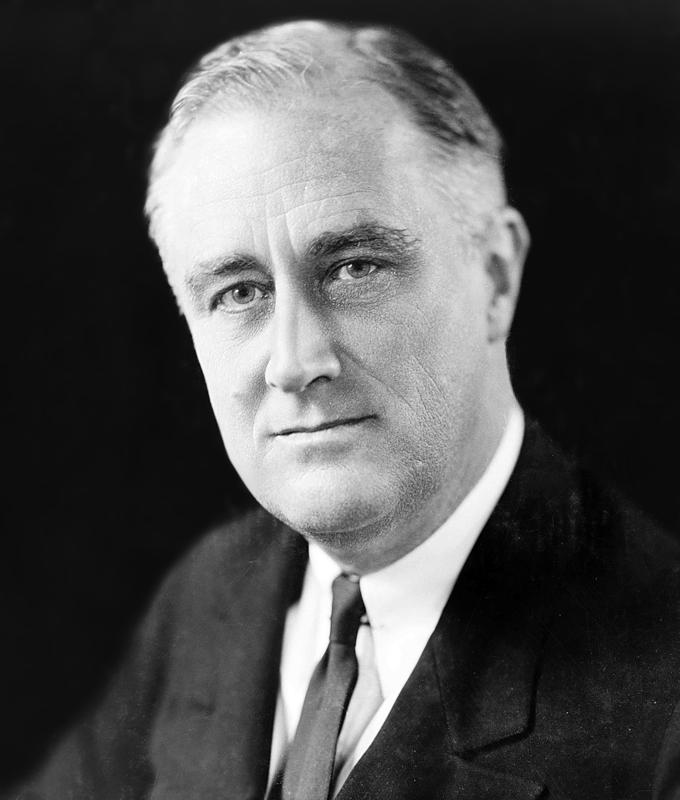
President Franklin D. Roosevelt, the man the plotters wanted to push aside.
Elias Goldensky, 1933 (public domain)
The plan had a cover story. The plotters would claim the president's health was failing. A new post, Secretary of General Affairs, would take charge of the country. Butler would hold that job. It would sit above the cabinet and answer to almost no one.
The timing made the idea less crazy than it sounds. The country was deep in the Great Depression. Banks had failed and millions were out of work. Some rich men feared Roosevelt's New Deal and watched strongmen rise in Europe. A march on Washington was not the stuff of pure fantasy.
How the plotters tried to recruit him
The plotters chose Butler because veterans loved and trusted him. Two men did the asking. A bond salesman named Gerald MacGuire and an American Legion figure named Bill Doyle first met him in 1933. Over many months, the pitch grew from vague talk into a hard plan.
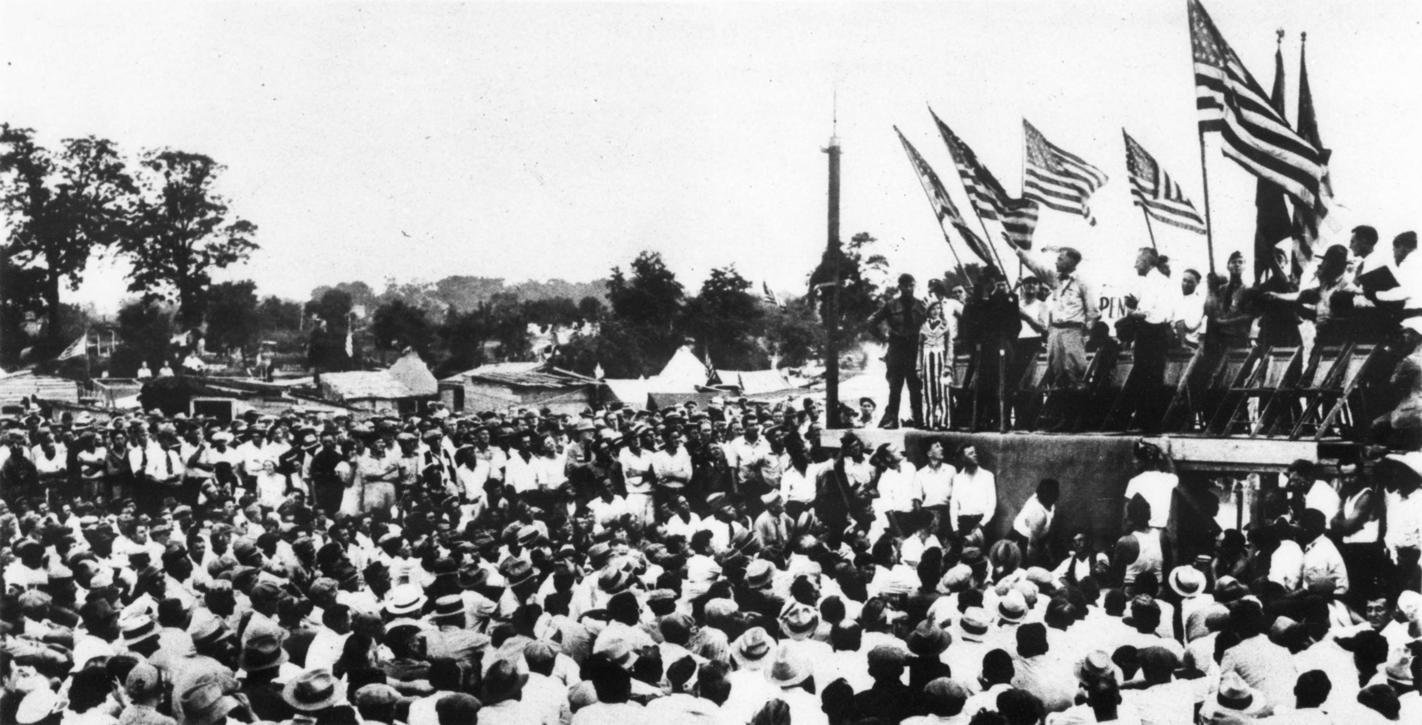
Butler speaking to Bonus Army veterans near Washington in 1932. His pull with old soldiers is just what the plotters wanted.
Wide World (public domain)
MacGuire said the money was ready. Butler later testified that the plan called for an army of up to 500,000 men and millions of dollars in funding. One backer named in the affair was Robert Sterling Clark, an heir to the Singer sewing machine fortune. The cash, MacGuire claimed, would not be a problem.
MacGuire had even gone abroad to study the model. He looked at veterans' groups in Europe that had backed fascist leaders, such as the Croix de Feu in France. He wrote home about what he saw. Those letters later helped prove that the talk was real, not just a daydream.
Why Butler reported it to Congress
Butler reported the plot because he was loyal to the country, not to the men with money. He let the plotters keep talking so he could learn the full plan. He wrote down names, sums, and dates. Then he carried what he knew to people who could act on it.
He first confided in a reporter he trusted, Paul Comly French. French met MacGuire too and heard much the same story. That gave Butler a second witness. It also meant the press could not bury the tale if powerful people leaned on it.
In November 1934 Butler testified under oath before a House committee. It was the Special Committee on Un-American Activities, known as the McCormack-Dickstein Committee. He named MacGuire and laid out the whole scheme. He did this knowing that rich and connected men would call him a liar.
What the committee found and what the press said
The committee found that Butler told the truth about the core of the plot, but it punished no one. Its final report in 1935 said the attempts "were discussed, were planned, and might have been placed in execution when and if the financial backers deemed it expedient." Staff dug up bank records and letters that matched his account.
You can read the committee's own work in the public archive. The hearing record, The Plot to Overthrow FDR, is held by the Internet Archive. It shows how the staff checked Butler's claims against MacGuire's paper trail. The Government Accountability Project lists Butler among the whistleblowers who shaped US history.
The newspapers were brutal at first. The New York Times called the affair "a gigantic hoax" and a "bald and unconvincing narrative". The named backers denied everything. No banker or businessman was ever charged, and the biggest names were never even called to testify.
This is the part that should worry anyone who reports wrongdoing. Butler had a spotless record and two Medals of Honor, and he was still mocked as a crank. Being right is not enough when the people you accuse are rich and well connected. Other famous whistleblowers met the same wall of doubt.
| Whistleblower | What they warned about | First reaction |
|---|---|---|
| Smedley Butler | A 1933 plot to sideline FDR | Press called it a hoax |
| Martha Mitchell | The Watergate cover-up | Smeared as unstable |
| Frank Serpico | Police corruption in New York | Shunned by fellow officers |
Why War Is a Racket made him a whistleblower twice over
Butler did not stop at the Business Plot. In 1935 he published a short book called War Is a Racket. In it he argued that many American wars were fought to enrich a few firms, not to keep people safe. He wrote it from the inside, as the man who had led those fights.
His most famous line came from a 1933 speech that fed the book. "I was a racketeer, a gangster for capitalism," he said of his own career. He claimed he had been a "high class muscle-man for Big Business". Coming from the most decorated Marine alive, the words landed hard.
"War is a racket. It always has been. It is possibly the oldest, easily the most profitable, surely the most vicious."
Smedley Butler, War Is a Racket, 1935
The book made him a hero to peace groups and a problem for the military he had served. He spent his last years speaking out against profiteering and needless war. He died in 1940, still warning anyone who would listen. His small book has never gone out of print.
Smedley Butler: frequently asked questions
What did Smedley Butler expose?
He exposed the Business Plot, an alleged 1933 scheme by wealthy backers to raise a private army and push President Roosevelt aside. He testified about it to a House committee in 1934. He also exposed war profiteering in his 1935 book War Is a Racket.
Was the Business Plot real?
A House committee found that Butler's core account was true and that the plan had been discussed and planned. It did not prove every detail, and no one was charged. Historians still argue over how close the plot ever came to action.
Did anyone go to prison for the Business Plot?
No. No banker, businessman, or organizer was charged. The committee verified much of Butler's story but called none of the biggest names to testify. The matter ended with a report and nothing more.
Was Smedley Butler a whistleblower?
Yes. He came forward about serious wrongdoing in the public interest, which is the heart of whistleblowing. He risked his good name to warn the country, and he was mocked for it before he was believed.
What is War Is a Racket about?
It argues that war is often run for private profit. Butler drew on his own career to show how a few firms gain while soldiers and taxpayers pay. The book is still read today as an early warning about the business of war.
Conclusion
Smedley Butler had every shield a whistleblower could want. He had medals, fame, and a record no one could question. Power still found him easy to laugh off. Even the strongest witness can be drowned out when money and mockery line up against him.
His warning was checked and largely confirmed, yet nothing happened to the men he named. That gap between proof and consequence is the hardest part of his story. It is the same gap that still tempts honest people to stay quiet, and the same reason a safe way to report wrongdoing matters so much.

Researcher and data analyst in whistleblowing. Tells the stories of famous whistleblowers and the history behind their fight for accountability.