Bartolomé de las Casas reported the conquistadors to the king
Bartolomé de las Casas was a Spanish colonist who turned on the conquest of the Americas. He had owned native workers himself. Then he gave them up, became a friar, and spent fifty years telling the king what the conquistadors were really doing. His report helped change the law in 1542.
Key Takeaways
- Las Casas was one of the first people to expose the abuse of native people in the Americas.
- He once held an encomienda himself, then gave it up and turned against the whole system.
- His book reported the killings straight to the Spanish Crown.
- His campaign helped push Charles V to pass the New Laws of 1542, which banned native slavery.
- Colonists fought back hard, and much of the reform was undone within three years.
Who was Bartolomé de las Casas?
Bartolomé de las Casas was a Spanish priest and friar who became the loudest critic of his own country's conquest of the Americas. He was born in Seville in 1484 and sailed to the Caribbean as a young man. The Crown later gave him an official title that he wore for the rest of his life, Protector of the Indians.
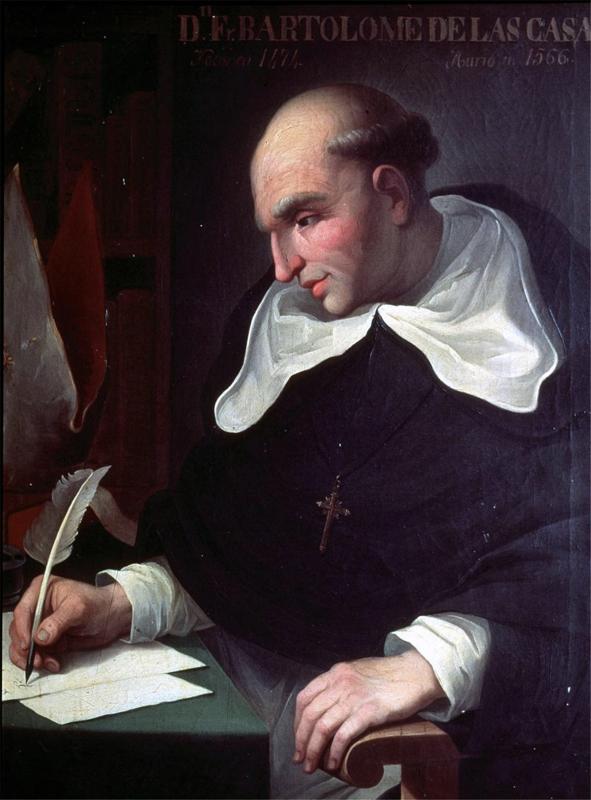
Bartolomé de las Casas, the friar who spent half a century reporting the conquest to the Spanish Crown.
Anonymous, 16th century (public domain)
He arrived on the island of Hispaniola in 1502. Like other settlers, he was handed an encomienda. That was a grant of land and of the native people who lived on it. The people had to work for him. In return he was meant to protect them and teach them the faith. In practice it was forced labour.
 WeMoral - whistleblowing software
An anonymous, encrypted whistleblower reporting channel for your employees, suppliers and customers, with case management, the 7-day and 3-month deadlines, and audit logs. Be compliant with the whistleblowing laws that apply to you, in minutes.
He took part in the conquest of Cuba in 1513. He saw villages burned and people killed for sport. For a while he looked away, as most settlers did. He was a priest by then, one of the first ordained in the new colonies, yet he still held native workers of his own.
From encomienda holder to accuser
The turn came in 1514. While preparing a sermon, Las Casas read a line of scripture that stopped him cold. It warned that to rob the poor was to spill their blood. He looked at his own hands and saw a slaveholder. He decided to give it all up.
He freed the native people in his charge and handed back his land. Then he started to fight. He sailed to Spain again and again to argue their case at court. He made enemies of nearly every settler in the Americas, because he was attacking the very thing that made them rich.
In 1516 the regent of Spain, Cardinal Cisneros, gave him a formal job. He was named Protector of the Indians. It came with a small salary and a huge task. He was meant to report abuse and defend native people before Spanish officials. In 1523 he joined the Dominican order as a friar.
What did A Short Account of the Destruction of the Indies say?
It was a short, brutal report that Las Casas wrote in 1542. It listed massacre after massacre across the Caribbean and Central America. He named the methods plainly. People were burned, hanged, fed to dogs, and worked to death in mines. He wrote it to shock the Crown into acting.
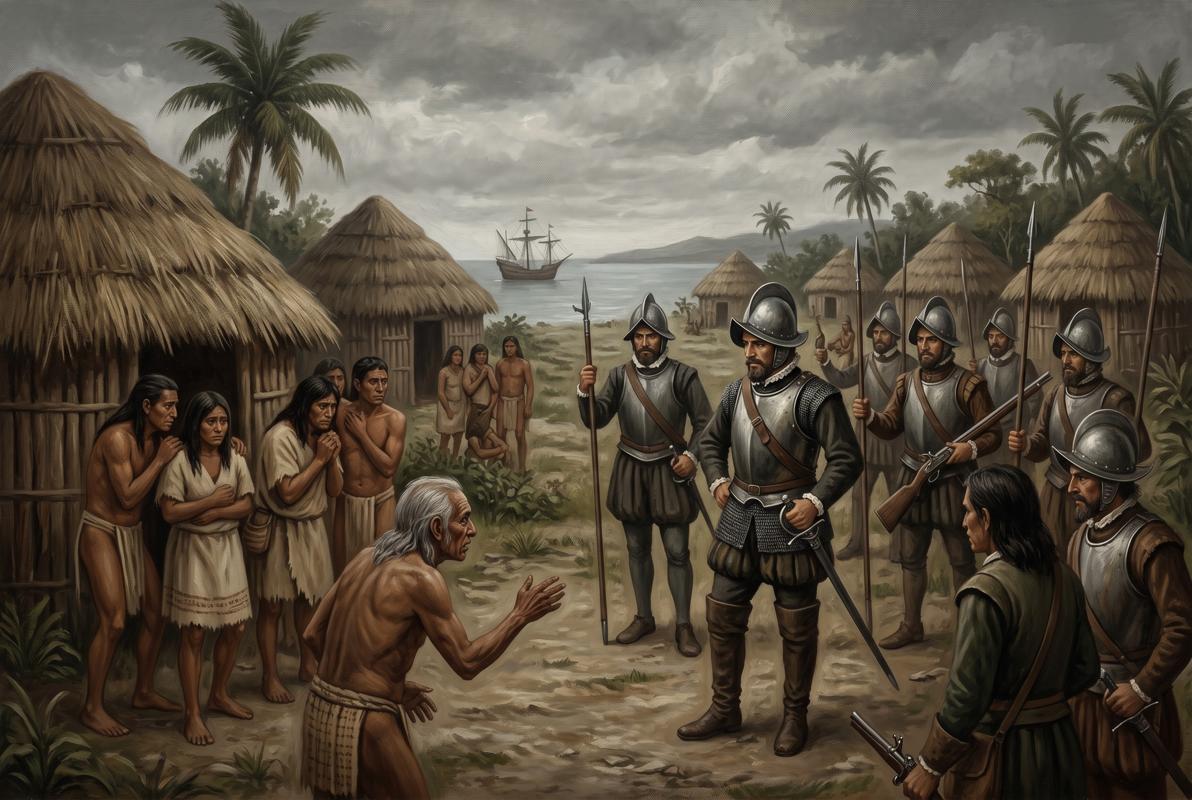
The conquest Las Casas set out to document, settler against native across the early colonies.
The book was addressed to the future king, Prince Philip. Las Casas wanted the man who would soon rule Spain to know what was done in his name. He had seen much of it with his own eyes. The rest he gathered from other priests and eyewitnesses over forty years.
His numbers, though, were not careful. Las Casas claimed that many millions of native people had died. Most historians think he inflated the totals to drive his point home. The true toll was huge, driven by disease as much as by violence, but his figures read as a weapon, not a census. That is worth holding in mind as you read him. In the same year he also handed the Crown a formal statement of his views, now kept by the Library of Congress.
How a friar's report reached the king
Las Casas did not just publish and hope. He carried his case straight to the top. He briefed officials, sat on royal panels, and pressed the emperor in person. In 1542 the effort paid off. Charles V signed a sweeping set of reforms that became known as the New Laws.
The New Laws were signed on 20 November 1542. They banned the enslaving of native people. They blocked any new encomiendas. And they ordered that existing grants end when their holder died, so the land would slowly return to the Crown. It was the strongest action Spain had ever taken for the people of its colonies.
| Rule | Before the New Laws | After 1542 |
|---|---|---|
| Native slavery | Widely allowed in practice | Banned outright |
| New encomiendas | Granted to settlers | No new grants |
| Existing encomiendas | Passed to heirs | End at the holder's death |
| Native people as carriers | Forced to haul loads | Barred except in real need |
On paper this was a win few people who report wrongdoing ever see. One man named a crime, and the most powerful ruler in Europe rewrote the law because of it. Las Casas had turned a moral argument into hard policy.
The colonists fought back
The reform did not hold. Settlers across the Americas lived off forced native labour, and the New Laws threatened their wealth. They resisted at once. In Peru the anger boiled over into open revolt, and a royal viceroy was killed. The Crown blinked.
In 1545, only three years after the laws were signed, the Crown scrapped the rule that ended encomiendas at the holder's death. That was the part the settlers hated most. With it gone, the system rolled on for generations. Las Casas had won the law, then watched its core be torn out.
He kept fighting anyway. As bishop of Chiapas, in what is now southern Mexico, he tried to enforce what was left. He told his priests to refuse absolution to settlers who would not free their slaves. The local Spanish hated him for it. He soon sailed back to Spain to press the case from there.
Were the indigenous people human? The Valladolid debate
In 1550 the king did something remarkable. He paused all new conquests and called a formal debate on whether they were just. It was held at Valladolid. On one side stood a scholar, Juan Ginés de Sepúlveda, who argued the native people were natural slaves. On the other side stood Las Casas.
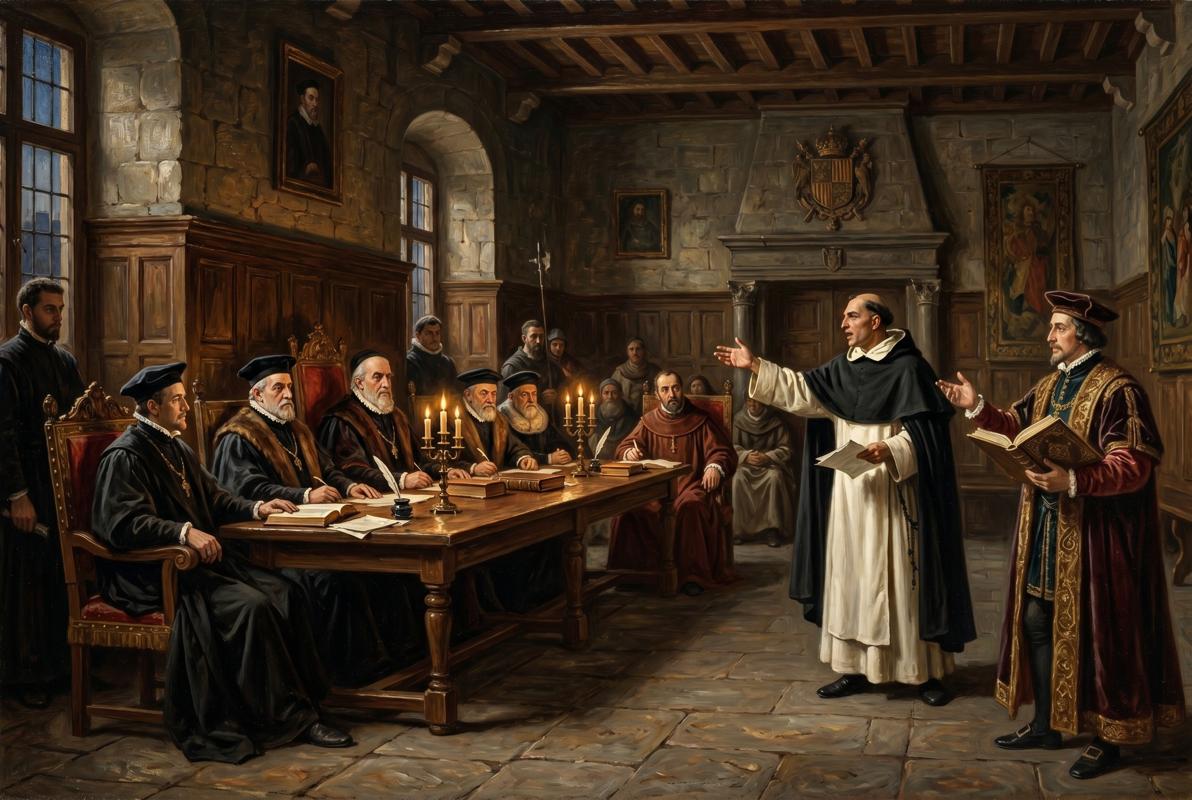
The Valladolid debate of 1550, where Spain stopped to ask whether the people it conquered had rights.
Sepúlveda said the conquest was lawful. He claimed the native people were so backward that Spain had a right to rule them by force. Las Casas tore the idea apart. He argued they were fully rational and fully human. They had cities, laws, and faith of their own, and no one had the right to enslave them.
No clear winner was ever declared, and both sides claimed victory. Still, the debate mattered. A European empire had paused to ask out loud whether the people it conquered were human beings with rights. Las Casas had forced that question into the open, and his answer slowly shaped Spanish law. You can read more about the Valladolid debate at History Today.
The blind spot he later renounced
Las Casas was no plaster saint. Early in his campaign he suggested a terrible fix. To spare the native people, he proposed bringing enslaved Africans to do the work instead. At the time he saw it as the lesser evil. He was wrong, and he came to know it.
Later in life he turned on his own idea. In his History of the Indies he wrote that African slavery was as unjust as the native slavery he fought. He said he had not seen it clearly before, and that he regretted the advice. Few men of his age admitted such a thing in writing.
This is part of why he still matters. He did not start as a hero. He grew into one by changing his mind when the facts demanded it. The same honesty that made him doubt the conquest later made him doubt himself.
Bartolomé de las Casas: frequently asked questions
Was Bartolomé de las Casas a whistleblower?
In spirit, yes. He saw serious wrongdoing from the inside, gathered the proof, and reported it to the people who could stop it. He had no legal shield and no reward. He risked his good name and his safety to put the truth in front of the Crown. That is the heart of what whistleblowing means.
What did the New Laws of 1542 change?
They banned the enslaving of native people and blocked any new encomiendas. They also ordered that existing grants end when their holder died. The aim was to wind the system down over time. Settler revolts forced the Crown to undo the inheritance rule in 1545.
Did Las Casas support slavery?
For a time he did. Early on he proposed bringing enslaved Africans to spare the native people. He later called that advice a grave mistake and wrote that African slavery was just as unjust. His change of heart is one of the most honest reversals of his age.
The very report that made Las Casas famous was later turned against his own country. Across Protestant Europe, printers seized on his account and reprinted it for their own ends. England and the Netherlands used it as anti-Spanish propaganda. It fed what became known as the Black Legend, the idea that Spain alone was uniquely cruel.
That is the strange fate of many people who tell hard truths. The truth rarely stays in their hands. Others pick it up and use it for their own ends, for praise or for attack. Las Casas wanted to save lives and reform an empire. He managed some of that. He also handed Spain's rivals a stick to beat it with for centuries. His record is still argued over today, and that alone shows how much what he reported still matters.

Researcher and data analyst in whistleblowing. Tells the stories of famous whistleblowers and the history behind their fight for accountability.