What Chelsea Manning's case reveals about whistleblower protection
Chelsea Manning gave more than 700,000 secret files to WikiLeaks in 2010. Many people call her a whistleblower. A military court called it espionage. Her case shows the wide gap between doing what feels right and being protected by the law when you report wrongdoing.
Key Takeaways
- Manning was a US Army analyst who sent about 700,000 classified documents to WikiLeaks in 2010.
- A military court convicted her under the Espionage Act and handed down a 35-year sentence.
- President Obama commuted her sentence in 2017, but he did not pardon her.
- US whistleblower law never covered her, because it leaves out military and intelligence leaks of classified files.
- The EU whistleblowing law would not protect her either, since it excludes national security.
What exactly did Chelsea Manning do?
Chelsea Manning was a US Army intelligence analyst posted to Iraq. In early 2010 she copied large sets of secret records and passed them to WikiLeaks. The files covered the wars in Iraq and Afghanistan, along with a quarter of a million US diplomatic cables. She did it because she felt the public had a right to see them.

Chelsea Manning
©Tessa Bury (CC BY 4.0)
The most famous item was a 2007 video later titled Collateral Murder. It showed a US Apache helicopter crew firing on people in Baghdad, including two Reuters staff. Manning also handed over the Iraq and Afghan War Logs and the State Department cables. Together they formed the largest leak of classified records in US history at the time.
 WeMoral - whistleblowing software
An anonymous, encrypted whistleblower reporting channel for your employees, suppliers and customers, with case management, the 7-day and 3-month deadlines, and audit logs. Be compliant with the whistleblowing laws that apply to you, in minutes.
The records held hard numbers. The war logs pointed to thousands of civilian deaths that had gone unreported. They also described cases of detainee abuse that were never followed up. To Manning, they were proof of a war the public did not fully understand.
She was arrested in May 2010. A former hacker named Adrian Lamo had talked with her online, then reported her to the Army. In those chats Manning explained what drove her.
"I want people to see the truth, because without information, you cannot make informed decisions as a public."
Chelsea Manning, chat logs with Adrian Lamo, 2010
Was she pardoned?
No. President Barack Obama commuted her sentence on 17 January 2017. A commutation cuts a sentence short. It does not wipe out the conviction the way a pardon would. So Manning still carries a felony record. She walked free on 17 May 2017, after about seven years behind bars.
The difference matters here. Her 35-year term was the longest a US court had ever given for a leak to the media. The commutation ended the prison time, but it left the verdict in place. In the eyes of the law she was, and still is, a convicted leaker.
Obama set out his thinking at the time. He said Manning had taken responsibility for her acts and had served a tough sentence already. He called the original 35 years far out of step with what other leakers received. A commutation, rather than a pardon, let him cut the prison time while leaving the conviction to stand.
Leaking versus protected whistleblowing
A whistleblower reports wrongdoing through a path the law protects. A leak sends secret information outside any approved channel. Both can spring from the same honest motive. But the law does not weigh the motive first. It asks a colder question: who did you tell, and does the law shield that route?
This is why Manning sits in two boxes at once. To much of the public she is a whistleblower who exposed abuses in a war. To the courts she was a soldier who moved classified files to people with no clearance to hold them. The word you pick is partly moral. The legal category is fixed, and it was never in her favour.
A simple contrast makes the line clear. Picture an accountant who finds fraud and reports it to a financial regulator. The law shields that worker from being fired. Manning had no equal route for war secrets. The safe channels could not reach the public, and the channel that could reach the public was not safe.
Why the Espionage Act gave her no defense
Manning was charged under the Espionage Act of 1917, the law used against most US leakers. It carries a harsh catch. You cannot argue that your leak served the public good. The judge would not let Manning tell the court why she acted, because under this law a good motive is simply not a defense.
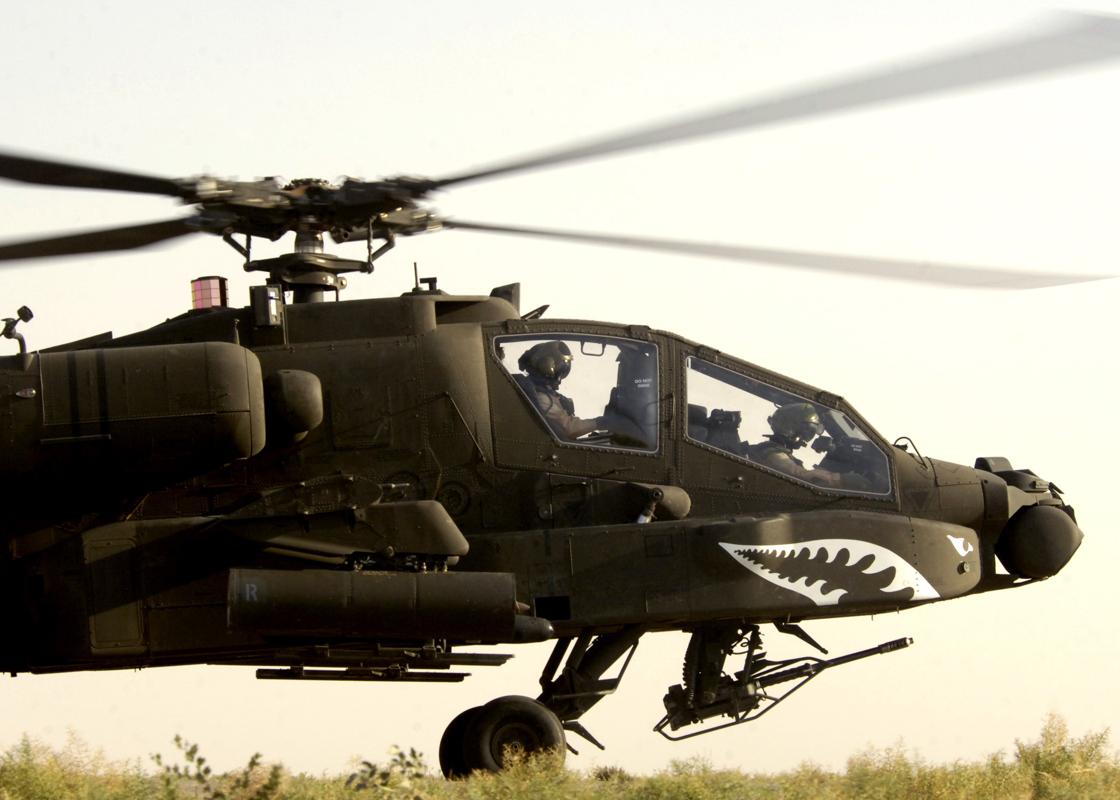
A US Army AH-64 Apache over Iraq. A 2007 Apache gunsight video was among the records Manning passed to WikiLeaks.
Courts read the act narrowly on purpose. The government does not have to prove the leak hurt national security. The defendant cannot argue the files were wrongly stamped secret in the first place. As the Electronic Frontier Foundation notes, no leaker has ever won an acquittal by showing the public gained from the disclosure. Manning said as much in her own statement to the court.
"I believed that if the general public, especially the American public, had access to the information, this could spark a domestic debate on the role of the military and our foreign policy in general."
Chelsea Manning, statement to her court-martial, 2013
Her case is not unusual in this respect. The same law has been used against other recent leakers, including Edward Snowden and Reality Winner. Each one hit the same wall. The court weighs what was disclosed, not the reason behind it. Intent only enters the room at sentencing, once the verdict is already set.
Why US whistleblower law did not cover her
The US does have a Whistleblower Protection Act. But it shields federal civilian staff who report through official channels. It does not protect soldiers or intelligence workers who leak classified files to the outside world. Manning fell straight into that gap, and the gap was not an accident.
Soldiers have a separate route. They can take concerns to a commander, a Defense Department inspector general, or the intelligence committees in Congress. Those paths carry some protection. None of them lets a service member hand secret files to a publisher. When Manning later argued the First Amendment should shield her, the Army appeals court rejected the claim and upheld her conviction.
Intelligence staff have their own channel too. They can take a concern to an inspector general, or to the congressional committees that handle secrets. That path can protect them. The moment the same material goes to a reporter, though, the protection falls away. The law treats a leak to the press as the very act it sets out to punish.
The routes open to her make the point plain. The channels that carried legal protection, her chain of command, an inspector general, the intelligence committees, could not put anything before the public. The one route that did reach the public, the press, carried no protection at all.
Would the EU Whistleblowing Directive have protected her?
The European Union passed a strong whistleblower law in 2019. It makes most employers set up safe internal channels for reports. It guards people who flag breaches of EU law from being fired or punished. Yet even this law would not protect a case like Manning's.
The EU Whistleblowing Directive tells firms with 50 or more workers to run a proper reporting channel. It sets out three steps in order: report inside first, then to a state authority, then to the public. But Article 3 carves out national security and classified defense files. A soldier leaking war records sits outside its scope. The law that fixed so much for ordinary workers would still leave Manning unprotected.
Even for the breaches it does cover, the directive sets conditions. A worker is meant to try the internal channel first. They can go to the public only if that fails, or if there is a clear and urgent danger. In return, a worker who reports in good faith cannot lawfully be fired or punished for it. The aim is to catch wrongdoing early and inside, before it ever has to become a leak.
What a secure internal channel changes
Most whistleblowers are not soldiers holding war secrets. They are workers who spot fraud, safety risks, or abuse on the job. For them, a safe way to report inside the organisation changes everything. A trusted channel lets someone raise the alarm early, without quitting and without going to the press.
Every account of Manning's story notes the same thing. She felt she had no route she could trust, so she went outside. Good whistleblowing software is built to remove that dead end. Tools like WeMoral give staff an anonymous, encrypted way to report, track what happens next, and shield the person who speaks up from payback.
A trusted channel also sends a signal. When people believe a report will be taken seriously and kept private, they tend to use the front door. Most never reach the stage where a leak feels like the only option left.
There is a clear limit here, though. A reporting channel handles fraud, harassment, and safety failures, the cases that fill most company hotlines. It was never meant to move classified military files, and it would not have covered what Manning released. That part stays a matter for national-security law, which is exactly where her case landed.
Manning's story sits in an awkward place. The public calls her a whistleblower. The law called her a spy. She reached millions of readers, yet she never had a route that both reached the public and kept her safe. That gap is still open today for anyone who holds a secret the law was never built to let them share. Manning told her own version of events in the 2022 memoir README.txt.
Researcher and data analyst in whistleblowing. Tells the stories of famous whistleblowers and the history behind their fight for accountability.