
Is it safe to be a whistleblower?
A decade ago, asking whether it is safe to be a whistleblower mostly meant guessing. Today there are real numbers, real court rulings, and real cases. Some are encouraging, some are sobering. The honest answer in 2026 is that protections are much stronger than they were five years ago, and reprisals still happen anyway. That gap is the whole story.
The directive is now law across the EU
The EU Whistleblower Protection Directive (2019/1937) sets a floor for every member state: confidential internal channels at any organisation with 50 or more employees, a seven-day acknowledgement of the report, a three-month deadline to give the whistleblower feedback on the follow-up, an explicit ban on retaliation, and financial penalties for employers who breach those duties.
The directive entered into force on 17 December 2021, and although the original transposition deadline was missed in many capitals, every EU member state has since adopted national whistleblower legislation. The European Commission did not let the late ones off lightly. In rulings handed down on 6 March 2025, the Court of Justice of the European Union imposed lump-sum fines on member states that had failed to transpose on time, with one penalty alone exceeding €30 million. The signal to governments and employers is unambiguous: this is not optional.
For someone considering a report, the practical consequence is that anyone working at a company of meaningful size, anywhere in the EU, now has a written legal channel, a written legal timeline, and a written legal protection against being fired, demoted, blacklisted, or harassed for using it.
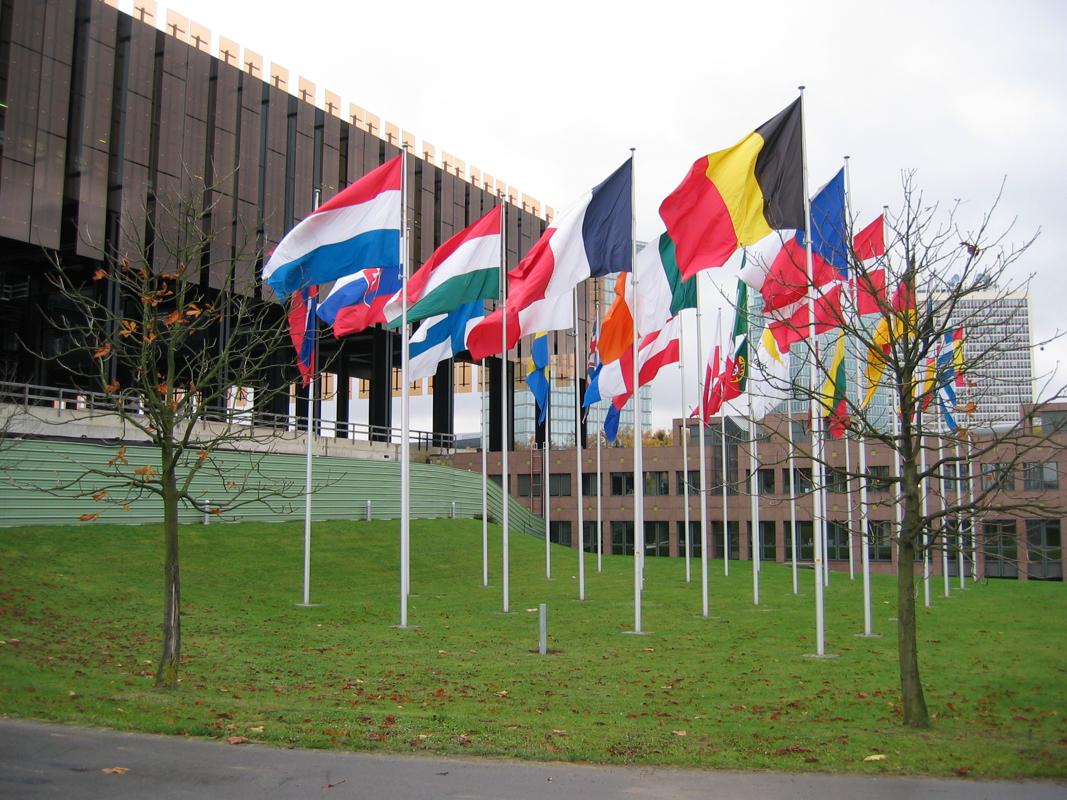
The Court of Justice of the European Union, Luxembourg, the venue for the March 2025 fines against late-transposing member states.
© Cédric Puisney (CC BY 2.0)
When protection fails: Boeing, OpenAI, and the human cost
Two cases from the past two years show why the law is on your side is not the same as you are safe. Both are tragic. Both are honest answers to the question this post asks.
John Barnett spent 32 years at Boeing, the last seven as a quality manager at the company's South Carolina plant. He raised internal alarms about the 787 Dreamliner: non-conforming parts, malfunctioning emergency oxygen systems, metal shavings near critical wiring. After he was pushed into early retirement in 2017, he filed a federal whistleblower retaliation claim. The case dragged on for nearly seven years without a hearing. On 9 March 2024, mid-deposition in Charleston, Barnett was found dead in his vehicle. The county coroner ruled it a suicide; police later attributed the death to the accumulated PTSD and chronic stress of the litigation. Boeing eventually settled the wrongful-death claim brought by Barnett's family in September 2025, on partly confidential terms.
Suchir Balaji spent nearly four years at OpenAI helping train GPT-4 before resigning in August 2024. In an October 2024 New York Times interview he argued that ChatGPT's training likely violated US copyright law. He was found dead in his San Francisco apartment on 26 November 2024, aged 26. After months of family-led pushback, the medical examiner and police confirmed in February 2025 that the death was a self-inflicted gunshot wound; his parents continue to dispute the determination and have filed a wrongful-death suit against the apartment building.
Neither story should be read as proof that whistleblowing is unsurvivable. They are proof that a multi-year retaliation case is itself a serious psychological event, and that the institutional support around the legal protection (fast adjudication, mental-health resources, emergency legal funding) still lags well behind where it needs to be. Anyone weighing a report should treat the personal consequences of speaking up as a real planning problem, not an abstract risk.
Murray v. UBS lowered the bar in the US
On 8 February 2024, the United States Supreme Court decided Murray v. UBS Securities, LLC. The unanimous 9-0 ruling changed how easy it is to win a Sarbanes-Oxley retaliation case. Trevor Murray, a UBS research strategist, was fired shortly after telling his supervisor that he was being pressured to skew published research. The Second Circuit had thrown out his win on appeal, holding that he needed to prove UBS acted with retaliatory intent (animus).
The Supreme Court rejected that reading entirely. Justice Sotomayor, writing for the Court, held that the plaintiff need only show that protected whistleblowing was a contributing factor in the firing, not that the employer harboured ill will. The contributing-factor standard is much easier to meet than animus, and once met, the burden shifts to the employer to prove it would have taken the same action anyway.
The practical effect is that in 2026, a US employee who reports securities fraud and gets fired no longer has to read their boss's mind. The legal calculation for whistleblowers, and the legal calculation for employers contemplating retaliation, both shifted in the whistleblower's favour.
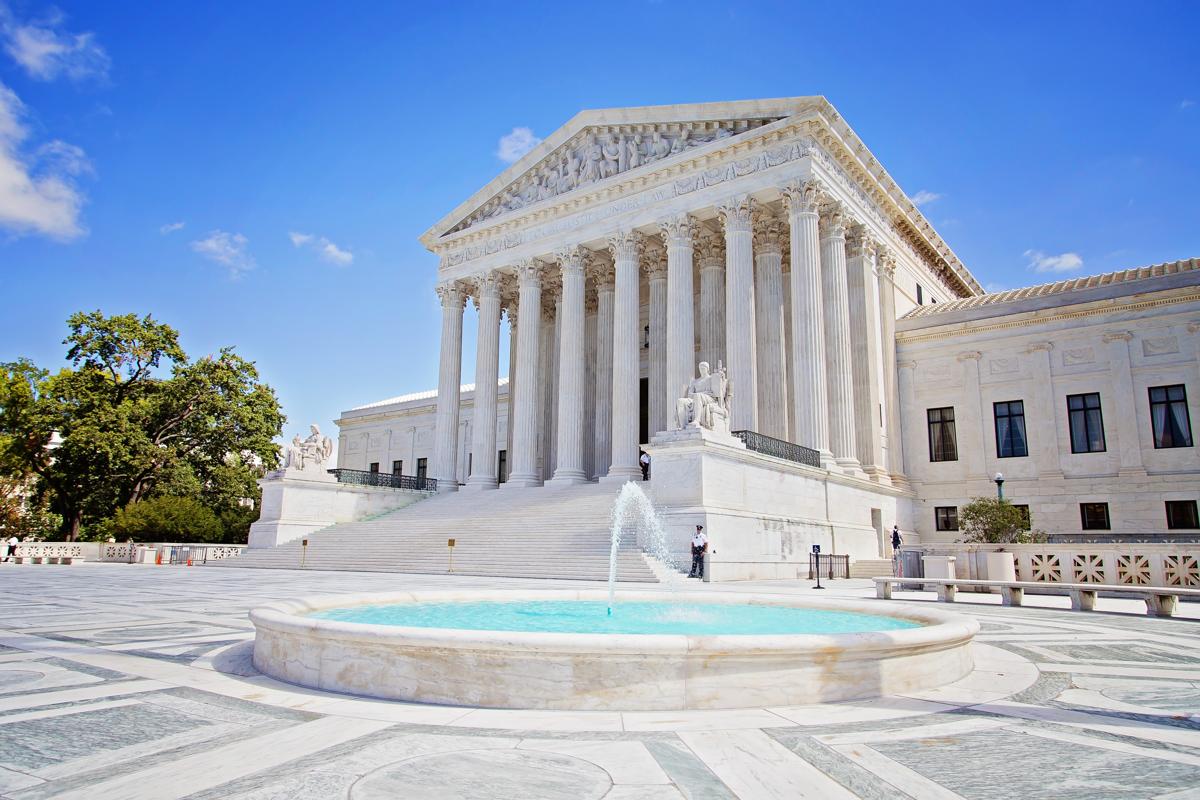
The United States Supreme Court, author of the February 2024 Murray v. UBS ruling.
© Sunira Moses (CC BY-SA 3.0)
The financial incentives are now real money
Whistleblower programmes in the United States have moved from they exist on paper to this is how some law firms are funding their practices. The SEC's whistleblower programme reported $255 million in awards across fiscal year 2024, distributed to 47 individuals. That was the third-highest single-year total since the programme launched in 2011. One award alone, split between two whistleblowers, was $98 million. Cumulative awards since 2011 have crossed $2.2 billion, paid to roughly 444 people.
The Commodity Futures Trading Commission saw a record 1,744 tips in fiscal 2024, paying out $42 million on 12 awards. And in March 2024 the US Department of Justice launched a corporate whistleblower pilot programme that lets tipsters claim up to 30% of forfeiture proceeds over $1 million. The pilot is explicitly designed to fill the gaps the SEC and CFTC programmes do not cover, including foreign corruption and certain healthcare-fraud cases.
Europe is structured differently. The EU directive does not include a US-style bounty system; the protection is statutory rather than financial. But the practical message is the same on both continents: regulators are paying serious attention to insider tips because nothing else surfaces complex misconduct as efficiently.
The bright headline numbers come with a sober counterpoint. NAVEX's 2025 benchmark report, drawn from over 4,000 organisations and roughly 2.4 million reports, found that internal retaliation complaints are rising in frequency year over year, and that only about 16% of them are substantiated by the employers reviewing them. Substantiation is not the same as truth, and a low rate is exactly what you would expect when the people accused of retaliation control the investigation. The statute is one safety layer; an independent intake channel is another; outside legal counsel before the first report is a third. Stacking all three is what people who have been through the process tend to recommend.
What an actually safe channel looks like
If safe has any technical meaning, it lives in the design of the reporting channel itself. A compliant system in 2026 will give the whistleblower an option to report anonymously, at least at first contact. That option is the difference between I'll think about it and I'll send it tonight. It will use end-to-end encryption on submissions, so even the IT team running the platform cannot read open reports. And it will enforce a clear separation of access between the case handler and the rest of the organisation; HR, the line manager, and the executive team should not be able to look up who filed what.
On top of that, expect a written acknowledgement within seven days and substantive feedback within three months. Both are required by the EU directive and a useful sanity check anywhere else. Expect GDPR-compliant data handling, with retention limits and a clear lawful basis for processing; a channel that secretly logs IP addresses against names is not a reporting channel, it is a trap. And expect a clear external escalation path: if the internal investigation stalls or covers up, the whistleblower can escalate to a designated public authority or, in qualifying circumstances, the press, without losing legal protection.
The technology is no longer the hard part. Mature systems in 2026 routinely combine encrypted intake, anonymous two-way messaging (so the case handler can ask follow-up questions without ever learning the whistleblower's identity), and tamper-evident audit logs that can be produced in court if retaliation is later alleged. Cost is no longer a serious objection: well-engineered platforms exist at the price point of standard SaaS, and the cost of being caught without one, in fines and civil damages, has gone up.
The frank answer to is it safe to be a whistleblower? in 2026 is that it is significantly safer than when this post was first written in 2022. The law is finally in place across the EU, the US Supreme Court has lowered the bar to prove retaliation, and regulators on both sides of the Atlantic are paying attention. It is not yet safe in the absolute sense the word implies. The cases of Barnett and Balaji show that institutional follow-through still trails the statute. The honest framing is that the system now protects the people who use it well, and that well includes choosing the right channel, keeping records, and getting legal advice early. The cost of staying silent, for the organisation that needed to know and for the people who would otherwise have been hurt, almost always exceeds the cost of speaking up through the right system.

Human Resources Coordinator, specializes in HR matters in the field of employment law. Corporate ethics expert. Active promoter of whistleblower protection.


