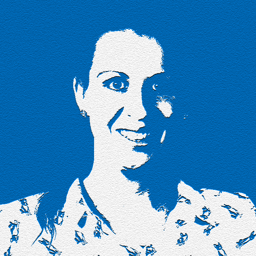
Mark MacGann, a former lobbyist for Uber, is now better known as the whistleblower behind the Uber Files. He spent two and a half years running the company's lobbying machine across Europe, the Middle East and Africa. In 2022 MacGann handed The Guardian more than 124,000 internal business files (18.69 GB) covering Uber's controversial strategies between 2013 and 2017. He went on the record because he believed Uber had intentionally violated laws in many countries and misled the public about the gig-economy model it was selling drivers. The leaked records, published as the Uber Files by a 42-outlet ICIJ consortium, cast doubt on the intentions of one of the largest ride-hailing companies in the world. Management was alleged to have tried to bribe the most influential political leaders in exchange for regulations favorable to the company.
The leaked records exposed the executives' efforts to transform transportation laws in unwelcoming markets all over the world, including France, the Netherlands and Russia. The Uber Files revealed the company's international lobbying activities and political support, involving world figures such as Joe Biden (then-U.S. Vice President), Emmanuel Macron (then-French Economy Minister), Benjamin Netanyahu (then-Israeli Prime Minister), Enda Kenny (then-Irish Prime Minister), former EU commissioner Neelie Kroes and others.
I'm exposing a system that sold people a lie.
Mark MacGann
Bribes, kill switches, and a quiet expansion
MacGann admitted his own role in the deceptive conduct and expressed regret. His revelations laid out the manipulative tactics Uber used to push governments to bend taxi regulations and create a friendlier business environment. He took responsibility for the rules he had argued for and described himself as the man who painted a rosy picture of economic opportunity for drivers. He regretted his role in strategies that weaponised Uber drivers: according to the published documents, the company encouraged them to stage protests or strikes, potentially putting them in harm's way.
When Uber moved into a new country, MacGann was the lobbyist navigating the regulatory terrain and advising on how to operate within the existing legal framework. In Russia he tried to launch the service and paid an Alfa Bank deputy chairman $300,000 to lobby for the company and influence federal taxi legislation. The unfair company practices were expected to help open new markets by disregarding the law, deceiving police, using violence against drivers, and secretly lobbying governments. There was also tax avoidance and the practice of hiring drivers on contracts that did not guarantee insurance.
According to MacGann, it was a premeditated approach: run a national business without permission, often against the law. Uber operated on the rule that, although unauthorised, once launched the application would be associated with something great when people started to use it. The company was infamous for clashes with traditional taxi services, which sometimes resulted in violence. As Uber spread, it met protests from licensed taxi drivers who turned against its employees and threatened their cars and lives. Tactics like the "kill switch", used to lock investigators out of company computers during raids in France, the Netherlands, Belgium, India, Hungary and Romania, only became public years later.
I think it's worth it. Violence guarantees success.
Travis Kalanick, in reference to participation of Uber drivers in violent protests in France
Macron's privileged channel
The Uber Files cover 2014-2016, when Emmanuel Macron was French economy minister. The records show his role in a lobbying campaign for Uber: at least 50 phone calls, emails and text messages, and meetings with Uber executives. According to the leaked files, the future president tried to change French law to ease the company's path in his country. Uber managers even asked Macron for help with tax issues.
Another flashpoint was the general strike of French taxi drivers in Paris in 2016. Uber wanted to launch a "person-to-person" UberPop service that let private individuals offer rides in their own cars. In France this model was treated as a banned and unregulated commercial transport service. To become a licensed taxi driver, applicants had to work under regulatory requirements, undergo 300 hours of mandatory training, and obtain a taxi licence costing up to €250,000. The proposed shortcuts for Uber drivers triggered protests and violent taxi wars. Uber eventually withdrew UberPop in exchange for an easier route to a licence; once UberPop was suspended, Macron passed a ministerial decree cutting the training required for a licensed driver.
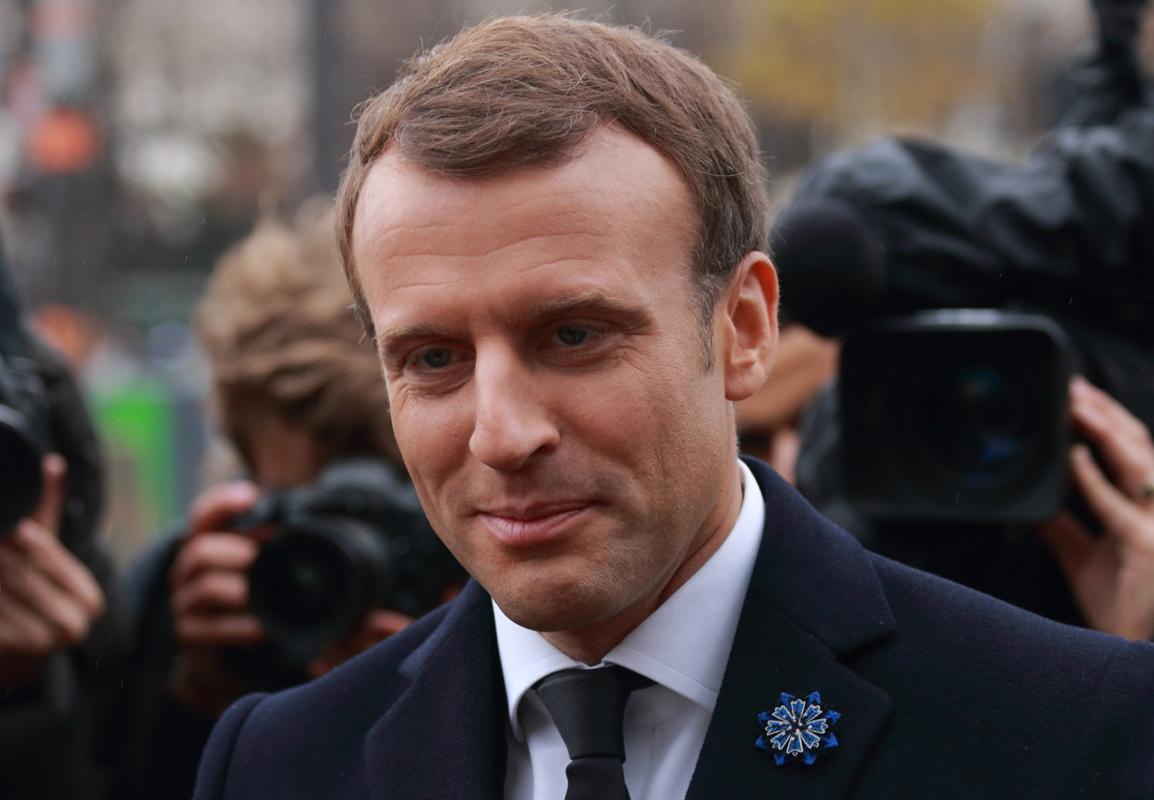
Emmanuel Macron in November 2017
©Rémi Jouan (CC BY
4.0)
A French parliamentary inquiry into the Uber Files reported its findings on 18 July 2023. The 500-page report drew on 67 hearings and 120 testimonies, including ex-prime ministers Bernard Cazeneuve and Manuel Valls. The commission described the relationship between Macron and Uber as opaque but privileged, documented 34 exchanges between the company and the President's office across 2018-2022, and quoted text messages in which Macron invited Uber's France CEO to dinner during his presidential race. The report did not find that Macron personally benefited or acted unlawfully; opposition MPs voted to adopt it, while Macron's own party abstained.
A useful fight in the Netherlands
Leaked records revealed Uber's close relationship with tax authorities in the Netherlands, the company's central hub, where it also operates numerous subsidiaries. Internal messages indicate Dutch authorities intentionally slowed down the sharing of information during a tax audit of Uber across five European countries in 2015. The Dutch tax office was accused of breaching European law and lacking transparency.
It looked as if the Netherlands had helped the company avoid millions in taxes. The Dutch tax office denied wrongdoing and emphasised its fair treatment of all companies. Uber claimed it was a digital platform, not a transportation company, a framing that let it sidestep certain costs. Dutch officials gave Uber time to organise its affairs, and the company eventually agreed to share driver data so the authorities would focus on individual taxpayers rather than its corporate structure.
The Dutch chapter took a sharper turn long after MacGann's leak. On 22 July 2024 the Dutch Data Protection Authority fined Uber €290 million for transferring sensitive driver data (taxi licences, location histories, photos, payment details, ID documents, and in some cases criminal and medical records) to US servers without proper safeguards. The case grew out of complaints from more than 170 French Uber drivers filed via the Ligue des droits de l'Homme and forwarded to the Dutch authority. It is one of the largest GDPR fines ever issued by a national regulator.
How MacGann became the source
After leaving Uber in 2016, MacGann did not decide to reveal the breaches immediately. He had time during the pandemic years to reconsider what he knew. He kept thinking about information from drivers, about Uber's rising commission and their simultaneous loss of earnings.
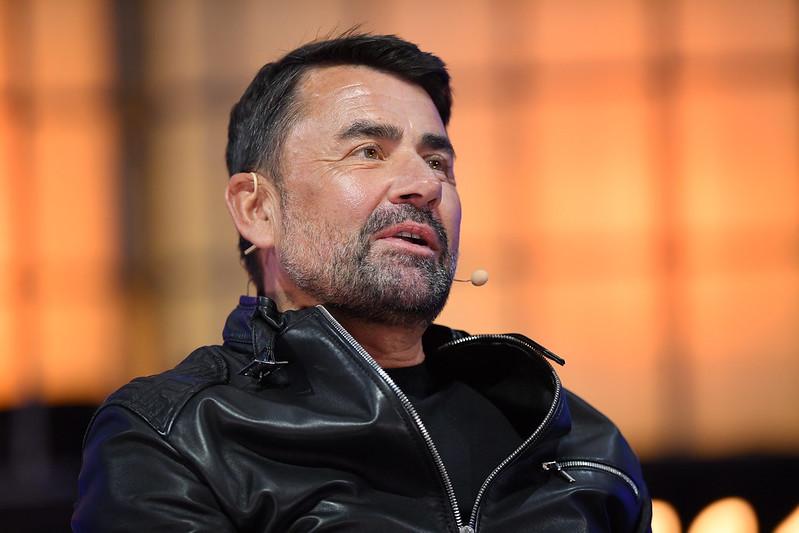
Mark MacGann - Web Summit 2022
November 2, 2022 in Lisbon, Portugal
©Ramsey Cardy/Web Summit via Sportsfile (CC BY 2.0)
The decisive nudge came from Frances Haugen and her revelations about Facebook. Watching Tyler Shultz and Erika Cheung dismantle Theranos from the inside also helped him picture leaving with the documents as something other than a betrayal.
There is no excuse for how the company played with people's lives. I am disgusted and ashamed that I was a party to the trivialization of such violence.
Mark MacGann
His personal safety was threatened even after he left Uber, and the company assigned him a team of bodyguards. Threats continued; in 2017 taxi drivers attacked him at a station in Brussels. He linked the hostility to Uber's confrontational posture toward traditional taxi services. MacGann has said his time at the company, including fear for his safety, contributed to a subsequent PTSD diagnosis. In a long interview with Nieman Reports, he was blunt about the price: he handed over the data in January 2022, and Uber's lawyers later threatened to enforce a €30,000-per-day confidentiality penalty backdated to that date, a sum that would have run into tens of millions of euros. The threat is officially still pending; reporters at The Guardian and The Washington Post warned Uber that suing the source would generate the worst kind of headlines.
Uber's cultural-reset defence
The French parliamentary committee gave Uber its turn. On 31 May 2023, CEO Dara Khosrowshahi appeared via video link from San Francisco. "I am not here to defend Uber's past mistakes," he told MPs. "Uber is a totally different company today, quite literally." His central pitch was demographic: 90% of current Uber employees joined after 2017, when Travis Kalanick was forced out and Khosrowshahi took over. The company, he argued, had moved from an era of confrontation to collaboration.
Lawmaker Danielle Simonnet pushed back. Uber's flexibility rhetoric, she suggested, let it claim the moral high ground without committing to actual employment standards. When asked about EU rules that would reclassify platform workers as employees, Khosrowshahi replied that drivers "value flexibility above all" and questioned whether the directive's authors had actually consulted them.
That same year, the EU's anti-fraud office OLAF closed its investigation into former European Commissioner Neelie Kroes, who had been accused of secretly lobbying for Uber. In December 2023, OLAF cleared her of wrongdoing, but the closing report flagged that Uber's reluctance to share documents had hampered the probe. Transparency campaigners read the result as evidence that the EU's conflict-of-interest rules were not working, not as exoneration.
What the Files actually changed
The most concrete consequence came at the EU level. The bloc's Platform Work Directive was politically agreed in February 2024, formally adopted by the Council on 14 October 2024, and entered into force on 1 December 2024. It establishes a presumption of employment for platform workers when their relationship has the hallmarks of a job, and forces companies to be transparent about the algorithms managing them. Member states have two years to put it into national law. It will not single-handedly fix the gig economy, but it is a regulatory shift the Uber Files reporting helped accelerate.
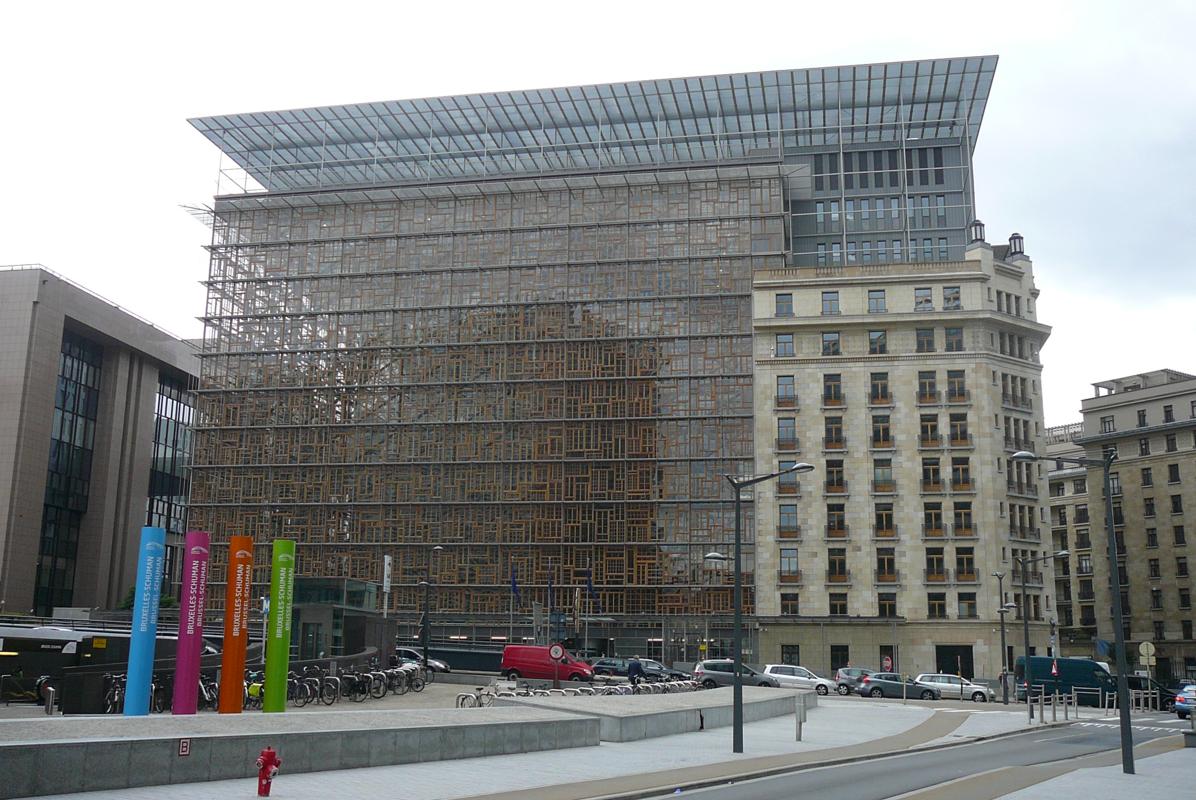
Europa building, Brussels, seat of the European Council and the Council of the
EU
©Guy Delsaut (CC BY-SA 4.0)
MacGann did not stay quiet either. He took up a residency as Knight Public Interest Tech Fellow at Harvard Kennedy School's Shorenstein Center, scheduled through Spring 2026, where his work centres on the labour and regulatory architecture of the gig economy. He is a founding board member of psst.org, a non-profit set up by lawyer Jennifer Gibson to support tech-industry whistleblowers. In a Harvard Crimson op-ed on 1 November 2024, he urged Massachusetts voters to back Question 3 (granting Uber and Lyft drivers the right to unionise), using language he might once have written against: that worker protections are not "friction", that drivers are not temporary, and that companies tell investors, riders and drivers three different stories about the same business.
Uber, for its part, continues to defend its treatment of drivers and its disagreements with MacGann. It still leans on the line that 2017 was a clean break, and that whatever the Uber Files revealed describes a previous company. The €550,000 bonus MacGann sued Uber over was largely paid out, with portions held back over tax issues; the confidentiality threat hangs in the air without ever being filed. In the catalogue of corporate whistleblowers, alongside the cases collected in the books on whistleblowing and recent figures such as Suchir Balaji at OpenAI, the Uber Files belongs to the rare category that produced both criminal scrutiny and legislation. It also showed something the field already suspected: a company can fund the best lawyers, the slickest PR and the friendliest minister, and still lose control of the story when one of its insiders walks out with the documents.