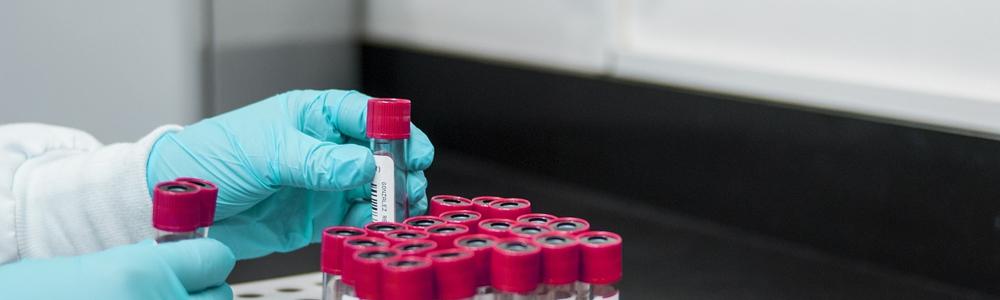
Tyler Shultz and Erika Cheung were the Theranos whistleblowers
Tyler Shultz and Erika Cheung are the whistleblowers who exposed Theranos. Theranos was a blood-testing startup run by Elizabeth Holmes. Holmes ran illegal and often dangerous tests there. The Wall Street Journal broke the story in 2015. The company's technology didn't work. The paper has tracked the scandal ever since, through Holmes' charges, trial, and a long legal fight.
Key Takeaways
- Erika Cheung and Tyler Shultz were junior lab employees who exposed fraud at the blood-testing startup Theranos.
- The Edison device failed: only 12 of 100 patient samples came back with correct results.
- The pair took their evidence to The Wall Street Journal in 2015, which broke the story open.
- Theranos paid about $150,000 to private investigators to follow both whistleblowers.
- Elizabeth Holmes was sentenced to 11 years and 3 months in prison for defrauding investors.
Theranos - Silicon Valley's darling
Holmes founded Theranos in 2003. She was a 19-year-old Stanford dropout. Her pitch was simple. Lab tests were slow and costly. One small device could replace them. It would run hundreds of tests from a single finger-prick sample.
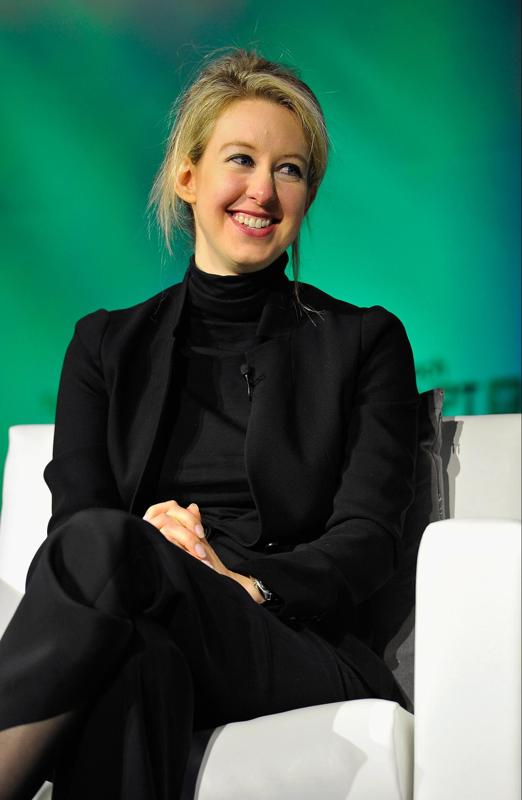
Elizabeth Holmes - TechCrunch Disrupt, September 8, 2014, San Francisco
©TechCrunch (CC BY
2.0)
Holmes said her machine could detect hundreds of diseases from a few drops of blood. Lab queues would shrink. Cancer patients would get faster, kinder tests. In time, every home could own a machine and run its own checks.
The device was called Edison. It never worked. Only 12 of 100 patient samples came back right. Theranos' scientists could not make the technology match the marketing.
Holmes did not back off. The press called her "the next Steve Jobs". She got senior business and political figures to keep backing her. She kept at it, raising close to a billion dollars.
She lied again and again to do it. Investors saw fabricated Edison results. In truth, staff ran real patient samples on rival firms' machines. Theranos then claimed its own device had made the numbers.
Theranos whistleblowers
Two junior lab employees changed the company's path: Erika Cheung and Tyler Shultz. Shultz was the grandson of George Shultz. George Shultz was a former US Secretary of State and a main Theranos investor. Both joined straight out of college.
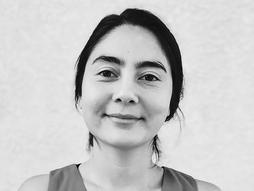
Erika Cheung / TEDx
The two ran routine blood tests. They soon saw a gap. Theranos told the public one thing. The lab bench showed another. The strict secrecy inside the firm started to make sense. They saw how little of the Edison story was real.
Theranos was lying to both investors and patients. Managers told staff to run clinical samples on Siemens machines. Siemens hardware belonged to a rival. Staff then reported the results as if Edison had made them. Strict non-disclosure deals bound the staff. Anyone who spoke up faced fines worth millions of dollars.
"To me it seemed kind of as a final resort to get the truth out about what was happening with these patient samples"
Cheung @ The Wall Street Journal
Plenty of people inside the firm felt uneasy. Cheung and Shultz were the ones who acted. In 2015 they took what they knew to John Carreyrou at The Wall Street Journal. His article was the turning point for Holmes and her company.
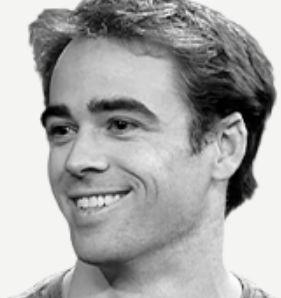
Tyler Shultz / Audible
The story drew in the media and US regulators. Theranos' lawyers tried to scare the WSJ and the whistleblowers into silence. It didn't stop the story.
"It was clear that there was an open secret within Theranos that this technology simply didn't exist"
Shultz @ National Public Radio (NPR)
In April 2016, federal prosecutors opened a case against Holmes. So did the U.S. Securities and Exchange Commission (SEC). They also looked at her COO and then-partner, Ramesh "Sunny" Balwani. The charge was misleading investors and regulators about Theranos' technology. Criminal charges followed.
Elizabeth A. Holmes and Ramesh "Sunny" Balwani (...), are charged with wire fraud, in violation of 18 U.S.C. §1343, and conspiracy to commit wire fraud, in violation of 18 U.S.C. §1349. The charges stem from Defendants' allegedly deceptive representations about their company and its medical testing technology.
United States v. Elizabeth A. Holmes, et al. 18-CR-00258-EJD
Surveillance and intimidation
The threats were not just talk. Theranos paid about $150,000 to two private investigation firms. Their job was to follow Cheung and Shultz. The company logged the cost in its own books. It named the project after both whistleblowers. At trial it went into evidence as the "E. Cheung & T. Schultz project". The line item surfaced on 29 November 2021. Assistant U.S. Attorney Robert Leach put the receipts to Holmes in court, and she refused to confirm the surveillance purpose. She said the documents did not refresh her memory.
The receipts matched moments Cheung had described from the witness stand. After she spoke to Carreyrou, colleagues noticed a stranger. He hung around the parking lot all day. A letter then arrived at a temporary Palo Alto address. She had not given that address out. Even her mother did not know it.
"I was being followed by private investigators, and what if one day I simply went missing. The thought of my family ever having to go through that experience caused me many sleepless nights."
Cheung @ Cal Alumni Association
Shultz said under oath that a private investigator tailed him after he left Theranos. Holmes also met with the firm Fusion GPS. Its job was to dig up dirt on Carreyrou himself. That meeting sat outside the $150,000 budget. The expense papers are now public. So the spying budget is no longer in doubt. Only one thing is: how much Holmes knew it bought.
Elizabeth Holmes trial
Theranos shut down after 15 years. Holmes fell from paper billionaire to bankrupt. The Forbes list once put her peak worth at $4.5B. In late 2022, Holmes was sentenced to 11 years and 3 months in federal prison for defrauding investors. Balwani got about 13 years in a separate trial.
"I am happy that she was found guilty of these crimes and I feel like I got my vindication from that, and I feel good about that."
Shultz @ CBS News
Balwani reported to federal prison in April 2023. Holmes had married Billy Evans in 2019. Evans is heir to the Evans Hotel Group. The couple had two children, born in July 2021 and February 2023. Holmes used up her last bail appeal. She then reported to the Federal Prison Camp in Bryan, Texas on 30 May 2023. A separate May 2023 ruling told Holmes and Balwani to pay $452 million in restitution to defrauded investors.
Many people now call Cheung and Shultz modern whistleblowers, in the same line of corporate-cover-up stories as Erin Brockovich's fight over PG&E's toxic water, or the KPMG Australia audit scandal. Their work had a real effect. Theranos' bad practices stopped. Patients were no longer given unreliable tests.
Inside FPC Bryan
FPC Bryan is a minimum-security prison camp for women. It has dormitory housing, a small staff, and no barbed wire. Inmates work in food service or the on-site factory. The pay is $0.12 to $1.15 per hour. They wear khaki uniforms. They may see family at weekend and federal-holiday visiting hours. The camp bans personal jewellery. The only exceptions are a wedding band or a simple religious medallion worth no more than $100.
What's happened since 2023
The Theranos story has kept moving, even with Holmes locked up in Texas.
Sentence reductions. In July 2023, good-conduct credits cut about two years off Holmes' sentence. That moved her likely release to the end of 2032. Later cuts pulled the date forward again. The Bureau of Prisons now puts it at around December 2031. That is about six years earlier than the first sentence.
Appeals exhausted. In June 2024 the Ninth Circuit Court of Appeals heard oral arguments on Holmes' conviction and sentence. In February 2025 the panel turned down her arguments. It upheld both the conviction and the sentence. A separate appeal of the $452M restitution order is still open.
A pardon campaign. In December 2025 the Los Angeles Times reported news about Holmes. She had begun lobbying for a presidential pardon from Donald Trump. In January 2026 the DOJ's Office of the Pardon Attorney confirmed a formal commutation request. Nearly six years of the sentence are still left to serve.
A Twitter comeback (of sorts). In September 2025, an X account in Holmes' name went live again. It has posted thousands of times. The posts cover free speech, prison-life gripes, and advice to her younger self. The bio reads "Mostly my words, posted by others." The Bureau of Prisons says FPC Bryan inmates cannot use the internet or social media. So proxies run the account. Reporting suggests three or four people operate it. Holmes guides them through monitored phone calls and mail.
One of the account's most-viewed posts landed on February 16, 2026. It was an edited "throwback" photo. It dropped Holmes into a Theranos lab beside Tupac, Biggie, Eminem and Snoop Dogg. It drew roughly 5 million views. The follow-up post cut harder: "Today I learned I have more time in prison than the 4 of them combined." The pardon request may go either way. Even so, the account has shown one thing. Holmes' public image is being managed from behind the fence.
Throwback to the weirdest demo I gave at Theranos.
- Elizabeth Holmes (@ElizabethHolmes) February 16, 2026
Haemanthus. In May 2025, Holmes' partner Billy Evans went public with Haemanthus, a diagnostics startup. He had quietly set it up in February 2024. The company says it is building AI-assisted optical devices. They use Raman spectroscopy to test blood, urine, and saliva. The first products are for pets, then humans. A wearable is planned later. Evans has raised roughly $18.5 million. The company line is "this is not Theranos 2.0". Holmes has no formal role. Still, she is reportedly advising Evans from prison. Her ban stops her serving as an officer or director of a public company. Regulators have so far let that slide for a private startup.
None of this changes what Cheung and Shultz did. Holmes may yet find a legal escape. It could be a pardon, early release, or neither. Even so, two junior lab technicians stopped Theranos. They risked their careers to keep bad results away from real patients.
Theranos on screen
The Holmes-Theranos story has done well on film and TV.
The 2022 TV series "The Dropout" tells Holmes' story across eight episodes. It runs from her Stanford ambitions to the moment former staff broke the story open.
The 2019 documentary "The Inventor: Out for Blood in Silicon Valley" looks at a different gap. Theranos pushed hard on marketing. At the same time it ignored R&D and advice from medical authorities.
What happened to Erika Cheung?
After she left Theranos, Cheung spoke about her experience at TEDxBerkeley.
She worked as a research associate at Antibody Solutions. In 2020 she co-founded Ethics in Entrepreneurship. The nonprofit trains early-stage founders to make ethical choices. Cheung says it rose "from the ashes of the Theranos scandal." She still speaks in public on business ethics. Her recent talks include the keynote at the 2024 Olafson Ethics Symposium.
Today Cheung splits her time between New York and Los Angeles. She still works with Asia-Pacific companies.
Even having lived through the expereince, the documentary was really insightful and offered a fresh perspective on Theranos case. A cautionary tale any entrepreneur can learn from. https://t.co/XnVGLNTmTN
- Erika Cheung (@ErikaMCheung) January 28, 2019
What happened to Tyler Shultz?
After he left Theranos, Shultz went back to Stanford. He worked in the Wang Lab on giant magnetoresistive (GMR) sensing. He co-founded Flux Biosciences in 2017. It is a home-diagnostics firm focused on women's fertility. In 2022 he founded The Healthyr Company. It analyses blood samples to catch health issues early.
He also advises Ethics in Entrepreneurship, Cheung's nonprofit. He advises The Signals Network too. That group supports whistleblowers. It also runs international investigative reporting on corporate wrongdoing and human-rights abuses. Shultz consults for Qvin as well, on menstrual-blood diagnostics.
In 2020, Shultz released his own account of the scandal, Thicker than Water. It is an Audible Original he narrated himself. He walks through his time inside the company. He also covers the legal pressure that followed and the harm the story did to his family.
This has been a long chapter of my life. I am happy that justice has been served and that this saga is finally in my rearview mirror. Proud of the impact that Erika and I had. Hope to inspire other young professionals to hold their leaders accountable.
- tylershultz (@TylerShultz_) January 4, 2022
Being a whistleblower at Theranos came at a personal cost. Shultz's grandfather, George Shultz, was an early Theranos believer. Their relationship stayed strained for years.
Did George Shultz apologize to Tyler Shultz?
In a CBS interview on January 4, 2022, Tyler shared some news. The two had made peace before George Shultz died in February 2021. No formal apology ever came. Still, his grandfather did, in the end, accept that Tyler had been right.
Tyler Shultz and Erika Cheung: frequently asked questions
Are Tyler Shultz and Erika Cheung a couple?
No. They were never romantically involved. They have never been married or dated. They met as junior lab employees at Theranos. They found they shared the same doubts about the Edison device. Together they took the evidence to the press. They are colleagues and friends, nothing more.
Are Tyler Shultz and Erika Cheung still friends?
Yes. Years after Theranos collapsed, they remain close friends and allies. Shultz sits on the advisory board of Ethics in Entrepreneurship. Cheung co-founded that nonprofit in 2020. The two are still named together as the Theranos whistleblowers.
Is Tyler Shultz married?
Shultz keeps his private life out of the press. He has not publicly shared details about a wife or marriage. His public record is about his work. He founded Flux Biosciences in 2017 and The Healthyr Company in 2022.
Is Erika Cheung married?
Cheung is just as private about her personal life. She has not publicly shared details about a husband or marriage. After Theranos she split her time between Hong Kong and the United States. She co-founded Ethics in Entrepreneurship and now speaks worldwide on business ethics.
Who were the whistleblowers at Theranos?
Two whistleblowers brought the evidence to The Wall Street Journal: Erika Cheung and Tyler Shultz. Both were junior lab employees. Cheung is the one with no family tie to a senior government official. Shultz is the grandson of former US Secretary of State George Shultz, an early Theranos investor.
Researcher and data analyst in whistleblowing. Tells the stories of famous whistleblowers and the history behind their fight for accountability.