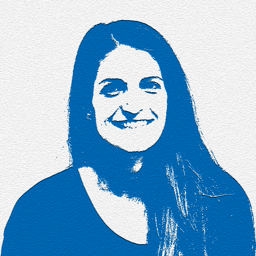
Tiffany Fong, a self-described "reluctant crypto content creator," sat closer to Sam Bankman-Fried in the months between FTX's collapse and his conviction than almost any working journalist. She visited his parents' Palo Alto home more than ten times during his house arrest, recorded hours of phone calls with him, and was the conduit for hundreds of pages of his private writing. Two and a half years on, the trial is over: Bankman-Fried was convicted on all seven fraud counts in November 2023 and sentenced to 25 years in federal prison on March 28, 2024. The case against him took the jury five hours to decide. The more interesting question now is Fong's role in shaping what the public saw before that verdict, and what she has done with the platform she built on top of it.
Tiffany Fong: A Reluctant Crypto Content Creator
Fong grew up in Las Vegas, one of the few Asian students at her school. She went from a shy elementary-school kid to, in her own telling, the "life of the party" by high school. She graduated from the University of Southern California, then spent three years backpacking the world rather than taking a corporate job. By her late twenties she had settled into a freelance, entrepreneurial rhythm that left her free to react to whatever the internet handed her next.
The Crypto Bull Market and Fong's Rise
The first thing the internet handed her was Celsius. Fong had been gifted small amounts of bitcoin when it was worth under $100 a coin and, by 2021, had over $200,000 parked in Celsius Network, a crypto lender promising double-digit yields. When Celsius froze withdrawals in June 2022 and filed for bankruptcy a month later, she went on Twitter and YouTube and complained about it loudly. Insiders began sending her documents and audio. The "Celsius leaks" earned her a reputation as someone who would publish what other reporters were still verifying.
Encounter with Sam Bankman-Fried
That reputation was why Sam Bankman-Fried followed her on Twitter as FTX was unraveling in November 2022. He DM'd, she pitched an interview, he agreed. The conversation she posted to YouTube on November 16, 2022 was the first long-form interview he gave after the bankruptcy, and at the time it was the closest thing the public had to an explanation from him.
Her position as an unaffiliated content creator, with no editor and no compliance desk between her and "publish," let her say things a staff reporter would have had to soften.
House Arrest, Ankle Monitors, and Unlikely Bonds
After Bankman-Fried was extradited from the Bahamas and placed under $250 million bond at his parents' Palo Alto home, Fong kept showing up. She visited him more than ten times across the months of house arrest. She recorded long phone conversations. She came away with details no one else had: what he was reading, who he was still talking to, the specifics of how he framed his own situation to himself. The line between "source" and "friend" got blurry in a way she has since admitted she did not fully think through at the time.
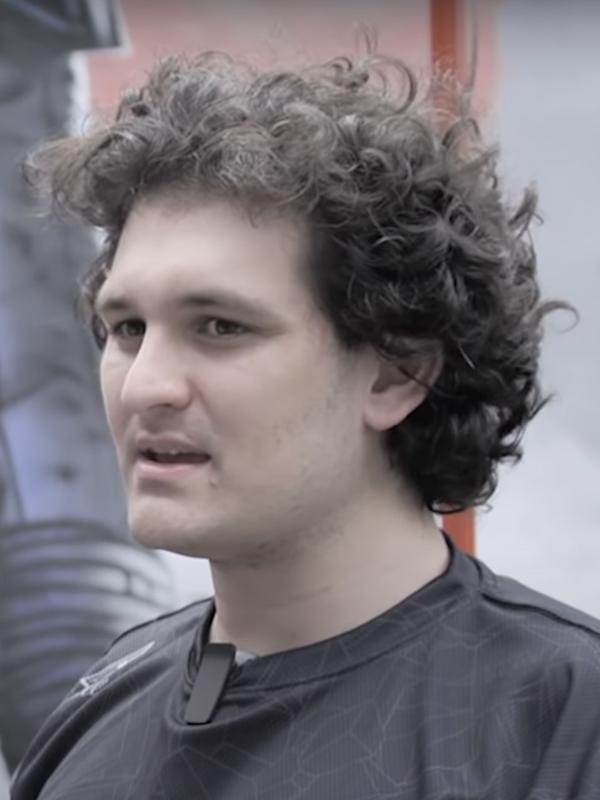
Sam Bankman-Fried in 2021, the year before Tiffany Fong met him
©Cointelegraph (CC BY 3.0)
Leaks, Documents, and Media Dynamics
The professional cost of that blur showed up in late 2022, when Bankman-Fried sent her over two hundred pages of private Google Docs, including a roughly 70-page draft series of tweets in which he attempted to relitigate FTX's collapse paragraph by paragraph. Fong handed the document to The New York Times, which broke the story. Her own social-media account became a steady drip of fragments: Amazon order histories, audio clips, screenshots. Each release scored attention and raised the same question: where was the line between a journalist with extraordinary access and a private citizen broadcasting a friend's documents to a few hundred thousand strangers?
Legal Ramifications and Conflicting Loyalties
Bankman-Fried was already under a partial gag order; the leaks helped tighten it. In an August 2023 hearing, Judge Lewis Kaplan revoked his bail entirely after prosecutors argued he had attempted to interfere with witnesses, partly through leaks routed via Fong and others. Fong herself was clear in subsequent interviews that Bankman-Fried had encouraged her to publish material, telling her he thought it would be "good" for her. That admission cuts both ways. It absolves her of the worst version of the journalism-ethics critique. It also makes her, by her own description, an instrument the defendant was actively trying to use.
Conviction, 25 Years, and Where SBF Sits Today
The trial itself was almost anticlimactic. After about a month of testimony in the Southern District of New York, the jury came back on November 2, 2023 after roughly five hours of deliberation, with a guilty verdict on all seven counts: two of wire fraud, two of conspiracy to commit wire fraud, and three more conspiracy charges spanning securities fraud, commodities fraud, and money laundering. Four months later, on March 28, 2024, Judge Kaplan sentenced him to 25 years in federal prison and ordered him to forfeit $11.02 billion. Bankman-Fried is now Federal Bureau of Prisons inmate 37244-510. After an unsanctioned interview with Tucker Carlson at the Metropolitan Detention Center in Brooklyn drew official displeasure, he was transferred across the country to FCI Terminal Island, a low-security facility in Los Angeles, where he is serving the sentence today.
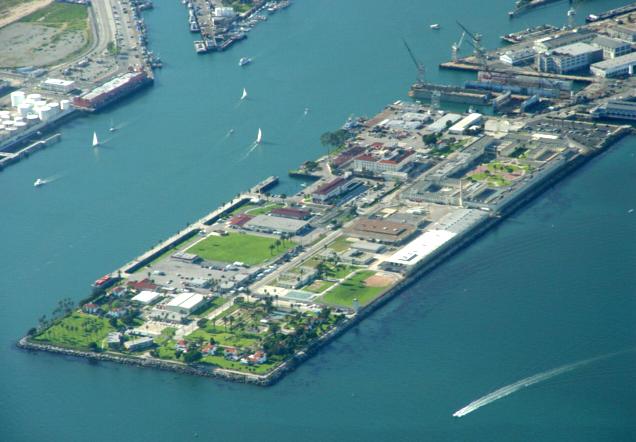
Reservation Point on Terminal Island; FCI Terminal Island sits at the upper right, above the
Coast Guard base
©P. Alejandro Díaz (CC BY-SA 2.0)
The Appeal That Probably Isn't Coming
The legal afterparty has been quieter than predicted. Bankman-Fried filed his notice of appeal on April 11, 2024, then in September moved for a new trial alleging Judge Kaplan had been biased. Oral arguments at the Second Circuit were heard on November 4, 2025. According to reporters in the courtroom, the three-judge panel was openly skeptical of his attorney Alexandra Shapiro's "fundamentally unfair" framing. As of April 2026 no ruling has been issued, and in late April he withdrew the standalone retrial motion (preserving the option to refile after the appeal is decided). His co-defendants have moved on faster. Caroline Ellison, who pleaded guilty and testified against him, was sentenced to two years in September 2024 and was released from FCI Danbury in January 2026 after serving roughly fourteen months. Bankman-Fried has spent some of his prison time courting a clemency angle through Trump-administration contacts and blaming his prosecution on what he calls "Biden's lawfare machine."
Customers Made Whole, Mostly
The most uncomfortable fact about the FTX case for the prosecution narrative is also the most uncomfortable fact for the journalism that pushed that narrative. The bankruptcy estate's reorganization plan went into effect on January 3, 2025, and distributions have run on schedule since. By the end of March 2026 the FTX Debtors had paid out roughly $10.3 billion to creditors. Customers of FTX.US are at 100% recovery. Customers of FTX.com, the offshore exchange where the fraud actually happened, are at about 96.6% of their dollar-denominated claims. Smaller "convenience class" creditors are getting roughly 118% to 120% of face. None of this means the underlying conduct was not criminal: claims were valued in November 2022 dollars, customers lost the upside of three years of crypto appreciation, and the prosecution's case turned on intent, not net loss. But it does change the shape of the public story Fong was helping to tell in real time, in which FTX customers were destitute victims.
After the Trial: Influence, Politics, and Elon Musk
Once the trial wound down, Fong did not produce the book, the documentary, or the long-form podcast project the press kept predicting. She built up her own platforms instead. Her X account passed 335,000 followers; her YouTube channel sits at around 48,000 subscribers; she launched a podcast carried on Apple and Spotify. She also became visibly political. On October 14, 2024 she posted that she would be voting for Donald Trump, a post Elon Musk amplified, and she became one of the highest-earning creators inside X's revenue-sharing program, reportedly clearing about $21,000 in a single two-week period in late 2024. Then, according to The Wall Street Journal, in November 2024 Musk privately messaged her asking whether she would have a child with him. They had never met. She declined. The story broke in April 2025; Musk unfollowed her, and her engagement and ad revenue dropped sharply. The journalist who built her career on a single founder's collapse spent 2025 being reminded that her income depended on a different founder's mood.
What comes next?
The cleanest way to read Tiffany Fong's last three years is that she was never quite a whistleblower, never quite a journalist, and never quite a friend. She was the most useful follower a defendant under house arrest could find: trusted enough to be given documents, but dependent enough on her own audience that publishing them served her too. The result was good for the public record. The 70-page tweet draft that ended up at the Times, the audio clips, the courthouse YouTube updates: those filled a gap that conventional reporting could not fill on the schedule the case demanded. The trade-off, which the Musk episode brought into view a year later, is that she is still a creator on platforms whose algorithms answer to other people. The ethical question her story poses to crypto coverage is not whether she crossed a line with Bankman-Fried, but whether independent reporting that lives entirely inside a single billionaire's platform was ever as independent as it looked.