
Suchir Balaji and the Cost of Being an OpenAI Whistleblower
Suchir Balaji's name is now inseparable from the broader fight over artificial intelligence accountability. In October 2024 he told The New York Times that OpenAI had trained its models on copyrighted material without permission. Five weeks later, on 26 November, San Francisco police found him dead in his apartment.
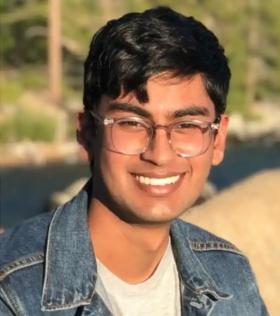
Suchir Balaji, the OpenAI researcher whose death in November 2024 sparked an ongoing dispute over AI accountability. Photo: Wikipedia (fair use, originally Times of India).
The 16 months since have not produced clean answers. They have produced lawsuits, an independent autopsy, a Senate bill, a foundation in his name, and a public dispute that San Francisco's Office of the Chief Medical Examiner formally closed and Suchir's family has refused to accept. This post tracks where the case actually stands now, and what it has changed about whistleblowing in the AI industry.
Suchir Balaji: A Courageous Voice in the AI Industry
Born in Florida in November 1998 and raised in Cupertino, California, Balaji was a computing prodigy long before OpenAI: a 2017 Kaggle finalist with a $100,000 prize, a UC Berkeley computer science graduate at 22, and an early hire on the team that scraped the internet to train GPT-4. He spent nearly four years inside OpenAI before resigning in August 2024, having concluded that the company's data practices could not be defended under the four-factor fair use test.
On 23 October 2024 The New York Times published a long interview with him, paired with an essay on his personal site titled "When does generative AI qualify for fair use?" His position was simple: ChatGPT competes economically with the writers and publishers whose work it learned from, which collapses the third and fourth fair use factors. "If you believe what I believe, you have to just leave the company," he told the Times. Less than a month later, on 18 November, Times lawyers named him a likely witness in their copyright suit against OpenAI.
Eight days after that filing, he was dead.
The Contested Investigation
The San Francisco Office of the Chief Medical Examiner released its report on 14 February 2025 and ruled the death a self-inflicted gunshot wound. The 13-page document cited gunshot residue on both of Balaji's hands, a registered Glock he had purchased the previous January, an apartment dead-bolted from the inside, recent browser history focused on brain anatomy, and toxicology showing alcohol at more than twice the legal driving limit alongside amphetamine and GHB. SFPD released its own four-page summary the same day. Police Chief Bill Scott and medical examiner director David Serrano Sewell wrote that they hoped the documents "may help bring some amount of closure" to the family.
The family rejected the findings. Suchir's mother, Poornima Ramarao, hired pathologist Joseph Cohen to perform an independent autopsy. Cohen reported that the bullet's downward, slightly left-to-right trajectory was atypical for a self-inflicted shot, and noted a contusion on the back of Suchir's head that he argued was consistent with a blow before the wound. The family's lawyer described the second autopsy as raising questions, not as conclusive proof of murder.
The case became a public conspiracy story almost immediately. Elon Musk tweeted in January 2025 that the death "doesn't seem like a suicide". Tucker Carlson released a long interview with Ramarao. Congressman Ro Khanna called for a "full and transparent investigation". On 22 September 2025, Suchir's parents sued the apartment landlord, Alta Laguna LLC and Holland Partner Group, alleging the property manager initially showed them garage CCTV, then claimed the cameras were not working, was fired immediately afterwards, and that the company provided only two days of footage when seven were requested. The nine-count complaint seeks at least $1 million in damages.
In January 2026, the San Francisco Standard published an investigation that worked through the body-camera footage, the building's key-fob logs, and the surveillance video against the family's specific allegations. It found blood confined to the bathroom rather than spread through the apartment, no sign of struggle on camera, no record of any other person entering Balaji's unit during the relevant window, and a piece of context the family had not previously disclosed: Suchir had a documented history of depression and was on antidepressants at the time of his death. None of that proves the family's grief wrong. It does mean the physical record is more consistent with the medical examiner's ruling than with the murder narrative built around the case online.
What Suchir's Allegations Meant for OpenAI
Suchir's death has not slowed the lawsuit he was set to testify in. On 26 March 2025, Judge Sidney Stein rejected OpenAI's motion to dismiss the New York Times's copyright claims and let the core infringement case proceed. On 5 January 2026, the same judge upheld a discovery order forcing OpenAI to hand over 20 million anonymized ChatGPT conversation logs to the publisher plaintiffs. The company had originally agreed to that figure and then tried to substitute a search-keyword sample instead. Stein ruled that users had "voluntarily submitted their communications" and OpenAI's privacy arguments did not survive the litigation interest.
That fight is the public-facing piece of a longer pattern. In May 2024, Vox reported that OpenAI was pressuring departing employees to sign non-disparagement agreements so broad that even acknowledging the agreement was a violation, on pain of forfeiting all vested equity. The company walked the clauses back after Daniel Kokotajlo, William Saunders, and other former staff went public. In June 2024, thirteen current and former OpenAI and DeepMind employees signed an open letter titled A Right to Warn about Advanced Artificial Intelligence, calling on AI labs to stop using NDAs as a gag mechanism and to create real channels for safety concerns. Suchir's case landed five months later, into that pre-existing argument.
Frances Haugen and Facebook's Ethical Challenges
Frances Haugen, a former product manager at Facebook, became a household name in 2021 when she leaked thousands of internal documents and testified before Congress that Facebook had prioritized growth over user safety. Her disclosures forced public debate about algorithmic amplification, teenage mental health, and the political-misinformation effects of feed ranking. She faced significant backlash but kept advocating for regulatory reform.
Tyler Shultz and the Theranos Scandal
Tyler Shultz helped expose the fraud at Theranos, the company once valued in the billions for blood-testing technology that did not work. As a young employee and the grandson of board member George Shultz, he risked his career and his family relationships to bring the truth out. His testimony was central to the company's collapse and the conviction of CEO Elizabeth Holmes.
What the Balaji Case Actually Changed
Suchir's allegations and the controversy around his death have already moved policy. On 15 May 2025, Senate Judiciary Chair Charles Grassley introduced the bipartisan AI Whistleblower Protection Act (S.1792). The bill defines AI systems broadly, prohibits employer retaliation against staff who report safety vulnerabilities or legal violations, makes the kind of NDA-plus-equity-clawback combination OpenAI deployed legally unenforceable, and gives whistleblowers a Department of Labor remedy plus a civil cause of action for reinstatement, back pay, and damages. Grassley's office cited the OpenAI departures and the Right-to-Warn letter as direct motivation.
One researcher's death did not produce that bill on its own. Suchir's case landed at a moment when the AI industry's NDA culture, the lack of safety-disclosure channels, and the weakness of federal whistleblower protection for AI employees were already on the table. The case made all three impossible to ignore.
Building a Safer Environment for Whistleblowers
Whatever happens with S.1792 in Congress, employers do not need to wait for legislation. Three things consistently make a difference:
- Anonymous, secure reporting channels. Internal disclosure routes that genuinely protect identity remove the need to choose between speaking up and keeping a job. A modern whistleblowing platform handles this at the technical layer.
- External advocacy and legal support. Groups like the National Whistleblower Center and the Government Accountability Project step in where employers will not. Suchir Balaji never reached them.
- A culture that does not treat dissent as disloyalty. The hardest of the three. It cannot be installed; it has to be modeled by leadership and demonstrated when an actual disclosure arrives.
Suchir's Legacy
Suchir's parents have channeled their grief into the Suchir Balaji Foundation, which runs a research initiative on AI fair use and a whistleblower defense fund. On 30 July 2025, National Whistleblower Day, the foundation hosted its first Truth in AI memorial summit in San Francisco, bringing together activists, policy staff, and technologists. Whatever the final word on how he died, his copyright argument will be litigated through the New York Times case for years, and the public record of OpenAI's conduct, the NDAs, the Right-to-Warn letter, the discovery fight, is now part of how the next generation of AI workers will weigh whether to speak up.
Conclusion
The most uncomfortable part of Suchir Balaji's story is that nobody comes out of it satisfied. The medical examiner closed the case; his family will not. The Times case is moving forward; nobody who could have testified about OpenAI's training data from inside the company is alive to do it. The Senate has a bill but no vote.
What we can do, as a service that exists to make whistleblowing possible without the kind of isolation Suchir experienced, is keep building the boring infrastructure of confidential channels, clear escalation paths, and real legal protection so that the next person who sees something inside an AI lab does not have to choose between their conscience and everything else they have built.
Researcher, responsible for data analysis in the field of whistleblowing. Environmental engineer by education. Enthusiast of biographical novels.


