The Szpital Poludniowy scandal tests Poland's whistleblower law
The scandal at Szpital Południowy, Warsaw's city-owned Southern Hospital, has been dominating the front pages for weeks. At its centre stands Dr Emil Jędrzejewski, the former head of surgery, whom the media labelled a whistleblower after he aired allegations against the Warsaw hospital: a so-called VIP lounge for politicians, suspected medical errors and the role of Dawid Kacprzyk, a former councillor for the Civic Coalition (KO). Soon afterwards he lost his own job. The case has become Poland's most prominent test of how the Whistleblower Protection Act works in practice, and of whether people who report irregularities really are protected from dismissal.
This story is instructive precisely because it is not black and white. It shows the difference between a "whistleblower" in the everyday sense and a whistleblower in the legal sense. It reveals how easily the line between a report and a private dispute can be crossed, and how wide the gap can be between a procedure on paper and one that actually works.
Key Takeaways
- The doctor reported it by private WhatsApp message, outside the channels the act recognises.
- In the view of Professor Makowski, he therefore does not have whistleblower status.
- You may dismiss, but not in retaliation. The employer must prove the reason.
- Mr Piotr had whistleblower status and lost his job too.
The Szpital Południowy scandal, what did Dr Emil Jędrzejewski reveal?
Dr Emil Jędrzejewski ran the surgical department at Warsaw's Szpital Południowy, a hospital owned by the city. He lost that post in 2025. He came to public attention in June 2026, after a long interview with Krzysztof Stanowski on Kanał Zero, in which he described irregularities said to have taken place at the hospital and his attempts to get the city authorities interested in the matter.
 WeMoral - whistleblowing software
An anonymous, encrypted whistleblower reporting channel for your employees, suppliers and customers, with case management, the 7-day and 3-month deadlines, and audit logs. Be compliant with the whistleblowing laws that apply to you, in minutes.
His gravest words concerned patient safety. "People are dying there because someone is learning on the job. That is the heart of the whole mess," the doctor said, claiming that errors, among them what he called "errors during intubation", led to complications that ended in death. He also spoke of a "conspiracy of silence" and of medical records being falsified.
This needs stating plainly: Dr Jędrzejewski produced no evidence to back these words, and when pressed for detail he referred questioners to the prosecutor's office. Every allegation cited here remains unproven and the presumption of innocence applies.
Who is Dawid Kacprzyk and what is he accused of?
Dawid Kacprzyk is a doctor and a former Civic Coalition councillor for the Ursus district, who took up the post of coordinator of the emergency department (SOR) at Szpital Południowy. According to Jędrzejewski's account and to media reports, the 28-year-old held that post without having completed his specialist training. It was to him that the former head of surgery attributed responsibility for the most serious incidents. The media, including the Zero.pl portal, revealed that Kacprzyk is said to have earned around 1.6 million zloty from the hospital in 2025.
Kacprzyk rejected the allegations, said that Jędrzejewski was not telling the truth, and announced legal action. He gave up his membership of KO and his council seat. His case has been taken up by the prosecutor's office and by the Naczelna Izba Lekarska, the Supreme Medical Chamber, but, and this bears repeating, none of the accusations has yet been resolved.
The VIP lounge at Szpital Południowy, what was it supposed to be?
The "VIP lounge" is the element that most inflamed public opinion. According to reports, the hospital is said to have operated a fast track for politicians and their families, who waited for tests and procedures out of turn in a separate room. Jędrzejewski himself confirmed that such a lounge existed, though he stressed that he had "never been in it". He suggested that it was the least significant of the hospital's problems. The city authorities later pointed out that the emergency department had no separate VIP room, and that the thread concerned a room belonging to a unit attached to the hospital, which is also being looked into.
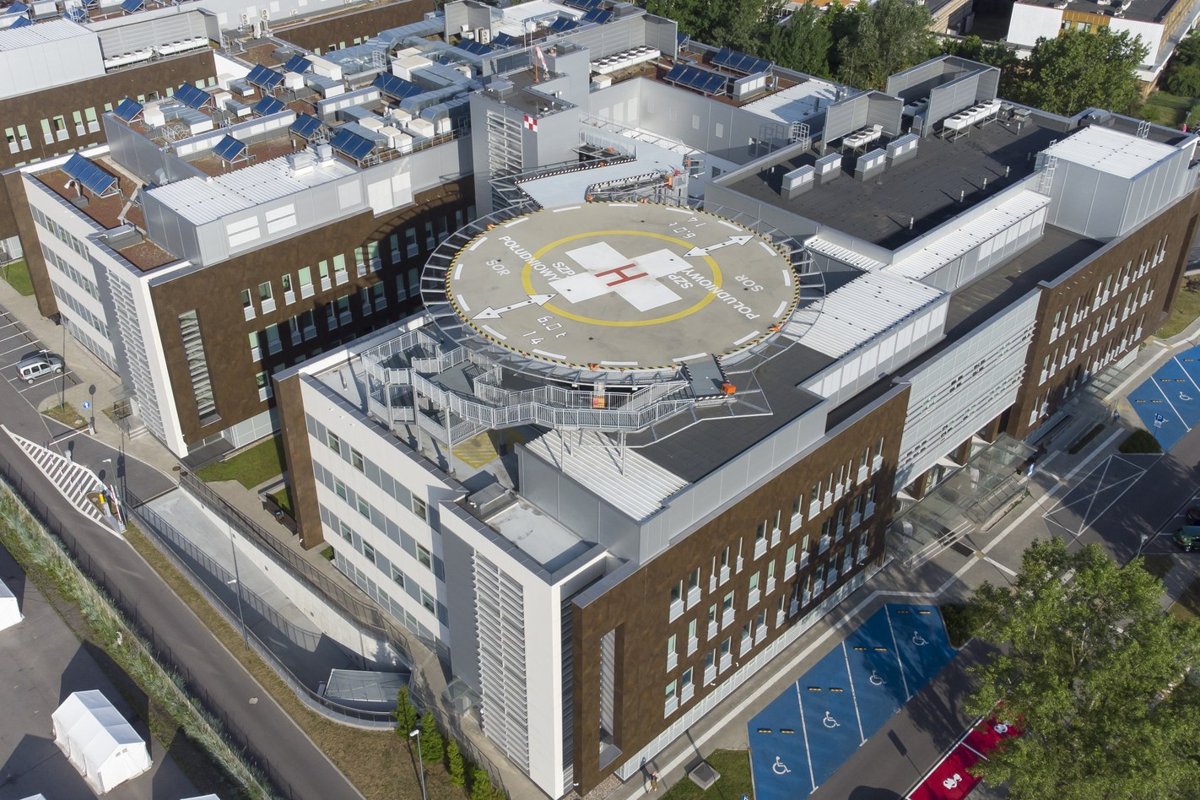
The rooftop helipad at Szpital Południowy, beside the SOR marking. That is the emergency department Dawid Kacprzyk ran. © Emptywords (CC BY-SA 4.0)
Institutions reacted quickly: the prosecutor's office opened two investigations (into fraud of more than half a million zloty and into abuse of powers by a public official), the National Health Fund (NFZ) and the National Labour Inspectorate (Państwowa Inspekcja Pracy) launched inspections, and the city dismissed the hospital's management board and supervisory board, appointing new leadership.
Whistleblower or party to a dispute? The other side of the case
If we stopped at the above, we would have a classic tale of a courageous doctor. The trouble is that Jędrzejewski's own position is ambiguous, and that is exactly what makes the case such a good case study. Every hospital has to tell a public-interest report apart from a workplace grievance. That job gets much easier when the two never share a file. A whistleblowing hotline for healthcare and social care keeps them apart from the first day.
The hospital remains in dispute with its former head of surgery over the return of 531,000 zloty, citing among other things allegations of fictitious shifts and of adding his name to procedures. The city gave as reasons for his dismissal, among others, backlogs in reporting to the NFZ, patient complaints and the incident involving Kacprzyk. Gazeta Wyborcza also described older threads: a long-standing case about diplomas, in which the doctor appears as a witness, and his earlier business plans (a sports medicine clinic, with Robert Lewandowski's name in the background), which may have coloured his relations with city hall. Jędrzejewski denied any political motivation and said he would respond publicly to all the allegations.
For the legal assessment this matters less than it seems. A reporter's motives, concern for the common good, revenge or self-interest, should not settle whether their allegations get checked. Where patients' lives are at stake, you verify the facts first and judge the person afterwards. Reversing that order discourages the next witness from speaking up.
Is Dr Emil Jędrzejewski a whistleblower within the meaning of the Act?
"Whistleblower" in everyday speech and a whistleblower within the meaning of the Whistleblowers Protection Act of 14 June 2024 (implementing EU Directive 2019/1937 and in force since 25 September 2024) are two different categories.
In the view of Professor Grzegorz Makowski of the SGH Warsaw School of Economics, calling the doctor a whistleblower is, from the standpoint of the law as it stands, premature. What matters is the way he passed the information on. As Jędrzejewski himself recounted, he obtained the phone number of the mayor of Warsaw and, when he could not get through, sent him a long message on WhatsApp (July 2025). Rafał Trzaskowski stated that a private message "is not a channel for reporting irregularities in a city institution" and stressed the importance of the formal route.
A message on a chat app, even to the mayor of a city, is neither a procedure provided for by the Act nor the procedure for accepting external reports that applies in Warsaw. Professor Makowski's conclusion is cautious but telling: in the light of the available information, Dr Jędrzejewski probably could not successfully invoke the protection of the Act. His allegations still have to be checked. The legal and the social understanding of reporting wrongdoing simply are not the same thing.
How do you report wrongdoing? The three routes under the Whistleblower Protection Act
The Act provides for three reporting routes, and the choice of route affects the scope of protection:
- Internal report, through the procedure in force at the organisation concerned (the employer's reporting channel). This is the basic and safest route.
- External report, to the competent public authority (for example the Commissioner for Human Rights or a supervisory body), in a defined manner.
- Public disclosure, including taking the matter to the media. It is protected only in special circumstances, among them where there is an immediate danger to life, health or the environment, or where earlier reports produced no response.
That is why the channel the doctor used matters so much: the whole of his protection hangs on that choice.
Can a whistleblower be dismissed? What the Act says about retaliation
This is the question that keeps coming back since the scandal broke. The answer is: an employee can formally be dismissed, but it must not be done in retaliation for a report. The Act prohibits retaliatory action against a person who has made a report in accordance with the rules. That covers termination of the contract, a pay cut or being passed over for promotion. The burden of proof is also reversed: it is the employer who must show that the adverse action had an objective cause unconnected with the report.
Article 55 of the Act also provides for criminal liability for taking retaliatory action against a whistleblower. A "loss of trust" announced right after a report is therefore a situation that authorities and labour courts examine with particular care.
The case of "Mr Piotr", when whistleblower protection fails in practice
To see the other side, a whistleblower with formal status, it is worth looking at a parallel case from the same Warsaw city hall, one often confused with the doctor's.
Mr Piotr, an employee of the Zarząd Dróg Miejskich, the city roads authority, refused in 2025 to carry out a verbal instruction he considered to have no legal basis, and demanded that it be issued in writing. He went through the entire route laid down by law: an internal report, a letter to the mayor, a formal whistleblower report. In November 2025 Rafał Trzaskowski granted him whistleblower status in writing and placed him under protection. Two months later Mr Piotr was dismissed, the reason given being loss of trust.
His lawyer notified the prosecutor's office of a possible breach of Article 55 of the Act. The National Labour Inspectorate found that his employee rights had been violated, and according to journalists' findings an internal memo at the roads authority indicated that the employer knew the employee was under protection before the notice was served. The city defends itself by saying that the employee performed his duties poorly and that "whistleblower protection is not absolute". The case has gone to the labour court.
Setting the two stories side by side is instructive. Jędrzejewski probably did not have whistleblower status within the meaning of the Act, and Mr Piotr had it in writing. Both lost their jobs. For the employees watching, the conclusion is the same: better to keep quiet.
Why does Dr Emil Jędrzejewski's case matter to every employer?
Whatever the investigations conclude, this case already shows that the Whistleblower Protection Act has stopped being theory. More and more often it will be labour courts deciding whether terminating the contract of someone who reported breaches was lawful or amounted to prohibited retaliation. And every such dispute has a cost: financial, reputational and organisational.
There are four lessons for employers, public and private alike:
- The reporting channel has to be real. If the only route open to a potential whistleblower is a private message to the chief executive "lost in a flood of hundreds of unread messages", then the organisation has no reporting channel at all. The Act requires an internal procedure: clear, known to staff, with acknowledgement of receipt and feedback.
- Confidentiality of identity is the foundation. In Mr Piotr's case, his correspondence reportedly reached the very people the allegations were about. A channel without a guarantee of confidentiality, and ideally of anonymity, deters people more effectively than any ban.
- The ban on retaliation has teeth. The reversed burden of proof and criminal liability under Article 55 mean that the response to a report has to be documented and substantive.
- The allegation is verified before the person is judged. Even if the person reporting is in conflict with the organisation, the report itself must be taken seriously.
How do you build an effective whistleblower reporting system?
Well-designed whistleblowing software is a risk management tool. It should provide multiple reporting channels (including an anonymous one), acknowledgement of receipt within 7 days and feedback within 3 months, protection of the confidentiality of identity, a register of reports, and an impartial person or team to conduct the investigations. It is also essential to separate the handling of a report from the people it may concern, so that a conflict of interest does not wreck the whole procedure.
FAQ, the most common questions about whistleblowers and the Szpital Południowy scandal
Is Dr Emil Jędrzejewski a whistleblower?
In the everyday sense, the media call him one. In the legal sense it is doubtful. In the view of Professor Grzegorz Makowski he probably could not successfully invoke the protection of the Act, mainly because of the way he passed the information on (a private message on a chat app instead of a formal channel).
Can a whistleblower be dismissed?
A contract can be terminated, but it must not be done in retaliation for a report. If the dismissal follows a report, the employer has to prove that it had an objective, unconnected cause. Otherwise it is prohibited retaliation.
When is a whistleblower protected by the Act?
When they report a breach covered by the Act's catalogue, act in good faith and use one of the routes provided for (internal, external or, in special circumstances, public disclosure).
What are the penalties for retaliating against a whistleblower?
Besides the employee's claims (compensation among them), Article 55 of the Act provides for criminal liability for taking retaliatory action.
What was the "VIP lounge" at Szpital Południowy?
It is the fast track for politicians and their families, outside the standard queue, described in the media. The extent and nature of this thread are the subject of inspections and proceedings.
Who is Dawid Kacprzyk?
A doctor and former KO councillor, coordinator of the emergency department at Szpital Południowy, and the central figure in the scandal. He rejects the allegations against him, which remain unproven; he gave up his council seat and his party membership.
The Szpital Południowy case will be settled by prosecutors and the courts. Yet whether Dr Emil Jędrzejewski turns out to be a hero, a party to a private dispute, or both at once, its most lasting mark will be on something else: on whether employees in Polish institutions come to believe that speaking up is worth it. And that depends on how organisations treat the first whistleblower who knocks at the door.
Sources: Rzeczpospolita, Rynek Zdrowia, Polsat News, Interia, Kultura Liberalna, Wprost,
Wirtualna Polska, i.pl, Do Rzeczy, the Zero.pl portal.
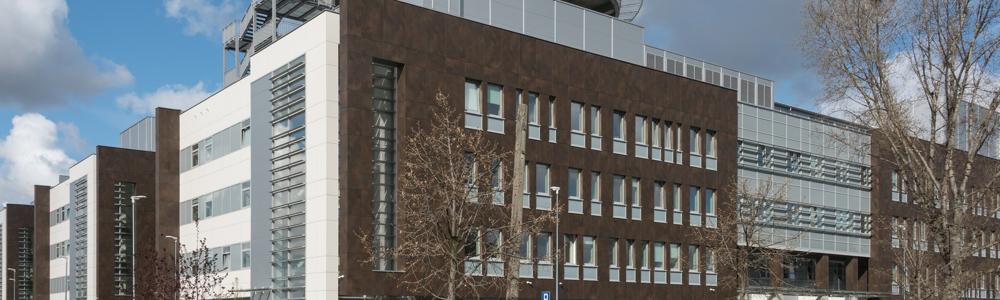
Title image: Adrian Grycuk (CC BY-SA 3.0 PL).
Legal advisor specializing in business, commercial and IP law. Writes on whistleblower legislation, the EU Directive, and implementing reporting procedures.