
For a long time my default check-in was a casual "how are you?" thrown across a desk or into a video call. I told myself I was being approachable. What I was really doing was inviting a one-word answer I could nod at and move past. The day I admitted that to myself was the day I started asking different questions, and the day I started getting different answers.
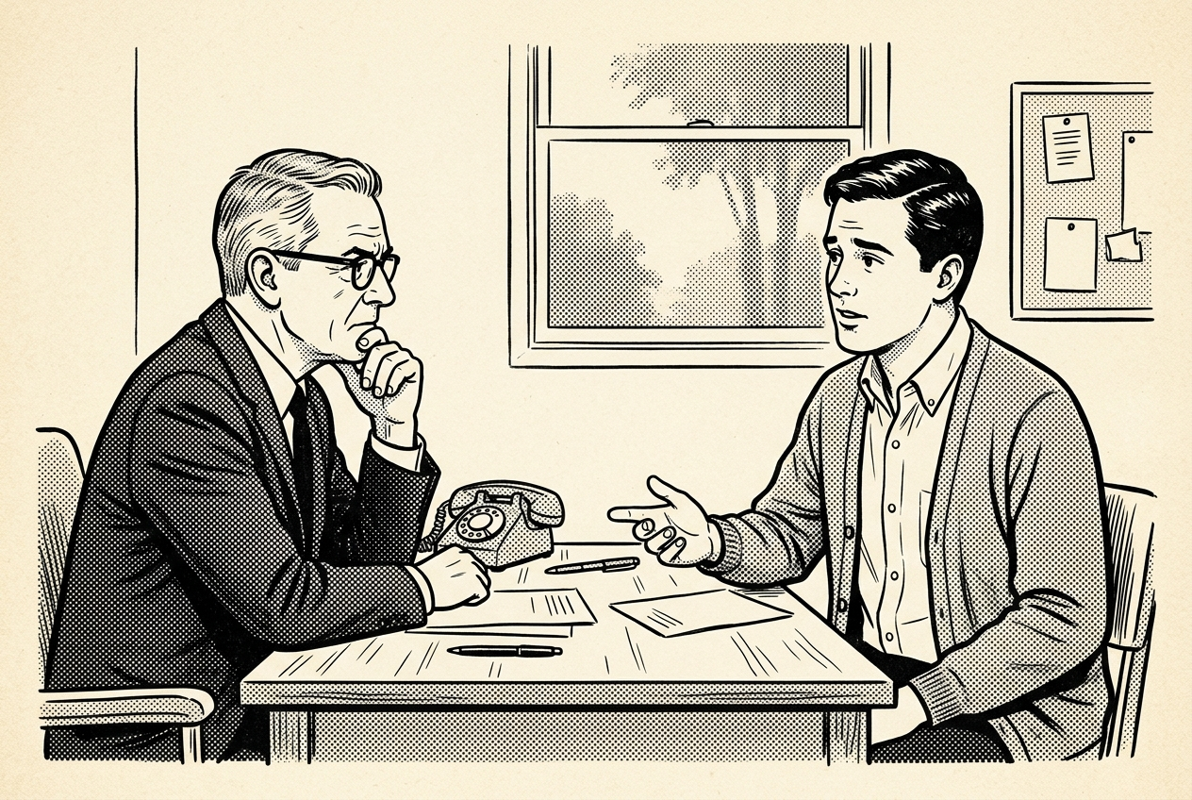
Why "how are you?" stopped working for me
"How are you?" is a greeting. People answer "fine" because that is the script, and because saying anything else feels like dragging a personal problem into a corporate hallway.
I noticed this most after work spread out across kitchens and home offices. Body language was harder to read on a small screen, and the social cues I leaned on, the shift in tone, the look at the floor, the pause before a meeting, were either compressed into a thumbnail or gone.
The real failure of the small-talk version is that it asks the employee to do all the work. They have to decide, in two seconds, whether I actually want to hear the truth. Most of them, sensibly, decide I do not.
What the engagement numbers told me
A few months in I went looking for hard numbers, to check whether my hunch was personal or general. Gallup's State of the Global Workplace reported global employee engagement at 20%, the lowest level since 2020, and put the cost of low engagement at roughly $10 trillion a year, around 9% of global GDP.
The same report tracked manager engagement falling from 31% to 22% over three years. The figure that hit hardest came from a separate Gallup question: only 28% of employees strongly agree their opinions count at work. Three out of four people sitting in those meetings, in other words, believe their voice goes nowhere. Against that baseline, my "how are you?" was a closed door with a doorbell.
Microsoft's recent Work Trend Index put a finer point on the cause: 80% of the global workforce report they lack the time or energy to do their job, and the average knowledge worker is interrupted every two minutes. Even when someone wants to say something, the day does not leave a gap to say it in.
Four questions I ask myself before I ask my team
Before I sit down with anyone now, I run a short self-audit. The questions are mine, not theirs.
The first is about half-seconds. How do I react when someone brings me a problem? Not what I say, but what my face does in the first half-second. People read that half-second and decide whether to keep going. If I look harassed or check my phone, the conversation is already over.
Then there is fairness. Do I treat everyone the same way when they cross a line? I ask myself whether two people who broke the same rule would walk out of my office with the same outcome, or whether one of them would get a quieter version because I like them more. The honest answer is uncomfortable more often than I want to admit.
The hardest one for me is admitting my own mistakes out loud. If a teammate told me they did not like the way I responded to one of their ideas, would I treat that as information, or as something to argue with? The answer the team sees is the answer that sets the ceiling on what they will tell me next time. I owe a lot of my thinking here to why purpose-driven workplaces win on retention: how I respond to friction is the experience.
And the one I was slowest to face: do I only talk to people one-on-one? One-on-ones are a tool, not the whole toolbox. People who are quiet, introverted, or burned by a previous job will not bring me anything face-to-face, no matter how warm I make it.
Why I added an anonymous channel
That last question is what pushed me to set up an anonymous route alongside the conversations. Anonymous reporting does not replace face-to-face talking; it catches what face-to-face cannot, the things people will only write when their name is not attached.
The friction is sharper than it was before remote work blurred everything. The "hushed hybrid" pattern is real: across 14,000 companies, required office days went up 12% while actual attendance climbed only 1%. Half the workforce disagrees with policy and says nothing in meetings about it. An anonymous channel gives that silence a place to land, and it gives me a chance to turn what I hear into goals the organisation can act on instead of rumours that drift.
Listening without flinching
The hard part of this work is not collecting the answer, it is sitting with it. I have caught myself wanting to defend, explain, or fix the thing the moment I heard it. None of those reactions feel like listening to the person on the other end. So I write the answer down, sit with it for a day, and then come back. What I do next is the part the team grades me on.
The cost of not asking is not financial, at least not first. It is that the people who could tell me what is actually wrong stop bothering, and that silence is hard to undo. By the time it shows up in revenue or attrition, the conversation has already happened in someone's head and I was not in it.