Harry M. Markopolos is a former securities-industry executive and forensic accounting expert who spent nearly a decade trying to convince anyone in authority that Bernie Madoff's wealth-management business was the largest Ponzi scheme in history. Between 1999 and 2008, Markopolos compiled and submitted detailed mathematical analyses to the US Securities and Exchange Commission three separate times. Each one was set aside. The fraud finally collapsed in December 2008, not because of regulators but because Madoff confessed to his sons, who walked out of his apartment and called federal prosecutors. By then Madoff's books listed $64.8 billion in fictitious balances and had wrecked the savings of more than 40,000 investors across 127 countries. Markopolos's persistence, alongside the much earlier solo whistleblowing of figures like Samuel Shaw and Richard Marven, sits near the head of any honest reckoning with what the modern whistleblower role actually requires.
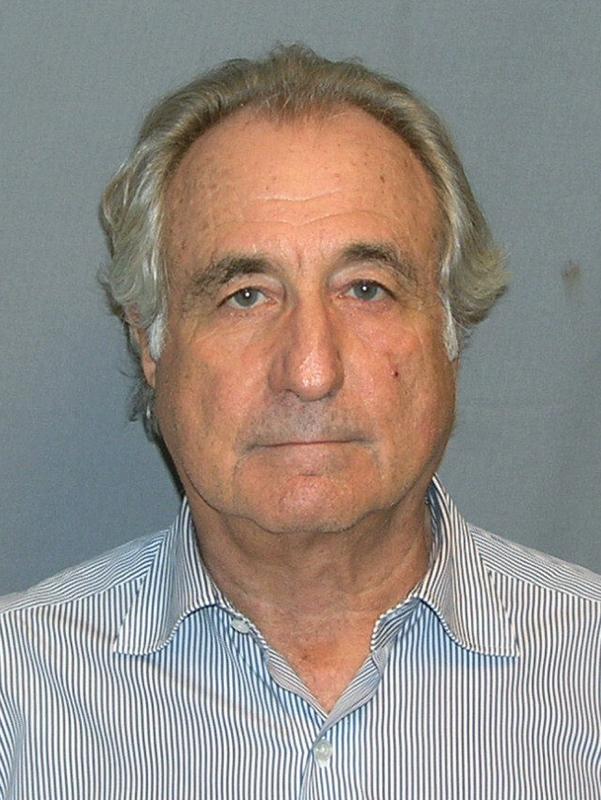
Bernie Madoff, federal mug shot, March 2009
©U.S. Department of Justice (public domain)
Five minutes to spot it, four hours to prove it
In 1999, Markopolos was working at Rampart Investment Management in Boston when his bosses asked him to clone the strategy of an obscure hedge-fund manager who had been delivering steady 1-2% monthly returns for years. The manager was Madoff, and his investors were mostly funneled to him through feeder funds. Markopolos later said it took him about five minutes to know the numbers were fake and another four hours to prove it. The split-strike-conversion strategy Madoff claimed to use could not produce a return curve that climbed at a near-perfect 45-degree angle, with only a handful of negative months across more than a decade. The mathematics simply did not work.
Madoff's reported options-trading volume on the dates in question would have exceeded the entire publicly reported volume of the OEX market, an arithmetic impossibility that no amount of trader skill could reconcile. That was the easy part. Convincing anyone with subpoena power was harder.
Three reports the SEC filed away
Markopolos walked his findings to the SEC's Boston office in May 2000, then resubmitted in 2001 with more documents. He was ignored both times. In November 2005 he submitted a 21-page memo titled The World's Largest Hedge Fund is a Fraud, listing thirty separate red flags: the impossibility of Madoff's self-clearing trades, the auditor of record being a one-man storefront firm in Rockland County, the absence of any independent custodian, the suspicious lack of negative months. The SEC opened a file, made a few phone calls, and closed it.
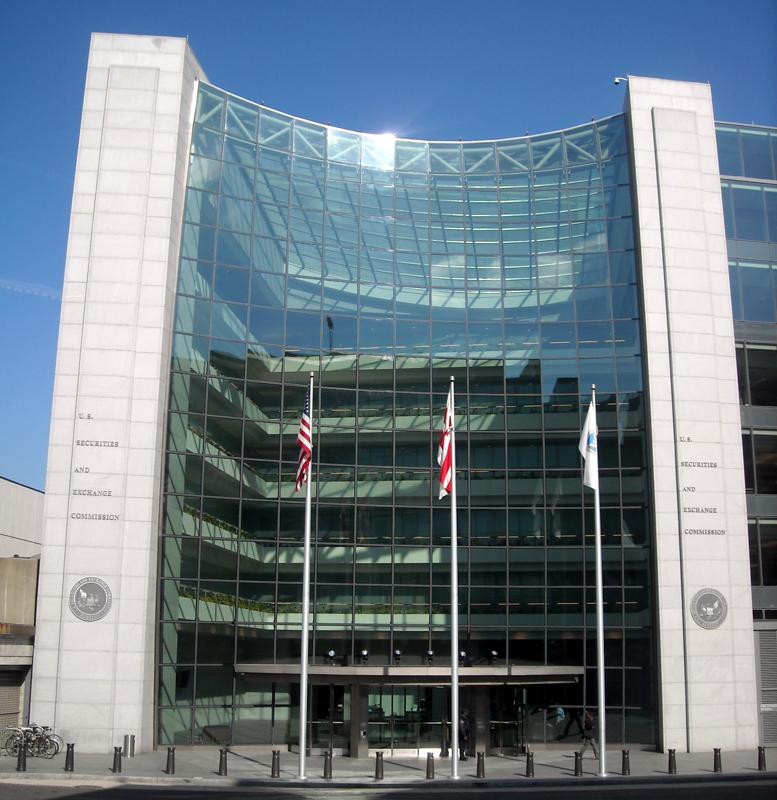
SEC headquarters, 100 F Street NE, Washington DC
©AgnosticPreachersKid (CC BY-SA 3.0)
The structural reason the SEC kept missing it has since become clearer. Madoff's broker-dealer arm was registered, examined, and respected; his unregistered investment-advisory operation, run separately on the seventeenth floor of the Lipstick Building, was where the fraud lived. Examiners who showed up checked the registered side, took Madoff's reassurances at face value, and went home. He was, by then, a former Nasdaq chairman, too prominent in the regulators' minds to be the kind of person they were supposed to be looking for.
Living armed and waiting for the call
In the years between submissions, Markopolos came to assume that a man who had stolen tens of billions of dollars was not above hiring someone to make him stop. He carried a SIG Sauer pistol, kept his concealed-carry permit current, and routinely checked the underside of his car before getting in. He varied his routes home. His wife and the small team helping him, an analyst at Rampart and a journalist at MarHedge magazine, assumed they were equally exposed.
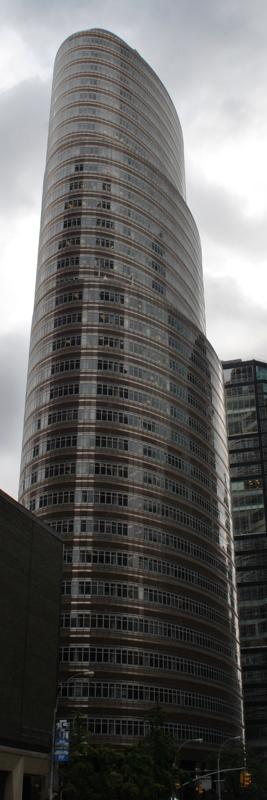
The Lipstick Building, 885 Third Avenue, Manhattan, where Madoff's investment-advisory operation ran from the 17th floor
©Elisa.rolle (CC BY-SA 4.0)
The fear was not abstract. Markopolos understood, from cases like Mark Felt's three decades of silence as Watergate's Deep Throat, how thin the institutional protections were for someone in his position. There was no SEC whistleblower programme yet; the bounty system that would later pay informants up to 30% of recovered penalties did not exist until Dodd-Frank in 2010, after Madoff's collapse had finally embarrassed Congress into action.
The collapse, when it came, did not come from him. In the first week of December 2008, Madoff confided to a senior employee that he was finished. That employee told Mark and Andrew Madoff, who left their father's apartment, called a lawyer, and the lawyer called the FBI. Madoff was arrested on 11 December 2008 and confessed within hours.
Testifying to a Congress that finally listened
On 4 February 2009, Markopolos appeared before the House Financial Services Committee in Washington and read a 65-page prepared statement into the record. The hearing was titled Assessing the Madoff Ponzi Scheme and Regulatory Failures, and most of the day was spent on what the SEC had failed to do.
"Nothing was done. There was an abject failure by the regulatory agencies we entrust as our watchdog."
Harry Markopolos @ House Financial Services Committee, 4 February 2009
He compared Madoff's reported track record to a baseball player batting .966 for an entire season and no one suspecting a cheat. He described SEC examiners as "financially illiterate", a phrase that did not endear him to the agency but matched almost exactly what their own Inspector General would later document in an internal report. The hearing was the moment a private grievance became formal public record, and the moment the SEC began the slow process of admitting it had needed help and refused it.
Sentenced, then dead in federal prison
On 12 March 2009, Madoff pleaded guilty to 11 federal felonies, admitting that he had run his investment-advisory business as a Ponzi scheme since at least the early 1990s. On 29 June 2009, US District Judge Denny Chin sentenced him to 150 years in federal prison, the statutory maximum, and ordered $170 billion in restitution. The arithmetic of those numbers was theatrical; Madoff would die in custody long before any meaningful share of either was paid back.
The wider family did not survive the scandal either. Mark Madoff, the son who had walked out of his father's apartment that December night, hanged himself on 11 December 2010, the second anniversary of the arrest. Andrew Madoff died of cancer in September 2014. Ruth Madoff, Bernie's wife, settled with the trustee in 2019 for $594,000 and the surrender of any remaining assets on her death. Bernie Madoff died at FMC Butner, a federal medical centre in North Carolina, on 14 April 2021, aged 82, after a request for compassionate release on grounds of terminal kidney disease was denied.
Almost the whole pot, returned
What did survive the scandal, against expectations, was much of the money. Two parallel tracks have been chasing Madoff's investors for the better part of two decades.
The first is the SIPA Trustee, Irving Picard, appointed by the bankruptcy court immediately after the firm collapsed. Picard's team has filed thousands of clawback actions against feeder funds, banks, and beneficiaries, and as of early 2025 has recovered over $14.5 billion through litigation. The single largest item came from the estate of Jeffry Picower, a Madoff investor whose returns had been so anomalous that Picard's lawyers concluded he must have been complicit; that estate forfeited $7.2 billion in December 2010, the largest single forfeiture in US judicial history.
The second track is the Department of Justice's Madoff Victim Fund, administered out of the Money Laundering and Asset Recovery Section. On 30 December 2024, the DOJ announced its 10th and final distribution: over $131 million sent to more than 23,000 victims worldwide, taking the cumulative total to $4.3 billion paid to 40,930 victims in 127 countries. The recovery rate, measured against actual cash losses rather than the headline $64 billion of fictitious balances, is now 93.71%. About $2.2 billion of that came from the Picower civil-forfeiture action; another $1.7 billion came from a deferred-prosecution agreement with JPMorgan Chase, the bank through which Madoff's flagship account had run for decades and which paid an additional $350 million fine for Bank Secrecy Act failures.
The Special Master overseeing the fund, Richard Breeden, is a former SEC chairman. The irony is not subtle. His team evaluated more than 66,000 remission petitions to compute each victim's actual cash-in-cash-out loss. The system was slow, sixteen years from arrest to final distribution, but in the end nearly every dollar of money actually deposited with Madoff has been returned, even if the fictitious gains never materialised.
Markopolos published his account of the investigation in 2010 as No One Would Listen: A True Financial Thriller; the documentary Chasing Madoff followed in 2011. He has appeared periodically since to point at other suspect companies, most prominently with a 175-page report in 2019 alleging $38 billion in accounting fraud at General Electric. GE rejected the report as "meritless"; markets and regulators ultimately set it aside without action. The episode is a useful corrective to the lone-genius reading of his career: getting the SEC to ignore something true is one problem, getting markets to take seriously something that may not be is another. Netflix's Madoff: The Monster of Wall Street in January 2023 returned to the original story, with Markopolos appearing in its third and fourth episodes to walk through the maths one more time. His own line about what comes next has held up: the next Madoff is already out there, and the only question is whether he gets caught before the damage is done. Edward Snowden would later operate in a different domain entirely, but the institutional dynamic, a single insider with the evidence and an apparatus reluctant to look at it, was the same one Markopolos had spent a decade describing.